This article was funded by LebTown donors as part of our Civic Impact Reporting Project.
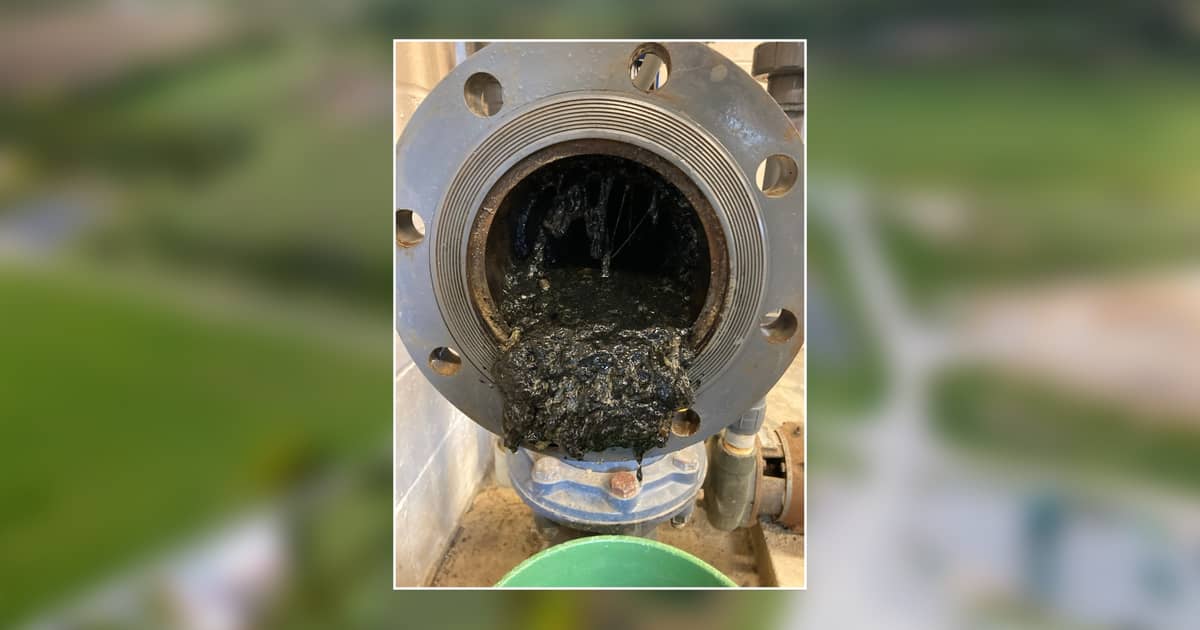
A chemical treatment for the sticky substance known as “black goo” in two of the Greater Lebanon Refuse Authority’s landfill cells released more of the tar-like material than expected.
“It unlocked leachate we didn’t know was out there,” GLRA engineering manager Jim Zendek said at Tuesday’s board meeting.
As predicted, leachate production increased in the two treated cells. What wasn’t expected was the release of chunks of the goo that had not fully dissolved, Zendek said in his report to the board.
When the leachate broke free, those chunks clogged pumps, and they shut down. But after adding a defoaming agent and water, the pumps again began working.
Only cells 4 and 6 were treated, Zendek told the board. He described cell 6 as now “squeaky clean,” and cell 4 as “better” but likely still having residual goo.
Leachate is the liquid produced during the complex biological and chemical processes that waste undergoes when deposited in landfills. The goo is only one substance in leachate. Because leachate can pollute groundwater, it is removed from cells through a system of pipes and pumps. GLRA’s leachate goes to the City of Lebanon Authority for treatment.
Until the chemical treatment, GLRA had relied on periodic cleaning of pumps, filters, and jetting liners for control of the goo, said Zendek in an email. While that provided temporary relief, it was time-consuming — which is why GLRA opted to try a chemical treatment.
“The black goo hasn’t halted any of our operations, just slowed them down,” Zendek said. “But the problem seems to be getting worse rather than improving.”
Landfills across the country began noticing the goo in the 2010s. Researchers have hypothesized it is the result of the breaking down of sodium polyacrylate, a synthetic polymer common in products manufactured to be “super absorbent.”
GLRA has sent samples of its goo for analysis to Florida Atlantic University, which has an ongoing research study investigating the causes and possible treatment of the substance. Results of that study should be made public this month, said Zendek in an email.
In other business, GLRA’s yearly financial audit has begun and should be completed by the end of May, GLRA executive director Skip Garner told the board.
Garner also reported that revenue from tipping fees exceeded budget in March by 16.5%, largely because of increases in residential and commercial waste. Year-to-date, GLRA’s revenue from waste receipts is up almost 7%.

GLRA continues to work on the design of an 18-hole disc golf course. Construction of the course could begin in late April or early May, Zendek said in his report.
The board also was told that a routine inspection of the landfill by the Department of Environmental Protection in early March listed no violations or recommendations.
Plant bedding is available for pick up for $12/cubic yard. Pick up hours are 8 to 11 a.m., Monday through Friday, and 8:30 to 11:30 a.m., Saturday.
The board of the Greater Lebanon Refuse Authority meets at 1800 Russell Road. The next meeting will be 7 p.m. Tuesday, May 5. These meetings are open to the public and do not require registration.
Questions about this story? Suggestions for a future LebTown article? Reach our newsroom using this contact form and we’ll do our best to get back to you.

Support Lebanon County journalism.
Cancel anytime.
Monthly Subscription
🌟 Annual Subscription
- Still no paywall!
- Fewer ads
- Exclusive events and emails
- All monthly benefits
- Most popular option
- Make a bigger impact
Already a member? Log in here to hide these messages
Local news is disappearing across America, but not in Lebanon County. Help keep it that way by supporting LebTown’s independent reporting. Your monthly or annual membership directly funds the coverage you value, or make a one-time contribution to power our newsroom. Cancel anytime.