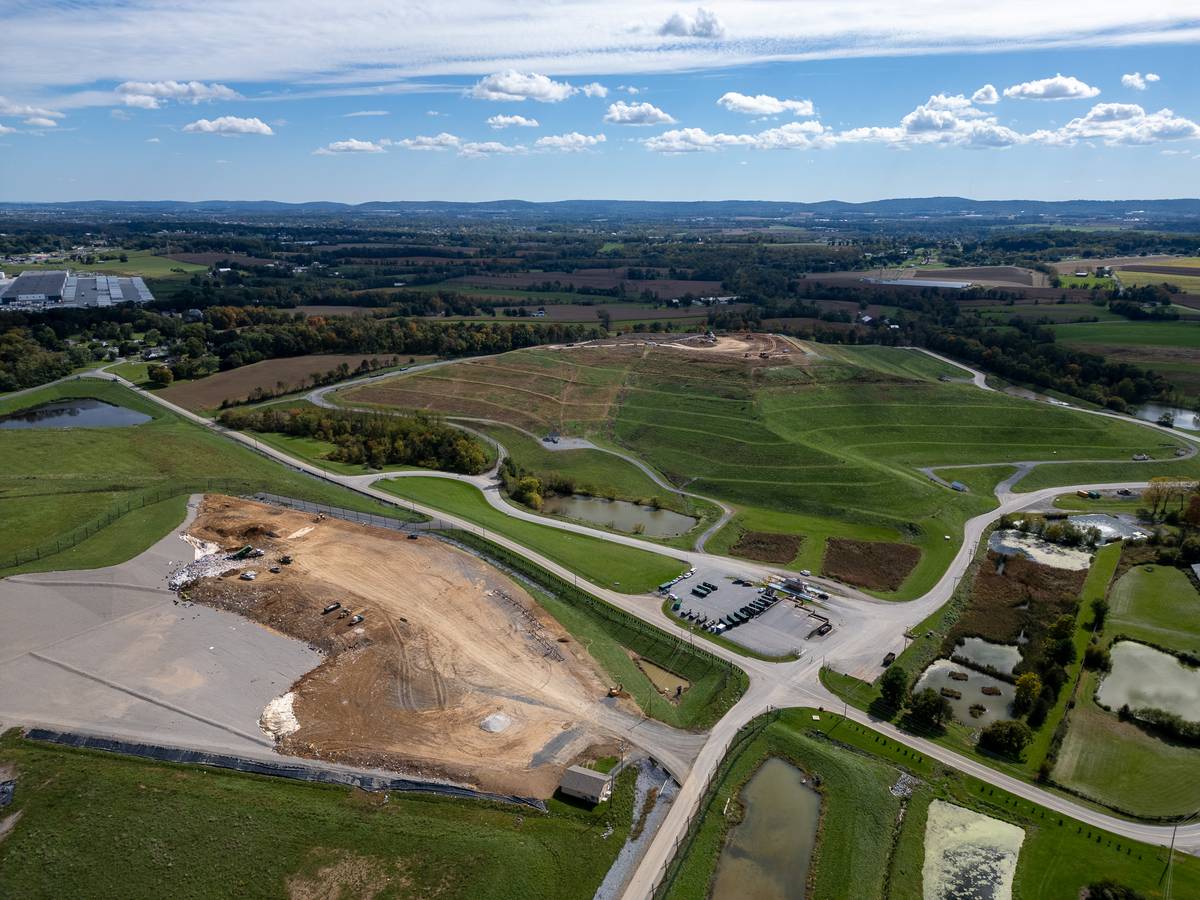
For the next five months, seven audio recorders will switch on 30 minutes before sunrise and stay on for two hours to capture wildlife activity in several of the Greater Lebanon Refuse Authority’s open fields.
Once the noise from nearby trucks, cars and other human activity is filtered out, researchers hope to hear the distinct calls of songbirds like the bobolink, eastern meadowlark and grasshopper sparrow, as well as those of short-eared owls, barn owls and other birds of prey.
Identifying the birds will provide much-needed information about whether the warm-season grasses planted at GLRA last fall are attracting birds. Almost 50 acres were planted with a mix of little bluestem, sedges, rushes, and flowers as part of the Pennsylvania Priority Grasslands Project.
“We are recording bird song to better understand how bird populations are responding to new and existing grassland plantings in Pennsylvania,” said Alexa Kennel, wildlife biologist with Pheasants Forever, who is managing the GLRA project and who was on hand in early April for set up of the audio recorders.
“These data will be used to inform how we manage grasslands, what seed mixes to use to attract bird species, and how bird populations shift as a grassland matures over time.”

North America’s bird populations have been declining for decades, but grassland birds have experienced the greatest decline — 53% — in the past 50 years, according to the 2025 U.S. State of the Birds Report compiled by scientists with conservation organizations and federal agencies.
The primary cause is loss of the birds’ habitat, specifically grasslands. Before European settlement, grasslands were found throughout the Mid-Atlantic. Over the centuries, much of that land was cleared for farming and pasturing. More recently, roadways and housing developments have eaten into native grasslands and meadows.
Recognition of the ecosystem benefits of grasslands has sparked interest in restoring them to the landscape. Not only do the grasses provide cover, nesting, and food for a diversity of wildlife, but their deep root systems also help to stabilize soil, thereby reducing erosion. They also filter rain and stormwater as they recharge groundwater.
A National Fish & Wildlife Foundation grant awarded to the Pennsylvania Game Commission supports the grasslands project. Landowners have to apply to Pheasants Forever to be considered as a site, and acceptance into the project requires the property to stay as grassland for a minimum of 10 years. Property owners have responsibility for mowing the acreage.
Since the grant was awarded, 17 sites totaling 749 acres in southeast Pennsylvania have been planted with various grasses and flower species, Kennel said. GLRA is one of three sites in Lebanon County, and the first to have the audio recorders.


“We pursue projects that improve our surrounding environment and natural habitats because we have the land, the means and a staff who love this county,” said GLRA staff engineer Morgan Hosler, who coordinates the grasslands project with Kennel. “For GLRA, passion for conservation is a no-brainer.”
After GLRA was accepted, Kennel evaluated possible sites for grassland restoration. GLRA owns 500 acres, 100 of which is in landfills with the other 400 acres leased to nearby farmers or in woodlands, wetlands and open fields, Hosler said.
As project manager, Kennel identified about 50 acres in six fields. She then designed a restoration plan and hired contractors to prep and seed the sites with both cover crops and grasses. Seeds and contractors were paid by the grant.
While the cover crop planted last fall has started to emerge, the grasses have not yet, Hosler said. When they do, they will be between three and seven feet in height, depending on the site and the seed mix used.
“Grasslands look great during the growing season when they’re flowering, but they can look messy in the in-between months,” Kennel said. “We have to remember that our baseline for what looks ‘good’ is colored by growing up in areas primarily planted with non-native grasses in the form of lawns for the past 200 years.”
Kennel doesn’t expect many birds will take advantage of GLRA’s grasses in this first year. But the recordings will provide baseline data to determine population increases and change in species in subsequent years.
“We are assessing habitat management to learn how these grasslands work and how birds are using these newly planted sites,” said Dan Ardia, professor of biology at Franklin & Marshall College. He provided the recorders and will analyze the recordings.
Questions about this story? Suggestions for a future LebTown article? Reach our newsroom using this contact form and we’ll do our best to get back to you.

Support Lebanon County journalism.
Cancel anytime.
Monthly Subscription
🌟 Annual Subscription
- Still no paywall!
- Fewer ads
- Exclusive events and emails
- All monthly benefits
- Most popular option
- Make a bigger impact
Already a member? Log in here to hide these messages
An informed community is a stronger community. LebTown covers the local government meetings, breaking news, and community stories that shape Lebanon County’s future. Help us expand our coverage by becoming a monthly or annual member, or support our work with a one-time contribution. Cancel anytime.