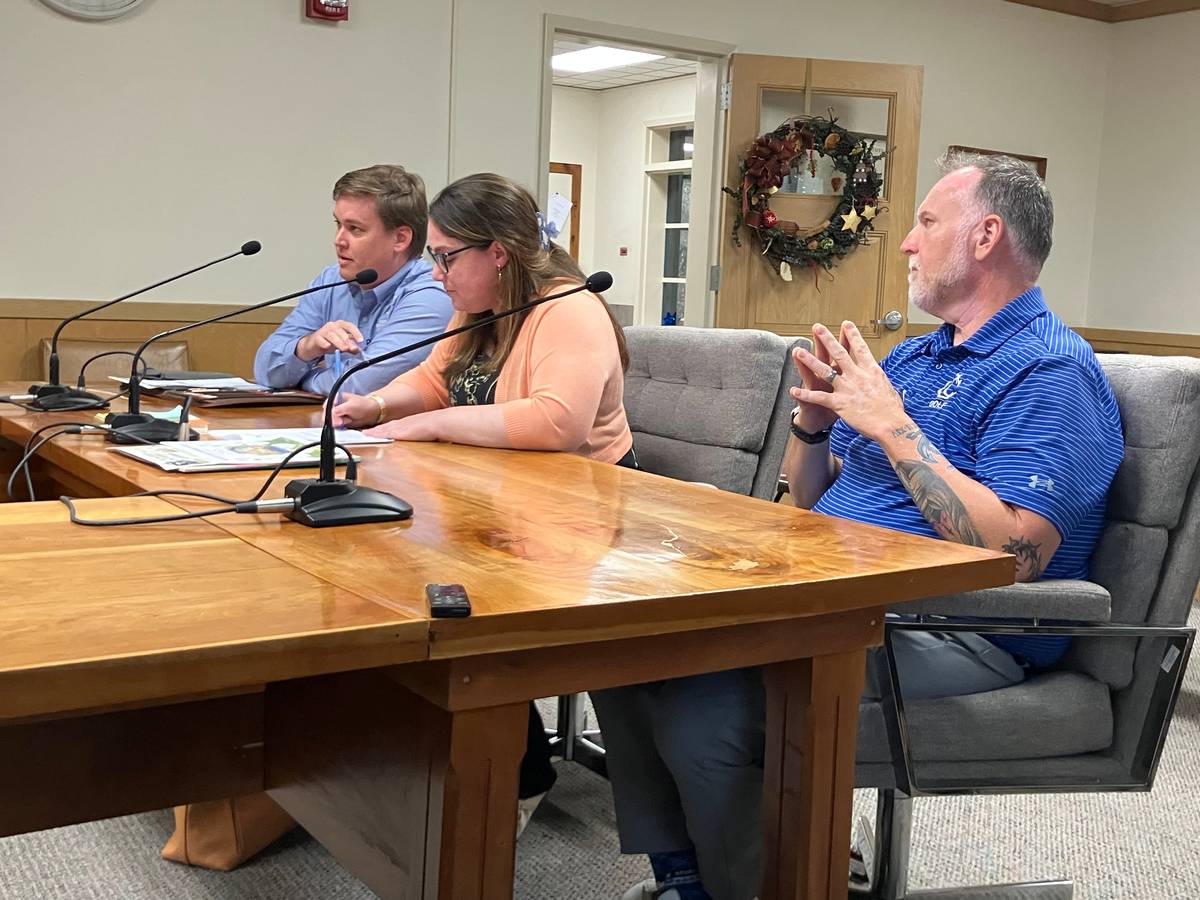
Following a two-hour hearing Tuesday, May 5, a U.S. bankruptcy judge delayed a proposed $40 million sale of Cedar Haven Healthcare Center until at least May 19, telling involved parties that they had not followed the auction procedure he ordered in March for the former county home’s non-real estate assets.
A court-appointed bankruptcy trustee conducted an auction on May 1 of both the real estate and non-real estate assets of Cedar Haven, resulting in a combined high bid of $40.375 million.
The financially strapped skilled nursing home at 590 S. 5th Ave. in South Lebanon Township was owned and operated by Lebanon County until 2014, when it was sold to private owners.
Cedar Haven has continued to operate since the bankruptcy was started in January, and all indications are that it will continue to operate while a sale is being arranged.
Split ownership issues are holding up a sale
After the county sold Cedar Haven and an earlier bankruptcy was concluded, a series of transactions between owners, operators, lenders, and creditors led to a split in the ownership of what is often lumped together simply as “Cedar Haven.”
The real estate and building are now owned by 590 S. 5th Avenue LLC, while another company, Cedar Haven Acquisition LLC, owns a separate business that provides care to the facility’s over 300 residents. As a result, 590 S. 5th Avenue, as landlord, leases the building to Cedar Haven Acquisition, as its tenant.
In November 2025, 590 S. 5th Avenue sued Cedar Haven Acquisition in Lebanon County court for $1.4 million in unpaid rent, triggering the appointment of a receiver to operate the facility and, ultimately, the current bankruptcy proceedings filed by Cedar Haven Acquisition.
590 S. 5th Avenue is not a party in the current bankruptcy proceedings, so the Cedar Haven building and real estate are not available to pay Cedar Haven Acquisition’s many creditors. Only non-real estate assets owned by Cedar Haven Acquisition – equipment, supplies, furnishings, etc. – are available to pay its bankruptcy creditors, plus any value derivable from the facility as a so-called “going concern,” its ongoing business operations.
At Tuesday’s bankruptcy hearing the consensus among participants was that the real estate is far more valuable than the business and its assets, and the combined May 1 auction of both seemed to bear that out.
The combined high bid for 590 S. 5th Avenue’s real estate and Cedar Haven Acquisition’s non-real estate assets was $40.375 million, substantially above a pre-auction “stalking horse” bid of $27.9 million. A stalking horse bid, sometimes called a reserve, sets a floor on bidding to avoid underbids of less than fair market value.
The high bidder was Cedar Haven Healthcare Center (“CHHC”), the company currently operating Cedar Haven on behalf of Cedar Haven Acquisition, and an affiliate of both 590 S. 5th Avenue and MDA Capital Group, a private equity firm concentrating on the nursing home industry.
MDA is also known as the Priority Group, according to court documents. MDA Capital Group is the same firm that had acquired StoneRidge Towne Centre in Myerstown last year, as identified in a January 2025 letter to StoneRidge residents identifying the new owners as Akiva Glatzer and David Gamzeh. That deal closed last fall.
A 2018 article by PennLive looked in-depth at Glatzer and Gamzeh’s operations and the management agreements held by Priority Healthcare Group. Glatzer and Gamzeh also received media coverage in Vermont during an attempted purchase of five facilities there.
If the proposed sale is ultimately approved as structured, there would once again be a single owner, CHHC, of Cedar Haven’s real estate and non-real estate assets.
On Tuesday, Judge Henry Van Eck pointed out that the non-real estate business assets had not been auctioned separately, as he had previously ordered, so their value, which is all that’s available to pay Cedar Haven’s bankruptcy creditors, was not established.
The bankruptcy trustee who conducted the combined auction replied that the non-real estate assets had very little value, at most $200,000, and that bidders insisted on the real estate being part of any sale. At least two creditors disagreed, arguing that the non-real estate assets are worth much more.
A higher value for the non-real estate assets would mean that 590 S. 5th Avenue gets less for selling its real estate, and creditors get more, from the eventual sale price.
The trustee told the judge that the sale should go through because 590 S. 5th Avenue had, outside the auction, agreed that $2,000,000 of what it would receive from the real estate sale proceeds could be set aside as a “carve out” to cover the estimated value of Cedar Haven Acquisition’s non-real estate assets.
Van Eck rejected the carve out, saying it was just an estimate and not a value fixed by bidders and market forces. He made it clear that to comply with bankruptcy law and his obligation to be sure that any sale is in the creditors’ best interests, a fair market value of the non-real estate assets has to be set, either by auction or the testimony of expert witnesses.
Potential buyers’ insistence on the sale of the real estate along with non-real estate assets is in line with a nationwide trend of private equity companies buying whole nursing homes, selling off the actual resident care component to businesses who become tenants, wringing profits out of them by charging high rents, and repeating the process if the tenant operator goes bankrupt.
Questions about this story? Suggestions for a future LebTown article? Reach our newsroom using this contact form and we’ll do our best to get back to you.

Become a LebTown member.
Cancel anytime.
Monthly Subscription
🌟 Annual Subscription
- Still no paywall!
- Fewer ads
- Exclusive events and emails
- All monthly benefits
- Most popular option
- Make a bigger impact
Already a member? Log in here to hide these messages
Free local news isn’t cheap. If you value the coverage LebTown provides, help us make it sustainable. You can unlock more reporting for the community by joining as a monthly or annual member, or supporting our work with a one-time contribution. Cancel anytime.
Van Eck concluded Tuesday’s proceeding by scheduling a second hearing on May 19. He urged the parties to arrive at a market-based value for the non-real estate assets by then, through a continued auction or other acceptable market-based means, or he would set it himself based testimony from expert valuation witnesses.