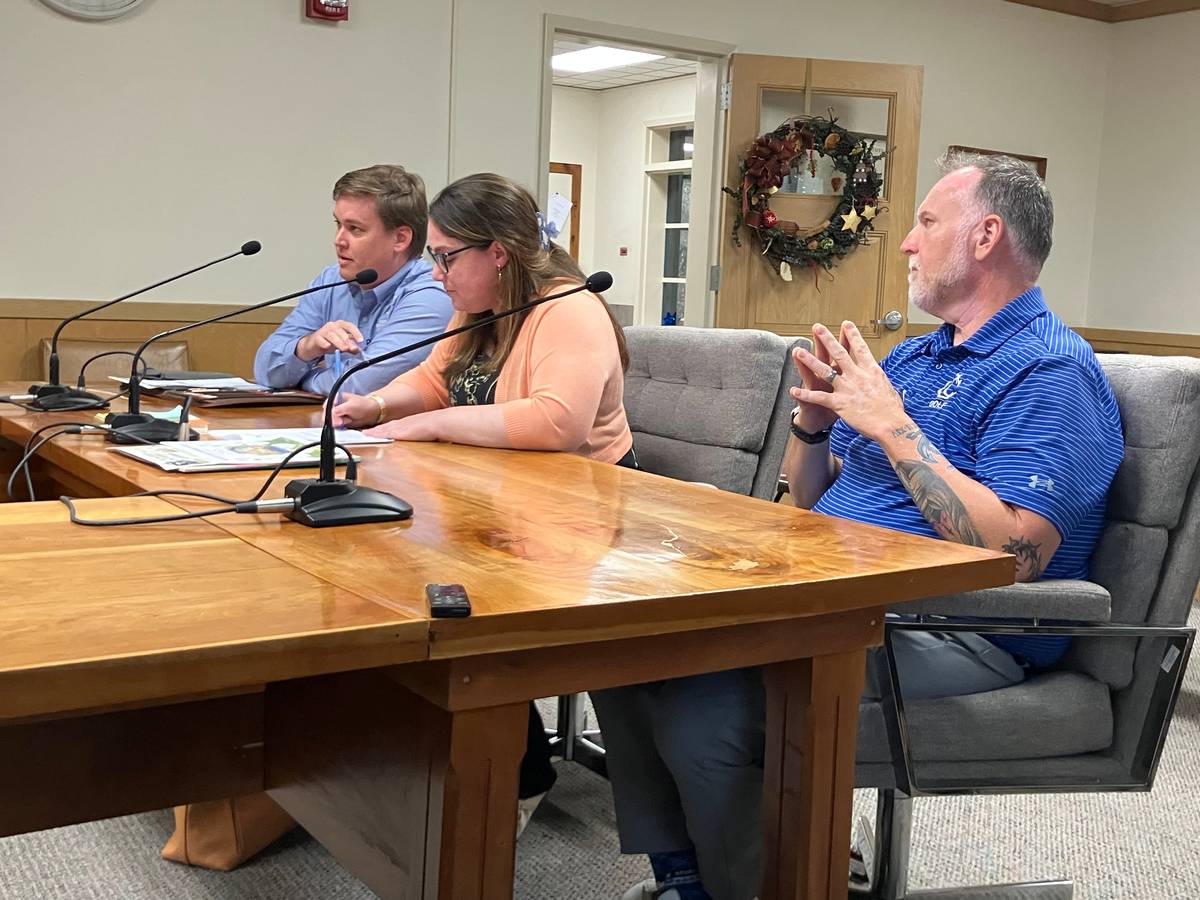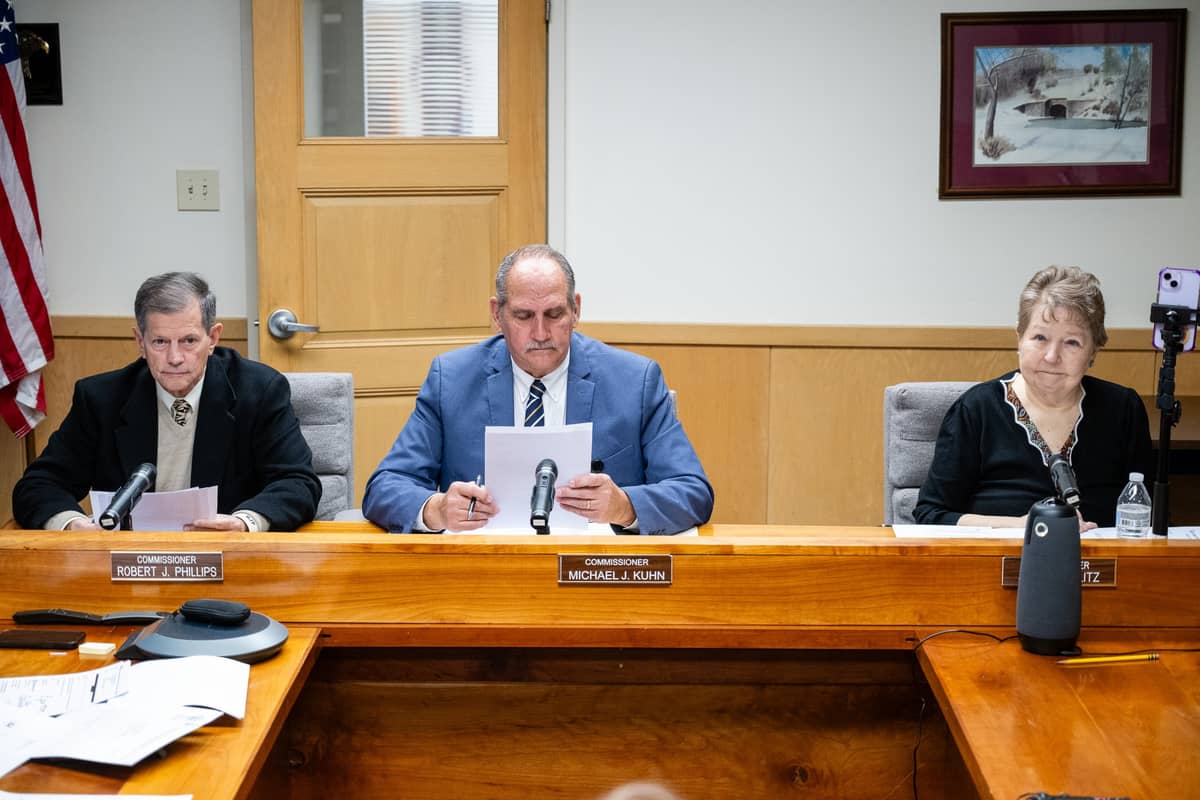
At the April 16 meeting of the Lebanon County Commissioners, several audience members raised questions about the need for transparency with the Lebanon County sheriff’s and district attorney’s offices since the signing of 287(g) agreements with federal officials in February.
Local activists Michael Schroeder of South Annville Township and Dr. Tom Overholt of Cornwall spoke about transparency, accountability, and why a resolution at the April 2 meeting opposing the 287 (g) agreements died due to a lack of a second.
Overholt expressed several times, in particular, his concerns about the need for both departments to be transparent to the public about departmental interactions with the Department of Homeland Security’s Immigration and Customs Enforcement (ICE) immigration enforcement efforts.
Following public comment, LebTown enquired about financial arrangements for the acceptance of federal funds for the participation of those two departments with federal agents.
Regarding program funding, ICE promotional materials indicate that participating agencies may receive federal reimbursements, including $100,000 for vehicles, $7,500 per trained officer for equipment, and partial salary coverage for local law enforcement agencies that cooperate.
To receive those funds, local law enforcement agencies are required by law to open separate bank accounts for the funds to be deposited.

While Sheriff Jeffrie C. Marley Jr. had the commissioners vote to approve opening a separate bank account at the April 2 meeting, district attorney Pier Hess Graf did not approach commissioners for a similar action and was not on the April 16 meeting agenda to go through those channels.
During that most recent meeting, commissioners said they had no knowledge of whether an account had been opened. Many of the county row officers regularly attend commissioners’ meetings, and no one offered a response to LebTown’s questions.
Since that last meeting, LebTown has learned that the district attorney had written to commissioners on Feb. 5 saying she had intended to open an account with a local credit union.
“Those (federal) funds will go directly into federal SAM accounts; both the sheriff and I will each maintain individual SAM accounts. Those accounts will be listed with the Federal Credit Union,” she wrote.
County administrator Jamie Wolgemuth wrote back that same day that a “County Single Audit involving another row office … led to a finding because funds were at a credit union.”
“As I recall, credit unions fall under different regulations than traditional banks, and do not have the same level of FDIC protection of funds, therefore are not a sufficient depository for government-held funds,” wrote Wolgemuth. “I’ve copied the Controller, who might be able to corroborate my recollection of the finding and provide a more detailed explanation. Since you mentioned that you have other accounts at LFCU, you should consider moving them to one of the depository banks used by the County Treasurer.”

During the last meeting, commission chairman Mike Kuhn asked Wolgemuth to explore whether a bank account exists for the district attorney’s office to receive funding from ICE.
That same evening, Graf responded to Wolgemuth and wrote that the “accounts were moved to an approved bank per the prior email suggestion. Initial funds were received. Funds are held in an account and utilized for law enforcement purposes. Approved expenditures include equipment and investigative tools.”
She noted that a lump sum would be received for “vehicles and other approved equipment” and that the departments would “further receive a lump sum per agent/designee.”
She also noted in that email that “public requests for information are regulated under federal law in addition to right to know, as we know it. I do not want to publicly explain investigative tools purchased and tip off criminals. We are only active on illegal alien criminal cases,” she wrote.
On Friday, April 17, acting county treasurer Tina Tobias wrote to commissioners to say she had received a “bank statement in her office a few days ago from Northwest bank labeled Lebanon County Commissioner’s 287-G account. I inter office it to the DA’s office assuming it belonged to the DA since I knew it wasn’t Jeff’s.”
Tobias also noted in her email that she was not aware that commissioners did not know an account had been opened to accept federal funding through the 287(g) agreement and wishes that she had “brought the statement to you.”
“As I said at the commissioner meeting, at that time I was not aware. We talked about how the sheriff did so and what appeared to be doing it by best practice. And again, what I learned was that these funds, if they’re received, they have to be in a separate account. It makes sense to me that the feds … if you don’t spend something, they want it back. They don’t want it co-mingled with other funds,” Kuhn said. “So that makes sense to me. But again, at the meeting, I was not aware that the DA had applied for or received any funds, but I did indicate that I would ask to see if that happened.”
While Kuhn was unsure if opening a separate account needed formal commissioner approval, what was being considered by commissioners was whether the funds were being handled in a way that aligns with acceptable accounting practices.
“Again, we’re looking into all that stuff to make sure that this account is set up and handled appropriately and aligned with all of our accounting practices in the controller’s office,” Kuhn said. “We have to get an audit done every year and we want to make sure we’re all in compliance with internal and any external protocols and procedures.”
As such, Kuhn said time was needed to get answers to these questions before he could further respond.
“So I don’t know the answers to everything yet but if you sit tight, I’m hoping within a few more days we’ll know what is actually required and I think at a minimum it’s probably going to be working with the controller’s office to make sure we’re following all current accounting practices,” Kuhn added.

February meeting with ICE
In the Feb. 5 email, Graf said that she, Marley and county solicitor Matt Bugli had met with ICE officials on Feb. 4 and were planning to file the 287(g) agreements on Monday (Feb. 10). Graf had signed her agreement on Feb. 4, according to her signed agreement that’s posted on the ICE’s website. Graf was not required to seek or be granted permission by commissioners to sign the agreement.
In that same email the day after the meeting, Graf explained the purpose of the task force and that there would not be any press release issued concerning the signing of the 287(g) agreement.
“The goal of the task force is to identify and remove criminals who are here illegally. We are not doing details, targeted round ups of non-criminals, etc. We are not doing a public press release on the task force. We do not want to make a public spectacle of it – we do not want to turn otherwise minor traffic stops and arrests into more escalated and dangerous scenarios because the public misconception is everyone is getting arrested and detained,” Graf wrote.
“The benefit is knowing ICE detentions are coming from known, local police who do a good job and who we trust. You aren’t getting agents from outside the area and whom the public may perceive as dangerous or reckless. We are trying to do our jobs safely and appropriately.”
Commissioner Bob Phillips said public comment and media enquiry had prompted commissioners to follow up to ensure accounting practices are being followed through the controller’s office for oversight of the federal funds.
“We want to make sure that the funds that come in that go into this account are auditable and in terms of transparency that all this federal money whatever is there, whatever flows in as an award and whatever goes out as an expenditure needs to be audited so that the county is protected, and frankly, the DA’s office too because we’re receiving federal money.”
Phillips added he trusts Graf to “do the right thing.”
“But there is an opportunity for better communication for sure. And that’ll come as we get into more of these new areas,” he said. “We have to respect the autonomy of these row offices. But we also have to enforce our side of it, which is to protect the taxpayer and the money that flows into this county through these departments that we have a way of auditing. And this is vital to making sure that the funds are properly expended and so on. And because we don’t want a finding in our audit, because of a lack of a piece of paper that was not handed over to the controller’s office. So I think we’re on the same page now.”
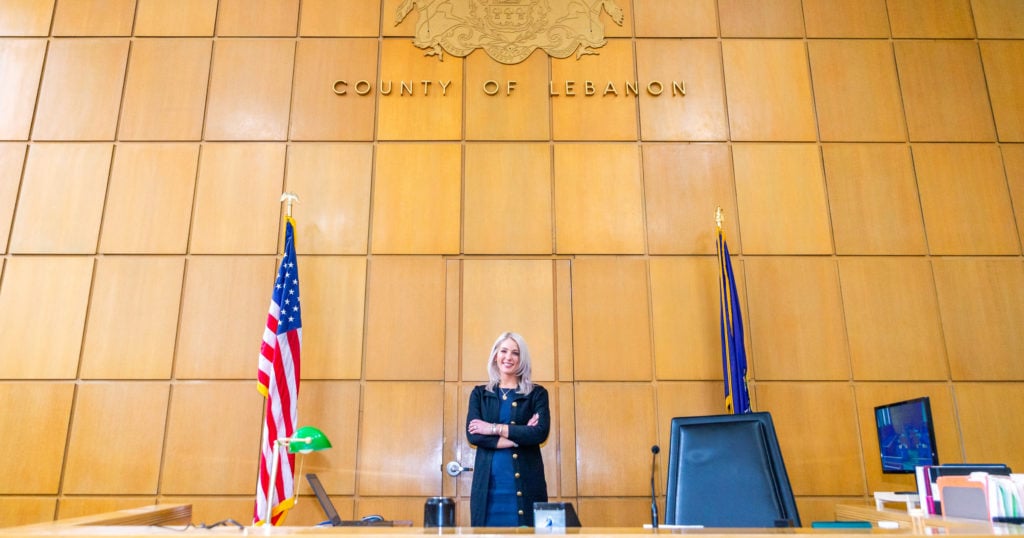
Commissioner Jo Ellen Litz disagreed with how this process has progressed from not knowing about the initial meeting with ICE officials to opening an account without the commissioners’ knowledge – even though she noted that it was believed that there was no wrongdoing in opening an account.
She believes there needs to be more transparency with the agencies concerning their ICE involvement. She added she was really upset upon learning after the April 16 meeting that an account was opened by the DA, and asked Wolgemuth if the account could be frozen. She noted a legal opinion was pending regarding that question.
LebTown asked Kuhn on April 17 and again on May 6 the amount in the account and whether or not any of the funds had been spent by the DA’s office and, if so, on what. On May 6, about the amount of funds received and was told he did not know that figure and whether “any money had been spent yet.”
“They are taxpayer dollars, whether they’re federal dollars or our dollars, they need to be accountable for them, as every department does, and we’re going to ensure that happens,” Kuhn said Wednesday.
Questions about this story? Suggestions for a future LebTown article? Reach our newsroom using this contact form and we’ll do our best to get back to you.

Become a LebTown member.
Cancel anytime.
Monthly Subscription
🌟 Annual Subscription
- Still no paywall!
- Fewer ads
- Exclusive events and emails
- All monthly benefits
- Most popular option
- Make a bigger impact
Already a member? Log in here to hide these messages
Our community deserves strong local news. LebTown delivers in-depth coverage that helps you navigate daily life—from school board decisions to public safety to local business openings. Join our supporters with a monthly or annual membership, or make a one-time contribution. Cancel anytime.