What’s the impact of farmland preservation?
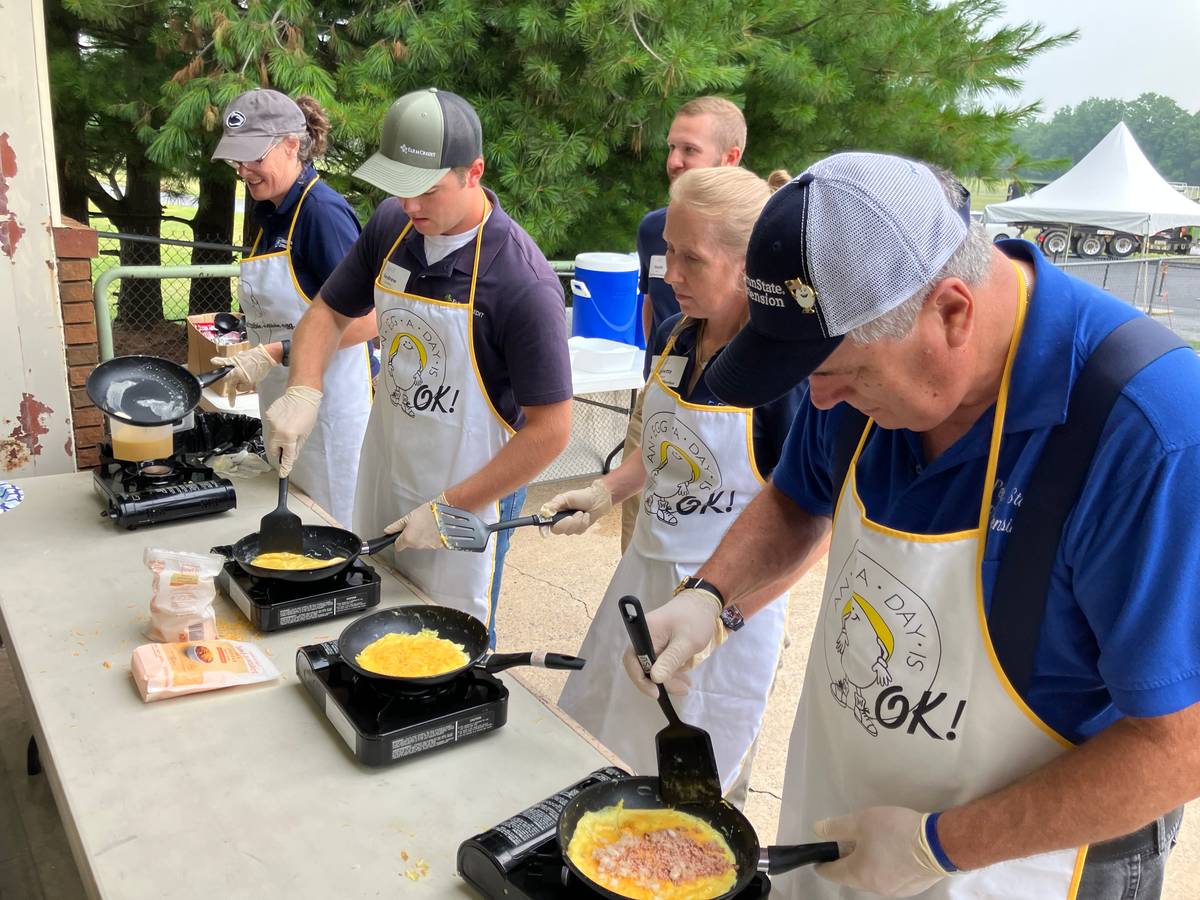
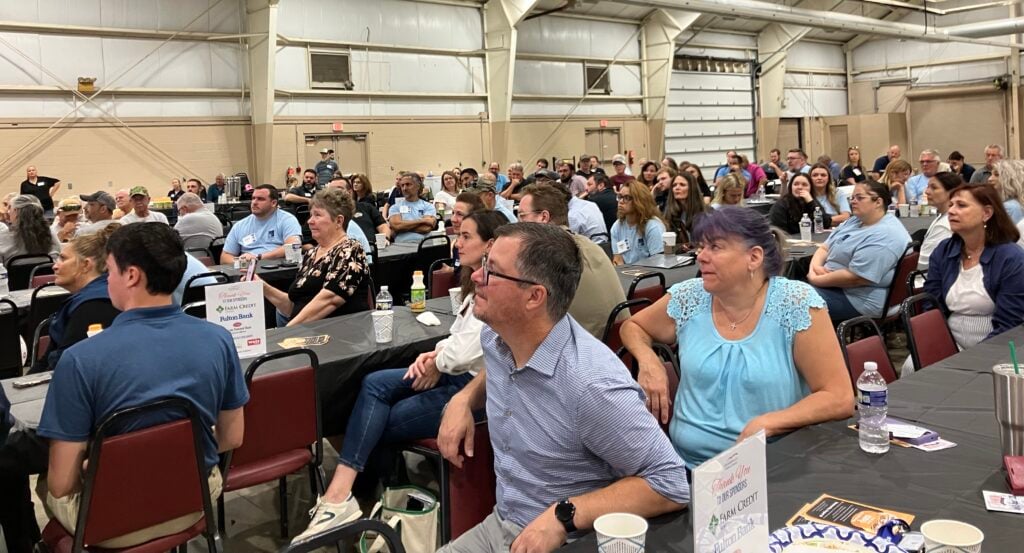
That question was asked – and answered – by the guest speaker at the 14th annual Breakfast at the Fair on Tuesday.
Doug Wolfgang, past director of the Pennsylvania State Conservation Commission, asked the approximately 100 attendees what farmland preservation means to farmers.
“This (farmland preservation) has been a huge investment to be made in Pennsylvania and in Lebanon County, but what is that return on investment?” Wolfgang asked in his presentation during the Lebanon Valley Chamber-sponsored gathering.
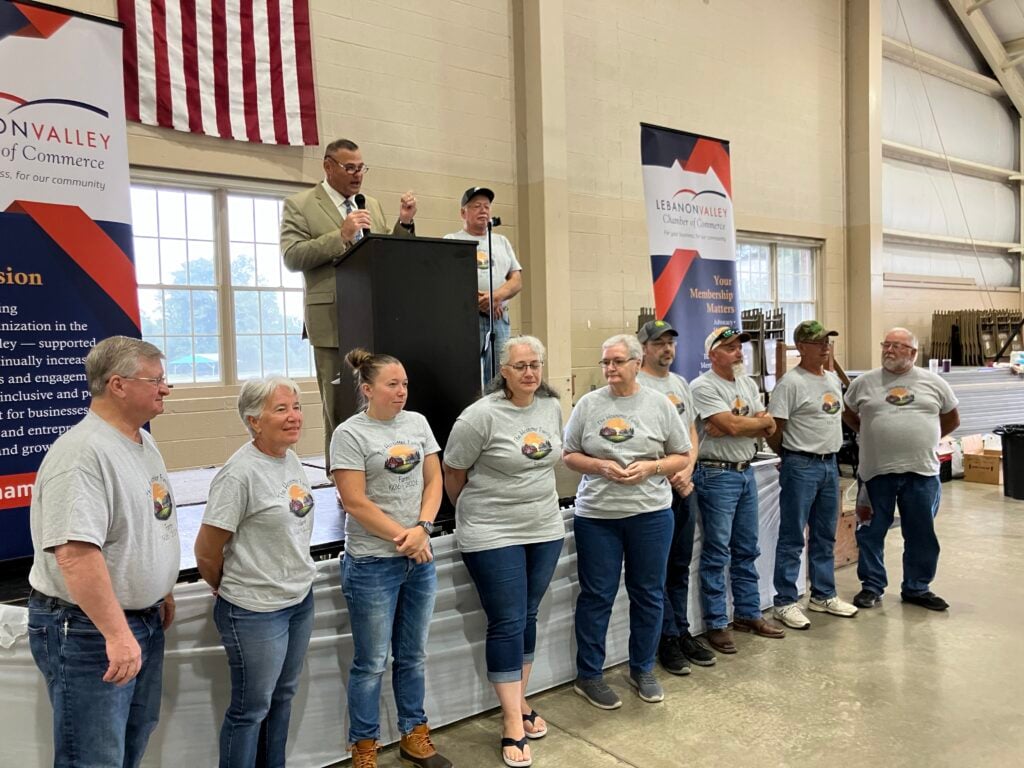
The chamber’s Farm/City Committee also presented a Century Farm award to the Hostetter family of East Hanover Township for their 129-acre corn and soybean operation. The farm, which has been in the family since 1926, was honored at the meeting in North Hall at the Lebanon Valley Expo Center & Fairgrounds during the 70th annual Lebanon Area Fair.
The fair runs now through Saturday, Aug. 1.
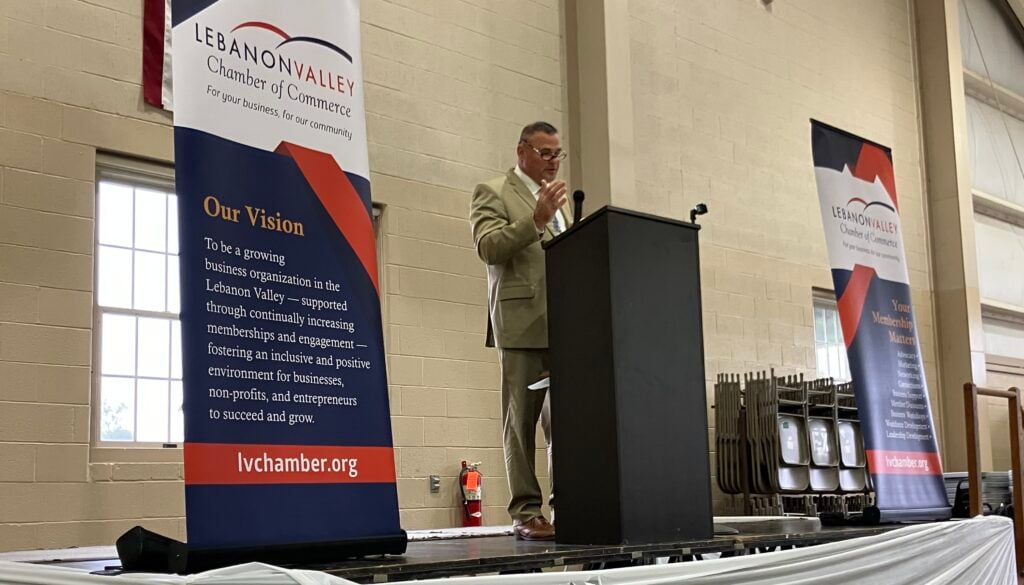
“For Pennsylvania, it’s made it an agricultural powerhouse. Since colonial times, we’ve been a growing nation. But $137.5 billion total economic impact, 20% of our state’s gross domestic product in many commodities, including poultry, eggs, specialty crops, and we’re second in the nation in direct marketing from producer to consumer, first or second in organic production,” Wolfgang said.
The financial impact from the farmland preservation program extends beyond those commodities, he added.
“From hemp to hops, mushrooms to maple syrup, the strength in our agriculture here is in its diversity. But how does the farmland preservation program work? That is the backdrop of why it’s so important to preserve farms for many reasons,” said Wolfgang.
He noted a study currently being conducted to ascertain other preservation benefits.
“Farmland preservation makes sense from an economic perspective, from a food security perspective, and we can’t emphasize this enough. Where we’re standing right here at the Expo Center is within a day’s drive,” Wolfgang said. “A large percentage of our nation’s population, that is only to be relied on the safest, most abundant food supply in the nation for the world.
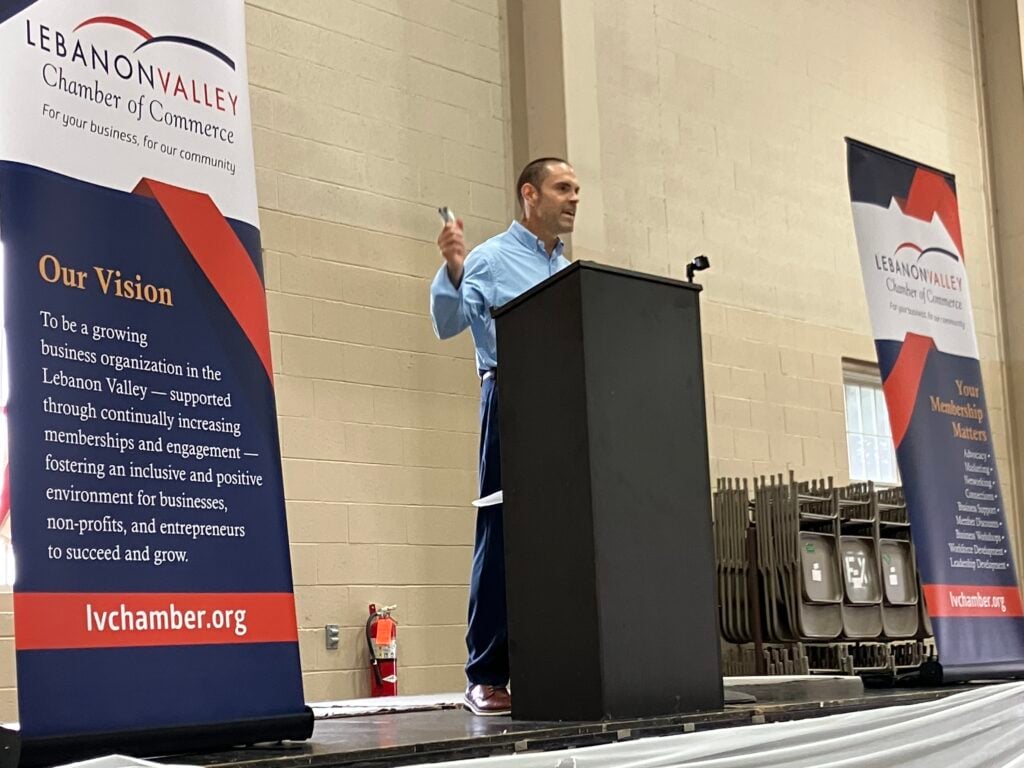
“We have this beautiful fertile non-irrigated soil here in the Lebanon Valley, that Hagerstown and Duffield soils. Of course, you go up further in the shale-y part of the county, still very productive soil that in a year where you’re getting rain, it produces such valuable commodities.”
Wolfgang said that when you compare that rainfall level to California and the western states, it’s easy to see why preservation matters.
“You think of the growing population there, and you think of how that’s going to be sustainable in the future. I think what we have here in Pennsylvania makes it even more critical that we’re protecting it for that reason,” he said.
Prior to Wolfgang’s remarks, Del Voight, extension agent for Penn State Cooperative Extension, provided an economic impact overview for all farms in Lebanon County.
“Lebanon County produces $6.6 billion dollars. … That ranks us sixth in the state, probably one of the smallest counties in our state. Currently there’s 22,000 acres that are preserved in Lebanon. There’s 2,000 more in the pipeline. That’s 180 farms that have been preserved here, which is kind of an interesting fact,” Voight said.
He added that the average age of Lebanon County farmers is between 35 and 64, and they farm an average of 111 acres.
“The majority, 50%, have over $100,000 of gross receipts per farm. Now they might only make $2 for the year, but they sold $100,000 worth of products, which is kind of interesting that way,” Voight said. “So the other thing I’ll mention at this point, too, is chickens. There’s a lot of chickens in Lebanon County. Nine million chickens are processed in Lebanon County a year. Nine million.”
While it was an exaggeration to say farmers only make $2 annually, the message delivered by Wolfgang was that profit margins for farmers are usually thin.
“Farmers continue to face (economic) challenges as we know, especially here in Lebanon and across the state,” he said. “In the dairy industry, high input costs, low commodity prices, labor shortage, volatile markets, erratic weather. Conservation and preservation funding is used to help offset new shortfalls.”
The economics of farming lead them to make other financial decisions that impact their operations, he added.
“Farmers tap into the equity or value of their farm, and these funds are used to trigger the local economies. They reduce debt and pay off mortgages. They reinvest through the farming operations. They expand their operations, or diversify,” Wolfgang said. “Perhaps they build new buildings. They purchase new tractors from a local dealer. They transition the farms … to the next generation.”
Wolfgang highlighted the state’s Farm Vitality Planning Grant program, which is designed to assist farmers in creating a succession plan. The initiative reimburses farmers up to 75% of project costs, with a maximum grant amount of $15,000 towards finding ways to ensure their land remains in agriculture.
“Another point, cost of community service studies with local governments show that farm land contributes a lot more in tax dollars, property taxes … than it demands in services. That helps to offset shortfalls in local tax revenues,” he said. “So it makes sense for the tax interest back to the property tax to have preserved farmland … in taxing jurisdictions.”
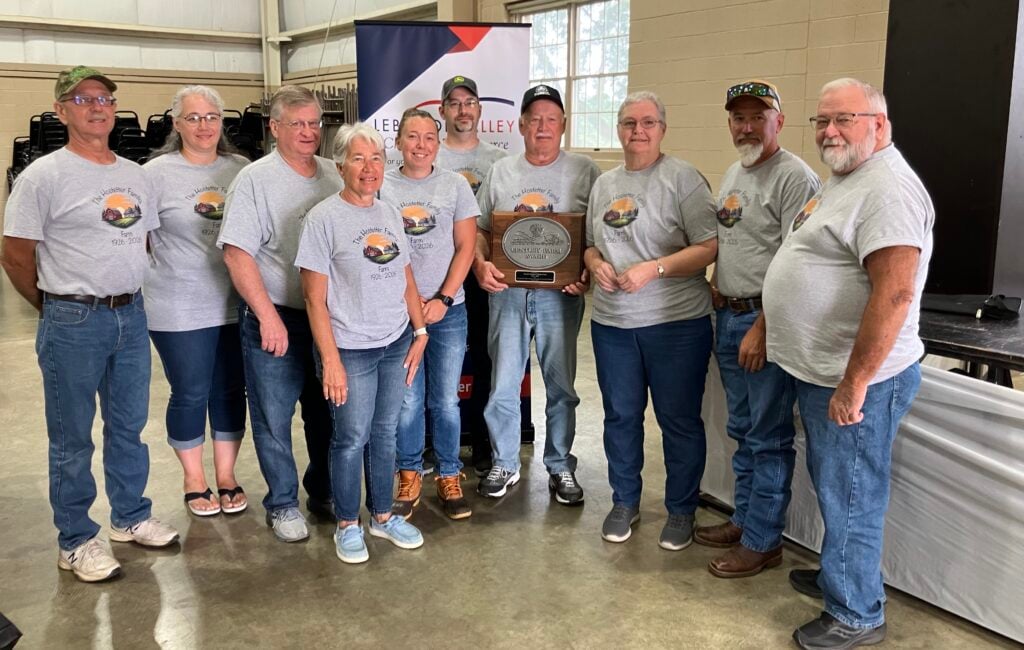
Hostetter Century Farm
David Hostetter, on behalf of brother Daniel and sister Joann, who also attended the breakfast meeting, accepted the Century Farm award for his family.
The 129-acre farm in East Hanover Township, along state Route 934 near Harper’s Tavern, was purchased by their grandfather Leroy Hostetter on April 1, 1926 and later was owned by father Harold Hostetter before being passed to the third generation, which holds the farm in a trust.
“We enjoy the farm. It’s 129 acres. We are remodeling the house right now, which is a big project. The house, according to what they looked up (at the county’s tax assessment office), was built in 1760,” David said of a log house on the property. “So it is taking a lot of work, but we are enjoying the farm.”
Questions about this story? Suggestions for a future LebTown article? Reach our newsroom using this contact form and we’ll do our best to get back to you.

Join our community of local news champions.
Cancel anytime.
Monthly Subscription
🌟 Annual Subscription
- Still no paywall!
- Fewer ads
- Exclusive events and emails
- All monthly benefits
- Most popular option
- Make a bigger impact
Already a member? Log in here to hide these messages
Strong communities need someone keeping an eye on local institutions. LebTown holds leaders accountable, reports on decisions affecting your taxes and schools, and ensures transparency at every level. Support this work with a monthly or annual membership, or make a one-time contribution. Cancel anytime.