A “breath of life” was added to the two-day Mount Gretna (Mt.GIFF) International Film Festival with the inclusion in its third year of an animation division.
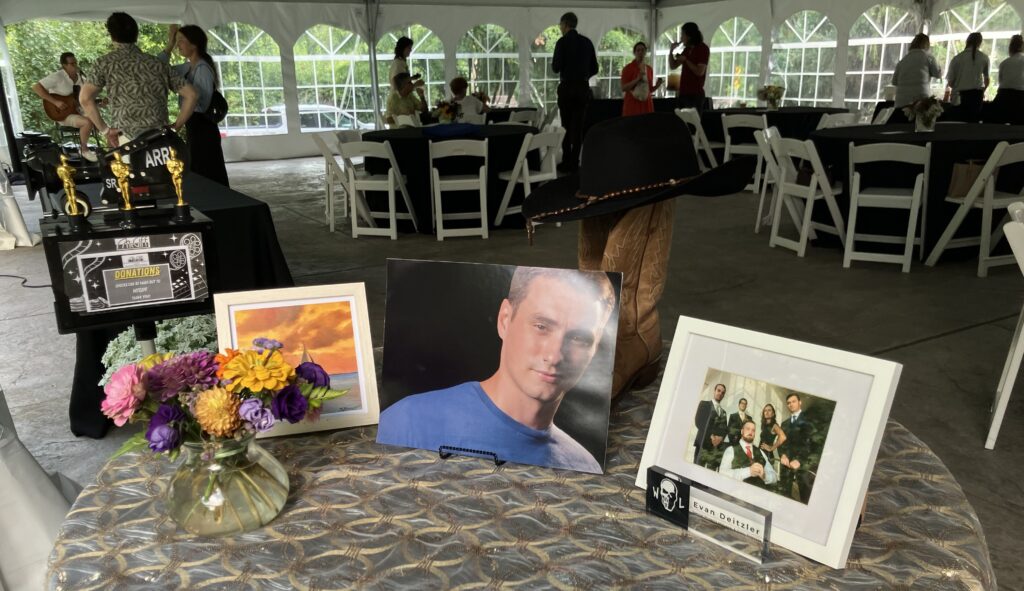
The two-day film festival, held on the same weekend as the 52nd edition of the Mount Gretna Outdoor Art Show, continues Sunday beginning at 10 a.m. The film festival is inspired by Michael Evan Deitzler.
An actor and director who lived in California, Deitzler dreamed of creating an international film festival in his beloved Mount Gretna, where he spent his youth at the family’s cottage. That dream was posthumously fulfilled to honor him and fellow filmmakers whose talents bring their creations to life via the art form.
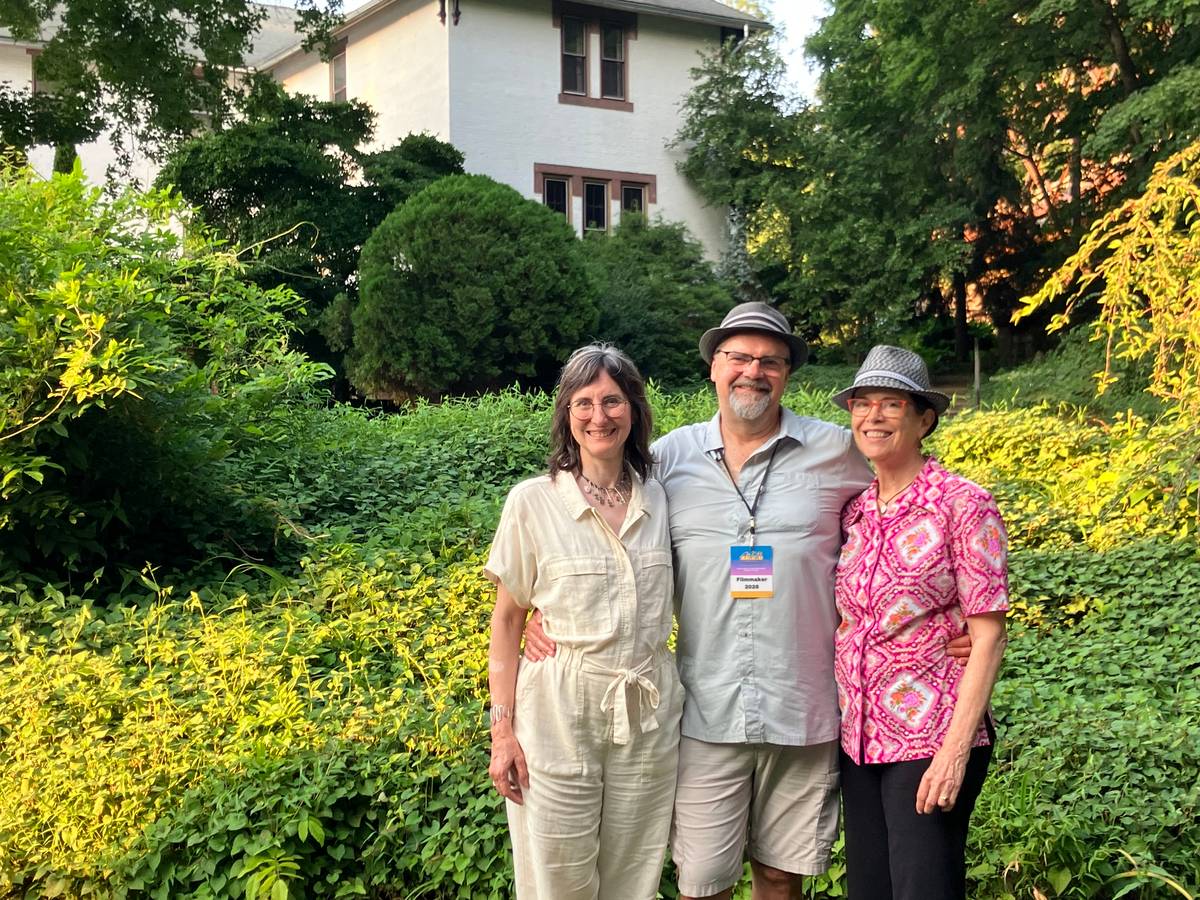
Besides showing six short animated films, three illustrious short film animators – Paul Harrod, Joanna Priestley, and Lynn Tomlinson – attended the festival to educate burgeoning filmmakers and film buffs about the genre.
“Animation is the most interdisciplinary and wonderful medium,” said Tomlinson. “You can make any kind of art move, and it’s that art of movement, that breath of life, that’s what animation means, to breathe life into things.”
Tomlinson said it’s exciting to what diverse kinds of stories can be told – anything from documentaries to completely imaginary stories – through animation.

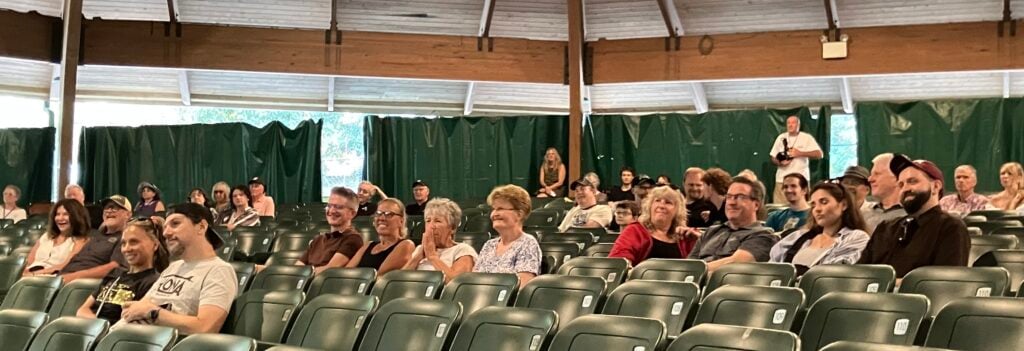
On Saturday, following short films from filmmakers in three categories – including animation– a 90-minute program featuring the films of Tomlinson and Priestley was shown and followed by a presentation from the two filmmakers, both of whom are members of the Academy of Motion Picture Arts and Sciences.
Harrod, a veteran animator whose credits include “Pee Wee’s Playhouse,” Eddie Murphy’s “The PJs,” and the current children’s show “Shape Island” on Apple TV+, gave an educational presentation on Friday at the opening reception at the Cornwall Inn.
Mt.GIFF artistic consultant Richard Herskowitz said it was a natural fit to include an animation category in the third year of the festival, which is held during the two-day Mount Gretna Outdoor Art Show.
“It’s my favorite category of short film,” Herskowitz said. “I also thought being right alongside the art show, having a category that’s really about, you know, a crossover of film and visual art, that animation is a form of visual art on film. It was the most compatible category that they could have with the art show.”
LebTown interviewed the three animators between hour-long showings of the nominated short films in the documentary, high school, and animation categories on Saturday. Sunday’s offerings include drama, horror and Pennsylvania filmmakers, the latter another new category at the 2026 fest.
“It’s incredible to add animation in and then bring in, you know, people from across the country in our field. I mean, it’s amazing,” Priestley said. “They made a big, big commitment to animation this year because it’s really expensive to bring this many people involved in animation in and they’ve been treating us royally.”
LebTown asked all three animators why the art form has been surging in popularity. Countless animated shows can be found across numerous platforms and the Cartoon Network, founded in 1992, is solely dedicated to animated shows.
“Well, I think it’s very simple. It’s the mind’s eye. It is opposed to trying to find your vision in what exists out there, you’re able to take what’s in your head and put it right there,” Harrod said. “And for a good artist, you know, they can realize that vision in a way that live action really can’t. And it’s, in a way, for the artist, it’s such an intimate kind of communication with the audience.”
LebTown asked the artists what they believe are some of the biggest changes to animation they’ve witnessed in their lifetimes. All three credited the advent of computers as a tool in their art making as being a sea change in the genre.
“When computer animation was kind of in its infancy, that was a big leap, But within stop motion animation, so much has changed because we went from just a very small group of people that knew how to make puppets to an almost industrial level of production,” Harrod said. “One of the things that really affected that was the advent of 3D lithography, 3D printing, rapid prototype, that sort of thing, which sort of brought computer animation into the realm of stop motion, where faces could be actually 3D printed on characters.”
Harrod added that this revolutionary development has led to improvements elsewhere within the world of stop motion animation.
“So the animation of a character’s expression could be, for every single frame, they would make a separate face, usually every two frames to be honest, but a separate face or a separate mouth that would be created in the computer then printed in 3D,” Harrod added. “This freed the animator up to really focus on the body language. So the body language within stop motion has really become more and more elaborate, more lifelike maybe, but it was a pretty dramatic development.”.
An artist who uses clay on glass to make what can be considered a moving painting, Tomlinson also finger paints with plasticine to make a moving two-dimensional painting. Using the digital software program Dragon Frame was a game changer for her craft.
“Just to be able to use digital processes to do something, something so tactile and handmade, like, you know, that digital animation, digital is just a tool that I’m using to make very handcrafted work,” Tomlinson said. “And so it’s allowed me to do something like bring in video reference and to look at that and do a kind of what’s called rotoscoping, which would trace over live action. I can kind of rotoscope with my very painterly process. So that technology has really, you know, enabled me to do something I couldn’t have done before.”
While Artificial Intelligence was mentioned as a recent change in the industry, Priestley sees hand-crafted animation remaining a player due to AI’s propensity for having a sameness to graphics it creates.
“The more AI there is, the more people are going to want handmade, handcrafted art that are made by people with passion,” Priestley said to LebTown, and she echoed the same sentiment later during the Titans in Animation presentation to festival attendees. “And that’s our field, it’s all over the place. Because only the people that are really passionate about it do it since it’s a challenge to do.”
LebTown also asked what is the most difficult form of animation – with Priestley saying that’s one question she believed all three are in consensus.
“I think we would all agree it’s pin screen (animation). Pin screens are the hardest. That’s taking a big board or a piece of fabric and sticking thousands of straight pins in there and then moving the lights on the side, moving the pins in and out to make the shadows to create figures,” Priestley said. “It’s gotta be the most difficult thing. It’s very complicated. Very few people make pins with it.”
Concerning the future of animation, all three had diverse answers to that question. Harrod said AI is leading to new ways of producing animation.
“I think one of the things we’re seeing is that people are reacting to AI and this sort of sanding over of reality by making things that are more raw and so in the last decade or so we’ve seen introduction of some really interesting uses of materials like yarn and felt and wire and wood,” Harrod said. “And people really using what you might call ignoble or crude materials to create images just so that it retains that kind of tactile quality.”
Tomlinson has seen other media forms becoming more prevalent and is already working in one of them, she added.
“One thing that I’ve been working on is Full Dome, which is in Planetarium Spheres, and is a kind of shared immersive space instead of having to have goggles on or a headset,” she said. “Digital projection in domes has become more accessible and my students and I have collaborated on things and I’ve made some films of my own that are in this really fun immersive space. Basically, planetary projection and animation in planetary space.”
“I’m hoping that there will be more international collaboration,” Priestley said. “Because right now it’s rare, very rare. But I would love to see that. … I love it when people collaborate all over the world. And maybe there will be more of it.”
Speaking of international films, all three said they appreciated the fact that several of the films in the animation short film category were from outside the United States, giving the fest a taste of film making from around the world.
Questions about this story? Suggestions for a future LebTown article? Reach our newsroom using this contact form and we’ll do our best to get back to you.

Support local journalism.
Cancel anytime.
Monthly Subscription
🌟 Annual Subscription
- Still no paywall!
- Fewer ads
- Exclusive events and emails
- All monthly benefits
- Most popular option
- Make a bigger impact
Already a member? Log in here to hide these messages
Strong communities need someone keeping an eye on local institutions. LebTown holds leaders accountable, reports on decisions affecting your taxes and schools, and ensures transparency at every level. Support this work with a monthly or annual membership, or make a one-time contribution. Cancel anytime.