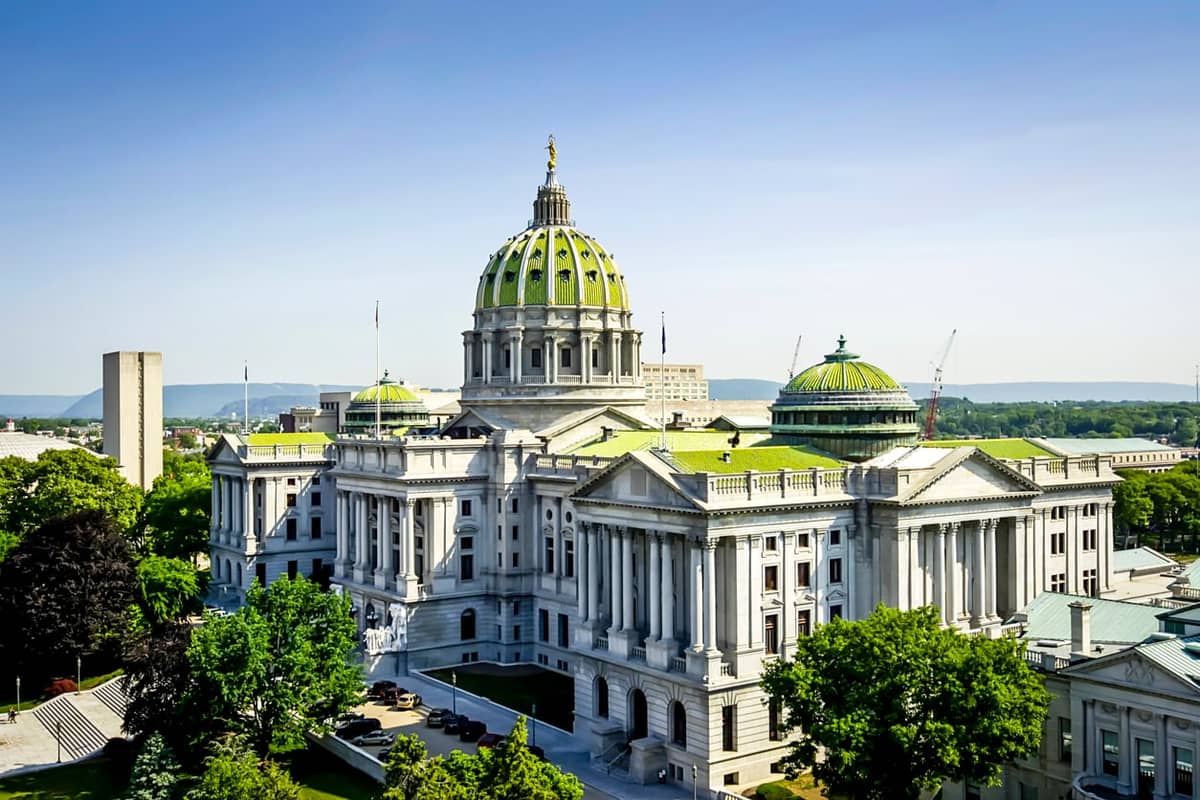
The battle to initiate redistricting reform in Pennsylvania will continue in the next legislative session.
That’s the assessment of Carol Kuniholm, chair of Fair Districts PA, an organization that wants the mapping of legislative districts to be conducted by an 11-member independent commission instead of five members from state legislative leadership.
While House Bill 31 and Senate Bill 131 both died in committee when the recent legislative session ended in Harrisburg, Kuniholm said her organization is in for the long haul and will continue to work to change how legislative districts are mapped.
Meanwhile, other states – including Maryland, Virginia, and California – recently decided to redraw their lines or, in the case of Texas, use an old map.
“Since they recessed for the summer, HB 31 and SB 131 are officially dead,” Kuniholm said, adding the plan is to introduce new bills in the next legislative session.
The bipartisan bills called for a joint resolution proposing an amendment to the state Constitution to replace the existing Legislative Reapportionment Commission with an Independent Redistricting Commission (IRC).

The commission would consist of four Democrats and four Republicans, plus three unaffiliated voters, tasked with drawing both state legislative and congressional districts, according to Kuniholm.
LebTown sent Congressman Dan Meuser (R-9), Sen. Chris Gebhard (R-48), and reps. representatives John Schlegel (R-101) and Russ Diamond (R-102) questions via email asking for their thoughts on this issue. (A spokesperson for Meuser requested that emailed questions be asked of the congressman directly but two scheduled telephone appointments did not occur and the spokesperson later said Meuser would not be able to contribute to the piece.)
“I don’t support it. Number one, nobody’s independent. I don’t care who you are. Nobody’s independent. Everybody has a political leaning,” Diamond said in an interview. “The other reason I don’t support it is, who do you hold accountable when you get a bad map?”
Kunihom disagreed, calling the idea that it’s impossible to create an independent, non-partisan redistricting commission “nonsense.”
“Of course people are going to want what’s best for their party. But if you set up an independent commission properly … then you limit the partisan bias. You limit the personal investment,” she said. “You get people who are not lobbyists, not politicians, not party leaders, and you put really good criteria in place and good rules in place for transparency and how the process works, and you end up with much better districts that serve communities better. And there aren’t many really independent commissions. There are a few genuinely independent commissions, and those have served very well. They have yielded districts that are much less gerrymandered.”

Diamond said another reason he opposes an IRC is that an independent map proposed in 2018 would have split Lebanon County into two districts.
“Who do you hold accountable if that’s the map that’s finally approved?” he asked. “And we were lucky that both Frank Ryan and myself were on the state government committee, which oversaw what maps got through. And we said, ‘Absolutely not. We will not tolerate Lebanon County being split in two.’ We were split in two at one time and it was horrible. We didn’t get any representation in Congress.”
Gebhard said he favors the concept of an IRC but added one caveat.

“In general, I’m open to any proposal aimed at improving life here in the Commonwealth, including the redistricting process. However, I believe any changes to the current system must genuinely enhance it, and in my five years in Harrisburg, I haven’t yet seen a proposal that accomplishes that on this issue,” Gebhard wrote. “I know there are groups that have put in a great deal of effort, but I’ve also seen many unintended consequences emerge from various bills, and I see a lot of that in the current slate of proposals on redistricting.”
Schlegel said a balance exists between political parties in Pennsylvania.
“The current system in Pennsylvania is about as closely divided as one could expect. Currently, the governor is a Democrat, Republicans hold a four-seat majority in the State Senate, and Democrats have held a one-seat majority in the House of Representatives,” he wrote. “That balance reflects a competitive political environment, and ultimately the choices made by PA voters.”
He questions the creation of a commission to govern the process.
“With the current process being made up of elected officials from both sides of the aisle with participation by the PA Supreme Court, how can any other system be guaranteed to be as or more bipartisan? Further, if the people of PA were dissatisfied with the commission’s decisions or the process itself, what mechanisms would exist to address those concerns?” he asked.
Kuniholm pointed to comments by the American Bar Association that said gerrymandering is the second largest threat to American democracy. She noted Pennsylvania, as a major swing state in elections, has “dealt too often with gerrymandering,” which is the political manipulation of voting district boundaries to give one party an unfair advantage. Both parties have done it when they’ve held power in Harrisburg, she added.
“At that time, Pennsylvania had some of the worst gerrymandering in the country at our legislative and congressional levels. And so some good government organizations, League of Women Voters, Common Cause PA, Committee of 70, opposed it,” she said. “I was vice president for government and social policy for the League of Women Voters at the time, and we just said we can’t fix gerrymandering unless we have an independent redistricting commission.”
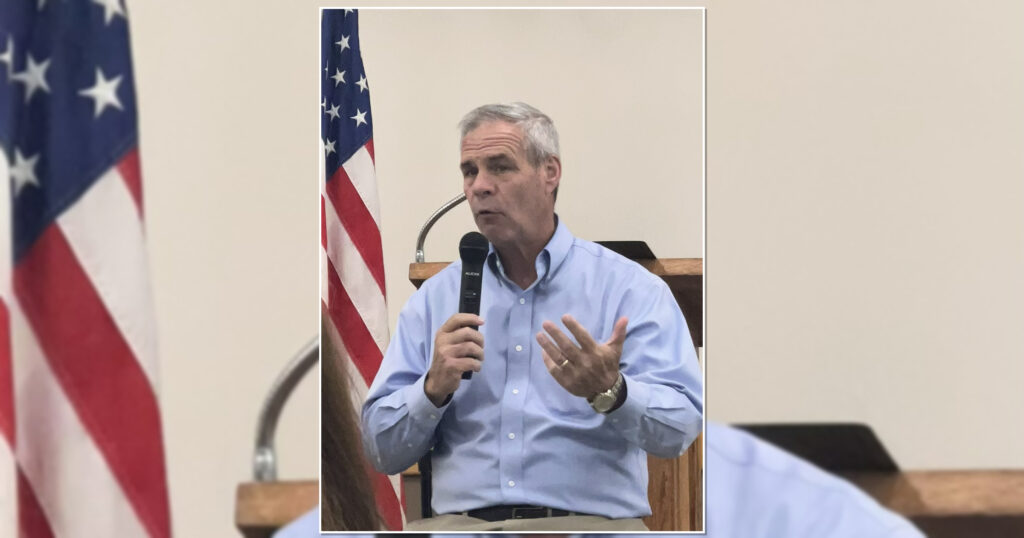
Gebhard and Schlegel echoed similar sentiments when asked if they agreed with the ABA’s assertion that democracy is in jeopardy due to gerrymandering. Both noted the closeness of political representation within the state Legislature.
“In my role as State Senator, I’ll limit my remarks to Pennsylvania, as each state faces its own unique challenges – and there are certainly examples of gerrymandering across the country. Here in Pennsylvania, however, I don’t believe the current system is as bad as some suggest,” Gebhard wrote. “Looking at the basic facts, voter registration between Democrats and Republicans is getting pretty close which means statewide elections are often decided by Independent and unaffiliated voters.”
Gebhard added that the state House is “as closely split as possible, 102-101,” noting “there’s a narrow Republican majority in the Senate, and a Democrat serves as Governor. … Statewide row offices are held by Republicans, while our elected Supreme Court has a Democratic majority. That’s about as close to a divided government as you can get, which suggests the current system is functioning reasonably well.”
Kuniholm said her organization believes an independent commission, consisting of 11 people, is better than the five who currently draw legislative boundaries. Legislative district lines are redrawn every 10 years following the census.
State law currently calls for the Legislative Reappointment Commission to consist of four caucus floor leaders, or deputies appointed by each of them, and a chairman to be selected by those members. Or, if they cannot reach agreement, the chairman is selected by the Pennsylvania Supreme Court.

“No system is perfect. Unless people are picked at random, no commission is truly made up of dispassionate, unbiased people,” Schlegel wrote. “A commission does not guarantee better or impartial outcomes. A commission can still face political disagreements, ideological divisions, and influences from the outside. Currently, those elected officials who participated in the redistricting process are accountable to the voters.”
“Each of these individuals holds their position because they were duly elected by the people of Pennsylvania,” Gebhard wrote. “Many of the proposals I’ve seen, however, transfer the power of selection to an outside body.”
He provided an example of a recent proposal that would have the Pennsylvania State Ethics Commission determine eligibility, narrow the pool of candidates, and then use a lottery to choose the final board.
“While this may sound appealing in theory, I’m concerned about introducing political pressure into the Ethics Commission – an entity where such pressures certainly do not belong. I also hesitate to give additional authority to a bureaucratic agency, particularly when it removes responsibilities from elected officials who are ultimately accountable to the public,” Gebhard said.
Kuniholm said another factor overlooked by the Legislature is the will of a majority of the electorate. She cited a recent study by Franklin & Marshall College that said nearly 70% of Pennsylvanians support creation of an IRC.
“I understand that there are people in PA who find the idea appealing. However, the success of the commission would depend on how it is structured. Before making a significant change, it is important to ensure that the new system is truly fair, transparent, and accountable to the people of PA,” Schlegel wrote. “Moves by other states have shown that these commissions will get tossed aside when partisan political interests make them inconvenient. Ours has withstood the test of time.”

The final point Fair Districts PA makes in favor of an IRC backed is removing the decision from the hands of a few – five legislators who Kuniholm says are beholden to their respective parties – to 11 individuals to lessen the possibility of party bias coming into the process.
Both Schlegel and Gebhard disputed that assessment.
“I disagree with that characterization. Every member of the General Assembly is elected and accountable to the voters in their districts,” Schlegel wrote.
“‘The People’ hold the power in Pennsylvania. I have seen Governors not re-elected, Chamber leadership not re-elected and many rank-and-file members not re-elected,” said Gebhard.
Any act to change the current redistricting system would require action by the state Legislature, which would need to approve a constitutional amendment proposal in consecutive legislative sessions to trigger a ballot referendum, giving voters the final say on whether to alter the state Constitution.
Questions about this story? Suggestions for a future LebTown article? Reach our newsroom using this contact form and we’ll do our best to get back to you.

Support Lebanon County journalism.
Cancel anytime.
Monthly Subscription
🌟 Annual Subscription
- Still no paywall!
- Fewer ads
- Exclusive events and emails
- All monthly benefits
- Most popular option
- Make a bigger impact
Already a member? Log in here to hide these messages
Quality local news takes time and resources. While LebTown is free to read, we rely on reader support to sustain our in-depth coverage of Lebanon County. Become a monthly or annual member to help us expand our reporting, or support our work with a one-time contribution. Cancel anytime.