This article was funded by LebTown donors as part of our Civic Impact Reporting Project.
Questions concerning 287(g) agreements signed in February with Immigration and Customs Enforcement (ICE) by two Lebanon County agencies were again the focus of public comment during the April 16 county commissioners meeting.
Several community members asked questions regarding transparency, accountability, and why a requested resolution opposing the agreements died due to a lack of a second.
Following those questions, LebTown enquired about financial arrangements for the potential acceptance of federal funds for the participation of the county’s district attorney and sheriff offices with immigration enforcement efforts.
Regarding program funding, ICE promotional materials indicate that participating agencies may receive federal reimbursements, including $100,000 for vehicles, $7,500 per trained officer for equipment, and partial salary coverage for local law enforcement agencies that cooperate.
To receive those funds, local law enforcement agencies are required by law to open separate bank accounts for the funds to be deposited.
At a previous commissioners meeting on April 2, the request by Lebanon County Sheriff Jeffrie C. Marley Jr. to open a separate bank account for his department was approved unanimously after that agency signed the agreement document in February.

However, District Attorney Pier Hess Graf, who signed a separate agreement for her department to assist ICE in February, has not appeared on the agenda to request the treasurer’s office to open a separate account for her department.
Cornwall resident Dr. Tom Overholt asked commissioners Thursday to create accountability guidelines for reporting actions associated with local law enforcement agencies involved with federal immigration enforcement.
“How is the county and the commissioners going to be accounting for this? How much money is coming in? How do you know that? Where’s it going? How’s it being spent? And then what metric are you using to establish the effectiveness of this 287 money?” asked Overholt.
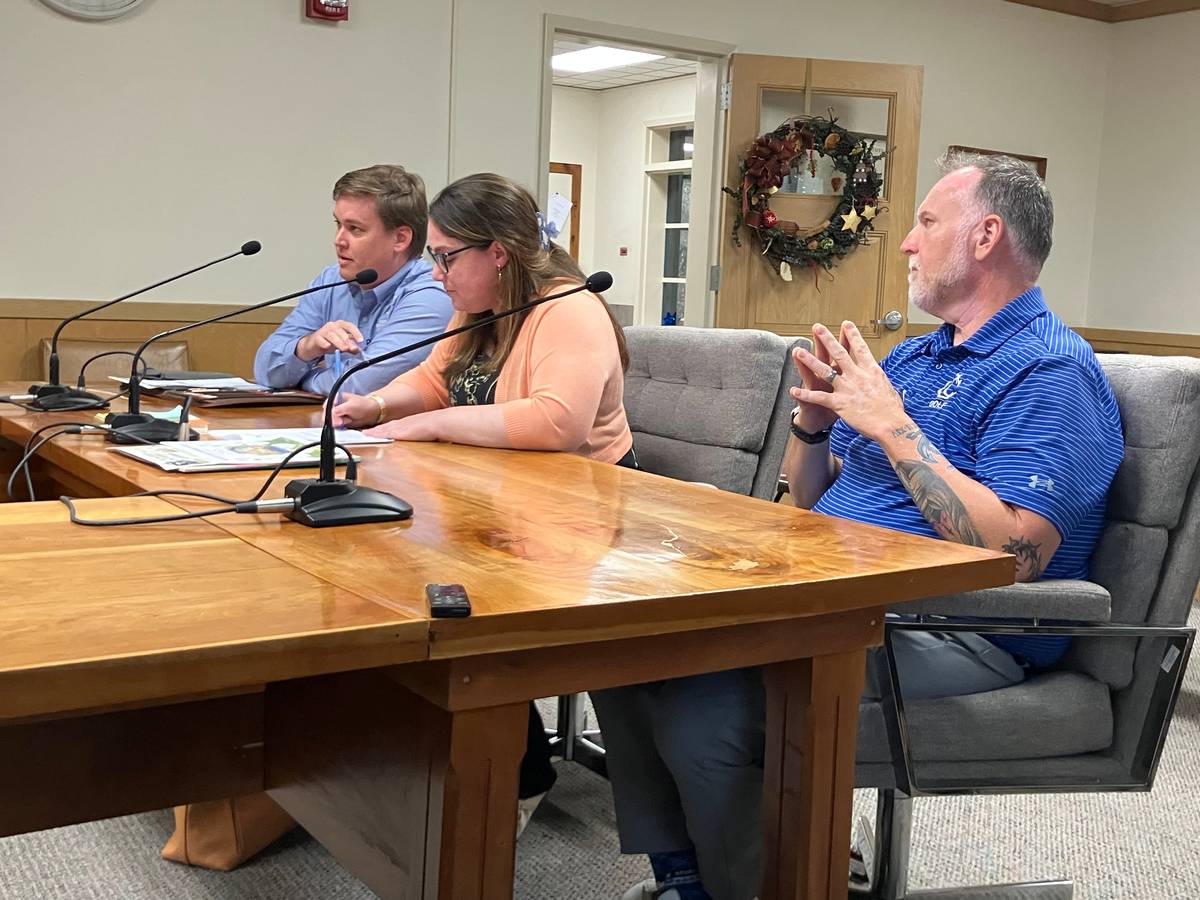
Commissioner Jo Ellen Litz asked Marley if field reports must be filed with ICE. He said yes, adding those reports go to the agency’s office in York County.
Overholt wondered what specific metrics the county is using to establish the effectiveness of the money coming to Lebanon County for their assistance of those two agencies.
“I can answer that at this point, it’s too early to tell, but public safety, the two experts, the two elected officials are in charge of that, whatever their conclusions are that we need for public safety, we would get involved more directly if they would need additional money beyond their budget for what their positions are,” said commissioner Bob Phillips. “And then that’s how we would have to then decide, do we want to fund any further and make those decisions. But as far as metrics and so on, we’re at the front end of this thing.”
Overholt said he’s concerned if his neighbors and others in Lebanon County are detained and suggested that commissioners implement reporting mechanisms to track what happens to those individuals.
“You can then report that you have effective public safety measures that are going on here so that you can account for the money coming in and how effectively it is being used,” he added.
LebTown asked about the timing for Hess Graf opening a bank account since it has been over two months since the initial 287(g) agreements appeared on ICE’s website for the two county agencies.
“We haven’t been approached by the DA about such a concept, so when that time comes, I don’t have an opinion, but right now, I have to look to our solicitor and (county administrator) Jamie (Wolgemuth) and others. That’s my opinion,” said commission chairman Mike Kuhn.
“I think we should follow the excellent example that the sheriff set. I think that’s the right thing to do, so we’re not supposed to operate behind closed doors. We’re supposed to have transparency. So I think he set up a wonderful example that the DA could follow,” said Litz.
“I guess my opinion is if it’s needed, she will do the proper thing. If we’re early, and she has not had any money to isolate and put in a special account, then that’s – when that time comes – I’m sure she’ll do the right thing,” Phillips said, who further expounded later when the topic of financial transparency was revisited at the end of the meeting.
“I don’t like to worry ahead of time. If the money is to come into the treasurer’s office and there’s no account there, then we will have to react to that. But I don’t wanna anticipate or get ahead of the district attorney, whether or not she’s been notified when the funds are coming if she hasn’t gotten the fund set up. So I’d rather wait to let it play out. And if there are safeguards in place for us to receive that money,” he added.
During the financial accountability discussion, Kuhn asked acting county treasurer Tina Tobias about the requirements for receiving federal funds through ICE.
“This was a contingency about receiving possible funding that it has to have a defined separate account set up as a federal requirement, correct?” asked Kuhn.
Tobias agreed, adding that the “state does the same thing. They like to see the interest bearing because they can choose to ask for that money back.”
Tobias said she has not been approached by Graf about establishing an account through the county treasurer’s office.
Kuhn told LebTown after the meeting that he plans to ask Graf what her intentions are for establishing an account since any federal funds received will be sent electronically by the federal government and are to be deposited separately from other accounts.
287(g) resolution request revisited
South Annville resident Michael Schroeder requested an explanation for the tabling of a requested resolution by Kuhn and Phillips at two prior public meetings.
Schroeder and a roomful of protestors attended two commissioner meetings to request passage of a resolution strongly opposing county agencies from signing 287(g) agreements.
On Thursday, he asked Kuhn and Phillips if they believed there is a “moral hazard” for the agencies and offices that adopt 287(g) agreements.
“From my side of it, and I think I did explain this at the last meeting, was that I respect the offices of the duly elected officials that are closest to this issue. And though we will watch and see if there’s something that I don’t understand or like, then I would go to the sheriff or the DA, but at this point I’m not going to second guess these public officials on what they’re closest to and is within their expertise,” said Phillips. “So that’s my reasoning. It may change if something changes and I would then go to them or revisit something.”
Kuhn noted he spent “significant” time talking to Schroeder and other members of the group that were here during the last public meeting on April 2.
“As the meeting ended, I shared similar thoughts about why I’m not interested in that at this time,” Kuhn said.
Other local law enforcement agencies that signed the agreements are Cornwall Borough, South Lebanon Township, and Lebanon County Regional police departments. City officials considered it but took no action.
Questions about this story? Suggestions for a future LebTown article? Reach our newsroom using this contact form and we’ll do our best to get back to you.

Become a LebTown member.
Cancel anytime.
Monthly Subscription
🌟 Annual Subscription
- Still no paywall!
- Fewer ads
- Exclusive events and emails
- All monthly benefits
- Most popular option
- Make a bigger impact
Already a member? Log in here to hide these messages
Free local news isn’t cheap. If you value the coverage LebTown provides, help us make it sustainable. You can unlock more reporting for the community by joining as a monthly or annual member, or supporting our work with a one-time contribution. Cancel anytime.