Ed Heagy is known as a farmer who not only works the land, but cares for it, too.
That is part of the reason he was named Lebanon County Conservation District’s Conservation Farmer of the Year for 2025, according to LCCD district manager Hannah Hartman.
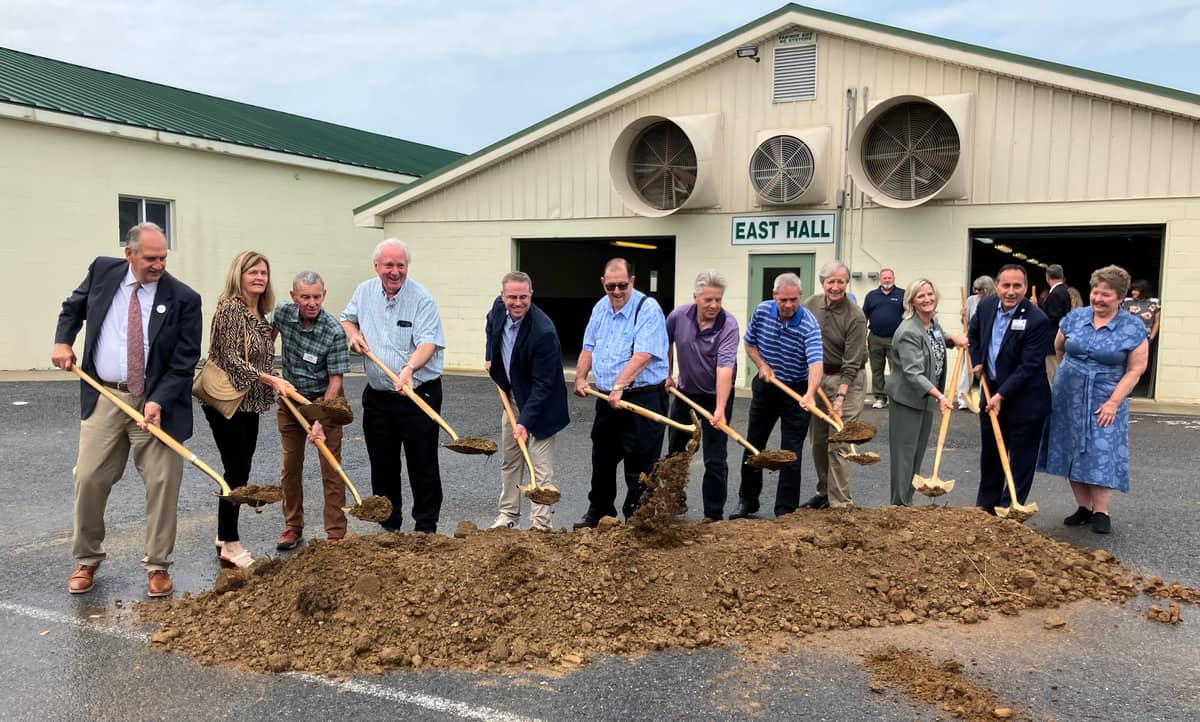
He was one of four farmers recognized Feb. 10 at the inaugural Lebanon County Conservation & Preservation banquet held by the LCCD at the Lebanon Valley Exposition & Fairgrounds in North Cornwall Township.
“The Conservation Farmer of the Year award recognizes a Lebanon County farmer who doesn’t just farm the land, but cares for it. This award honors a producer who has demonstrated exceptional commitment to conservation by improving soil health, protecting water quality, and setting an example of responsible stewardship within the agricultural community,” Hartman said.
Heagy’s testament to that care is evidenced in the nutrient management plan he wrote for his 230-head dairy cow operation, Silo View Farm LLC, in the 700 block of Ono Road in East Hanover Township. The farm is part of what is an ownership operation with his wife Geri, sons Dale and Darrell, and grandchildren Tyler and Hannah.

“One of the things that they require us to do is to have a nutrient management plan,” Heagy said. “They ran courses that you could get certified to do your own plan, and so I got certified. It’s an extensive plan.”
When he says it’s extensive, he means it’s extensive.
“It’s like 50-some pages,” added Heagy. “What’s required for this plan is you need to soil test every field at least every three years. And you got to take manure samples every year because that determines how much manure you can put on an acre. That takes pretty many hours to do that, and my wife helps with that. So that’s one of the things we do with conservation.”
Compiling the nutrient management plan is a team effort.
“It’s on the computer so I give my wife the information because she’s a computer person. She spent 10, 15 (hours),” Heagy said, adding that he estimates it might cost between $1,500 and $2,000 to have someone else write one for him. “But then I might spend four or five hours just getting soil samples and then I’ll get those samples tested.”
A practice that provides minimal disturbance to the land is injecting manure into the soil, which also reduces runoff into local waterways, including one traversing the property.

Hartman said said Heagy is “deeply committed to protecting local waterways and improving soil health.”
“Last year we hired a guy to haul our manure and we had him put it in (the ground),” Heagy said. “My grandson went out and bought his own tanker. We just don’t have the apparatus to inject the manure. That’s like $50,000.”
Proper application of manure through utilization of the manure management plan benefits the environment and the farm’s bottom line since less fertilizer is needed when there’s a proper balance.
“The other thing you’ve gotta watch out for is pollution. … If the phosphorus is way high, then runoff is a problem. But if you have it down, what they want you to do is, they want you to have balance. If you take so much out, put so much on. So if you have it balanced, you’re not polluting,” Heagy said.
When the farm received financial assistance a few years ago to install a manure storage facility, it came with at least one condition.
“There was a company that came and down in the bottom there’s land you can’t farm and they planted a lot of trees,” said Heagy, who later confirmed with Dale that it was 1,300 saplings.
The manure pit location involves some interesting design. Instead of having the facility away from the barn in the ground or sitting above ground, the pit sits beneath a newer barn that holds the cattle. The manure goes into the pit with no humans needed to move it from point A to point B.
“The biggest thing for us is I didn’t need to take extra space outside so I could save that two acres that I can use instead to grow crops,” said Dale. “It is under the building (barn), which is space that is already taken anyway.”
The farm, which includes 300 acres, some of which are rented, enhances its conservation game by being a no-till operation.

No-till farming is a technique where crops are grown without disturbing the soil through plowing or turning. Instead of clearing and aerating the earth between plantings, seeds are planted directly into the residue of previous crops. This preserves soil structure, locks in moisture, and prevents erosion.
“We went over to no-till, pretty much 10 years ago now,” added Heagy.
Besides being a conservation-minded farmer who has imparted his wisdom to his family members, he’s also a teacher to LCCD employees, Hartman said.
“When conservation district staff visit his farm, he is always eager to share the newest conservation practice he has installed, demonstrating his ongoing commitment to learning, improving, and stewardship of the land. By successfully managing multiple preserved farms and openly sharing his knowledge and experience, he shows that productive agriculture and environmental responsibility go hand-in-hand,” he said.
Questions about this story? Suggestions for a future LebTown article? Reach our newsroom using this contact form and we’ll do our best to get back to you.

Join our community of local news champions.
Cancel anytime.
Monthly Subscription
🌟 Annual Subscription
- Still no paywall!
- Fewer ads
- Exclusive events and emails
- All monthly benefits
- Most popular option
- Make a bigger impact
Already a member? Log in here to hide these messages
Free local news isn’t cheap. If you value the coverage LebTown provides, help us make it sustainable. You can unlock more reporting for the community by joining as a monthly or annual member, or supporting our work with a one-time contribution. Cancel anytime.