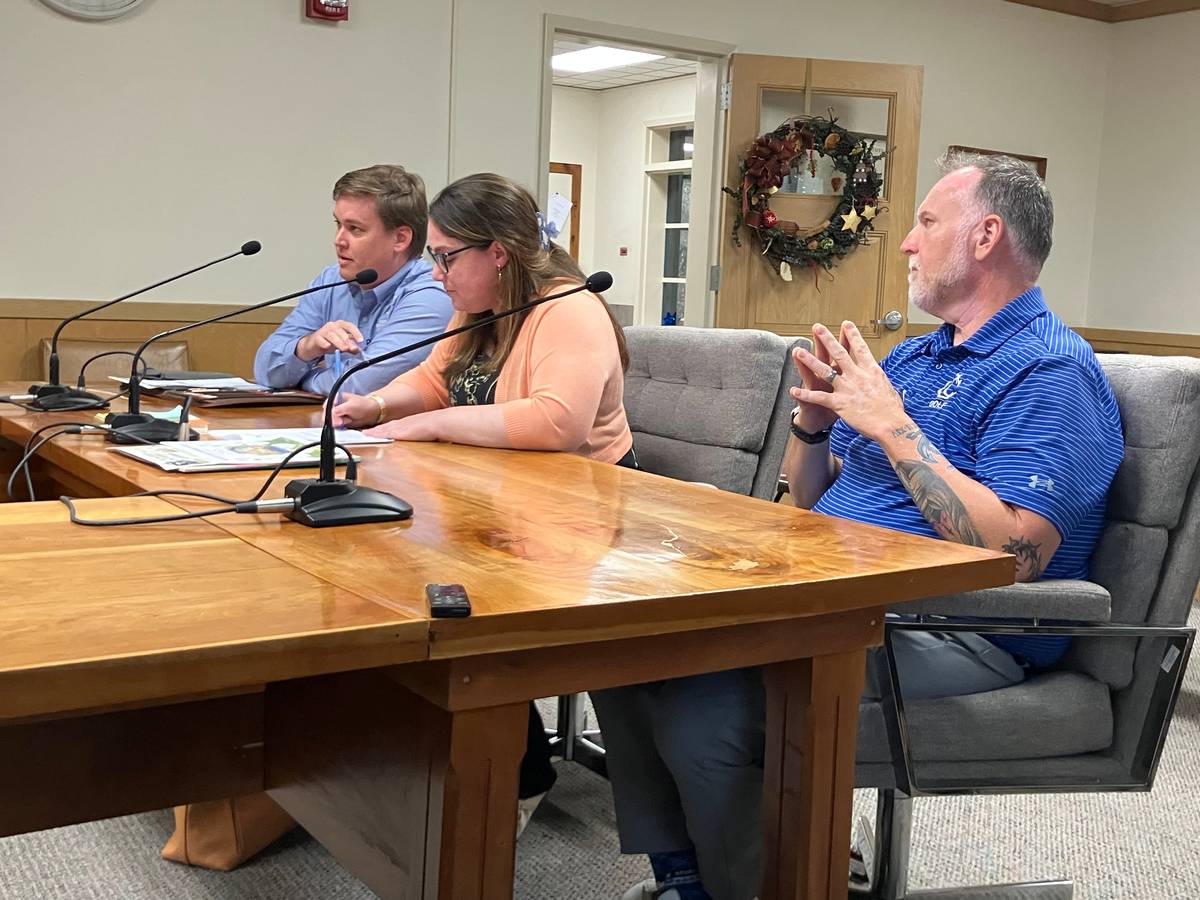
The latest town hall meeting held by state Rep. John Schlegel (R-101st) on Thursday, May 29, covered a variety of issues, including data centers, property taxes, affordable housing, and senior health.
Schlegel, who is near the end of his second legislative term in the Pennsylvania House, said this was the eighth town hall session, adding there’s also been three “tele-town” hall meetings held electronically.
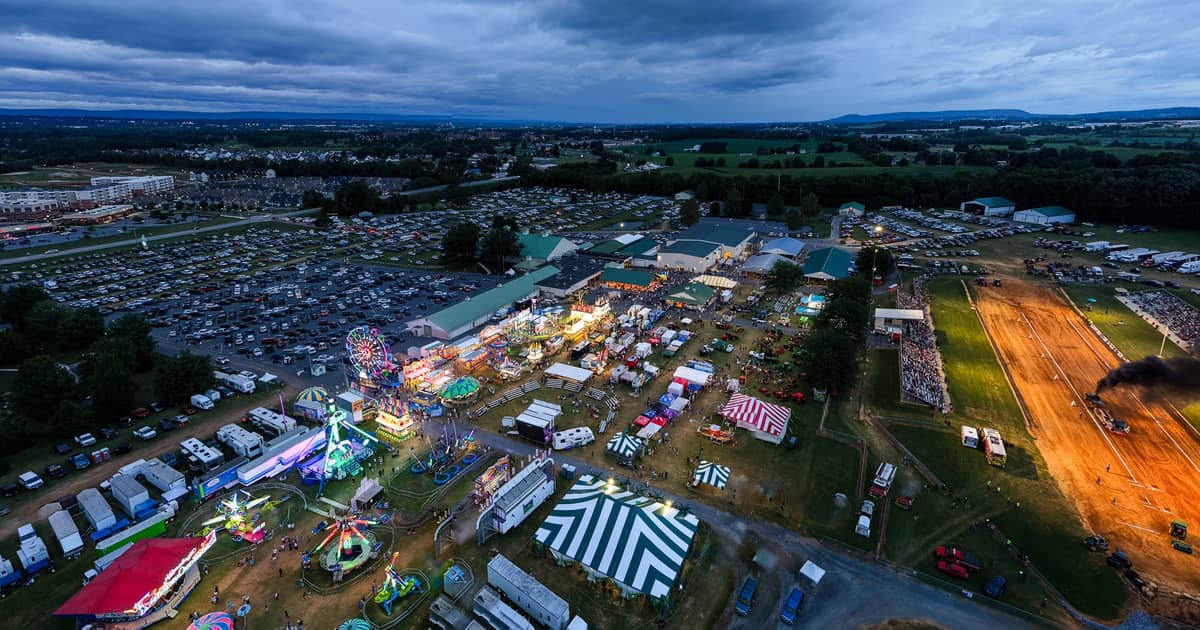
The 101st Legislative District includes Lebanon city, North Lebanon, South Lebanon, West Lebanon, North Cornwall and West Cornwall townships, and Cornwall Borough. Schlegel noted during the 90-minute session held at the Lebanon Valley Exposition & Fairgrounds that he represents about 64,000 residents in those seven municipalities.
Data centers
While he said data centers can be a source of revenue for municipalities, he noted that the decision as to where they should be located is best left to local officials and residents.
He referenced the recent proposed $1.7 billion project in South Annville Township that called for construction of five data centers totaling around 750,000 square feet over about 99 acres. That plan was opposed by an outspoken group of local residents.

“I think those types of things are really local decisions. So I think what we saw happen, you know, was local elected officials who know that area the best and the residents to be able to share their concerns,” Schlegel told the audience of about a dozen people. “In Harrisburg, there has been a proposal to allow municipalities if they want to have a moratorium on data centers, and I think that’s kind of a nice idea from the standpoint that you give local municipalities flexibility.”
Schlegel offered a word of caution about data centers and local public opinion about them.
“The only thing I would caution people on, and I’ve talked to data center people about this, and again, that’s their skewed opinion, but I’m just going to share this,” Schlegel said. “One of the things that they say they’re ready to do is to sit down with a community and say, ‘If we come in here, if you let us come in, if your elected officials approve the ordinance to do so, what do you want us to do for you?’”
Schlegel said some of those flexibilities include contributing to the stabilization or lowering of property taxes, or generating more electricity as another example.
He said the generation of more electricity has a chance of stabilizing rising electricity costs, or in some communities, decreasing costs.
“Please do not interpret my comments as saying, ‘I might like data centers.’ I didn’t say that, OK? That’s up to the local communities,” Schlegel said. “But there is a potential, I think, for some economic drivers in data centers or any business that might want to establish roots in Lebanon County. But again, I think that’s a local decision.”

Property taxes
Schlegel noted there are several pieces of legislation calling for the end of property taxes. Of course, any elimination of taxes would have to be replaced with another source of revenue to fund state government.
“There’s a couple proposals out there. There’s a standalone bill. And the point is to eliminate property tax, but you have to replace it with something else,” Schlegel said. “So, how do we replace those funding sources?”
He said a bill initiated by his predecessor, Frank Ryan, at the end of his third term calls for, among other things, raising the sales and earned income taxes.
“I’m the co-sponsor of House Bill 900, which calls for a constitutional amendment to eliminate property tax and we’re still frankly looking at what is the best way to do that,” added Schlegel.
Affordable housing
Schlegel said there’s a lack of available housing for earners of between $50,000 and $100,000 not only in Lebanon County but in many areas of the state and beyond.
“You look around here, we have three developments going on in Cornwall. You know, it’s not affordable housing. North Lebanon Township, you know, has at least one development. That’s not affordable housing. South Lebanon has certainly had its fill and over in West Cornwall, you know, they built some townhouses and now they’re going to work on some condos across the street,” Schlegel said. “We have condos and we have apartments and we have more going up and I don’t necessarily know that they’re affordable either.”
Schlegel said material costs, price of land, and permitting are three drivers of higher home costs, noting that few would-be buyers can afford to do so.
“So maybe of the three barriers, if there’s something we can do at the state level to make it easier and quicker for those kinds of projects to get permits, time is money,” he said. “So that might be one thing. I’ve been involved in three hearings that the Republican House caucus has had in the last week and I’m still processing and sorting out what are common themes, what seems realistic, maybe where’s the low hanging fruit right now that we can try to address to move forward.”
Senior citizen health
Schelegel told the audience he was appointed by the state House Republican caucus to chair a committee to work on behalf of senior citizens, and he serves on the advisory committee to the Office of Alzheimer’s, Dementia, and Related Disorders.
“We’ve had all kinds of practitioners. We’ve had representatives from both sides of the aisle that have participated in this initiative. We’ve divided us into work groups of our choice. And then we kind of rolled up our sleeves to work on various issues.”
He noted he sits on the early prevention and diagnosis work group, adding they just wrapped a session of information-gathering meetings.
“What we really want out of this is, let’s find a cure because it afflicts so many families and loved ones. I’ve lived through this with my mother-in-law who passed away right before Christmas. She had great care in Cornwall Manor and had as good a quality of life as I think that you could have,” Schlegel said. “We’ve had friends and others whose parents have gone through that disease and so it truly has been an education and I’ve done a lot more listening than I have talking because I would relate my experiences and I would relate experiences from other folks.”
Recommendations are expected in August based on the sessions held by the various work groups, he added.
“I think in terms of our workgroup we’re really taking a look at how we raise the level of awareness. You know, what is the difference between Alzheimer’s and dementia? What are some of the other related disorders?” Schlegel said. “How do we get that information out so that folks in our communities are able to access that kind of education, that kind of information and services so that we can best serve not only our loved ones, but families, too.”
Questions about this story? Suggestions for a future LebTown article? Reach our newsroom using this contact form and we’ll do our best to get back to you.

Support local journalism.
Cancel anytime.
Monthly Subscription
🌟 Annual Subscription
- Still no paywall!
- Fewer ads
- Exclusive events and emails
- All monthly benefits
- Most popular option
- Make a bigger impact
Already a member? Log in here to hide these messages
Local news is disappearing across America, but not in Lebanon County. Help keep it that way by supporting LebTown’s independent reporting. Your monthly or annual membership directly funds the coverage you value, or make a one-time contribution to power our newsroom. Cancel anytime.