Lebanon County’s mental health agency plans to open a new transitional home, this time in the 700 block of downtown Lebanon.
The project is being conducted in cooperation with Lebanon County Housing & Redevelopment Authority and is specifically for males who need transitional housing after incarceration.
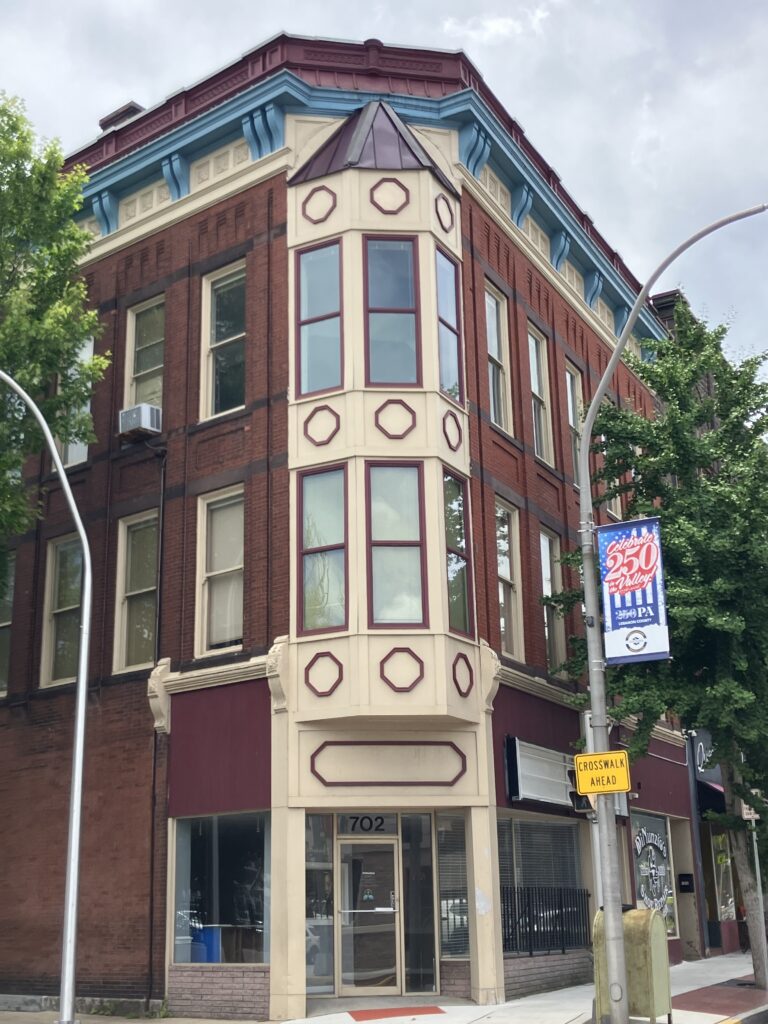
The home will be located at 702 Cumberland St., according to Holly Leahy, administrator of Lebanon County Mental Health/Intellectual Disability/Early Intervention, who recently received approval for the plan from county commissioners.
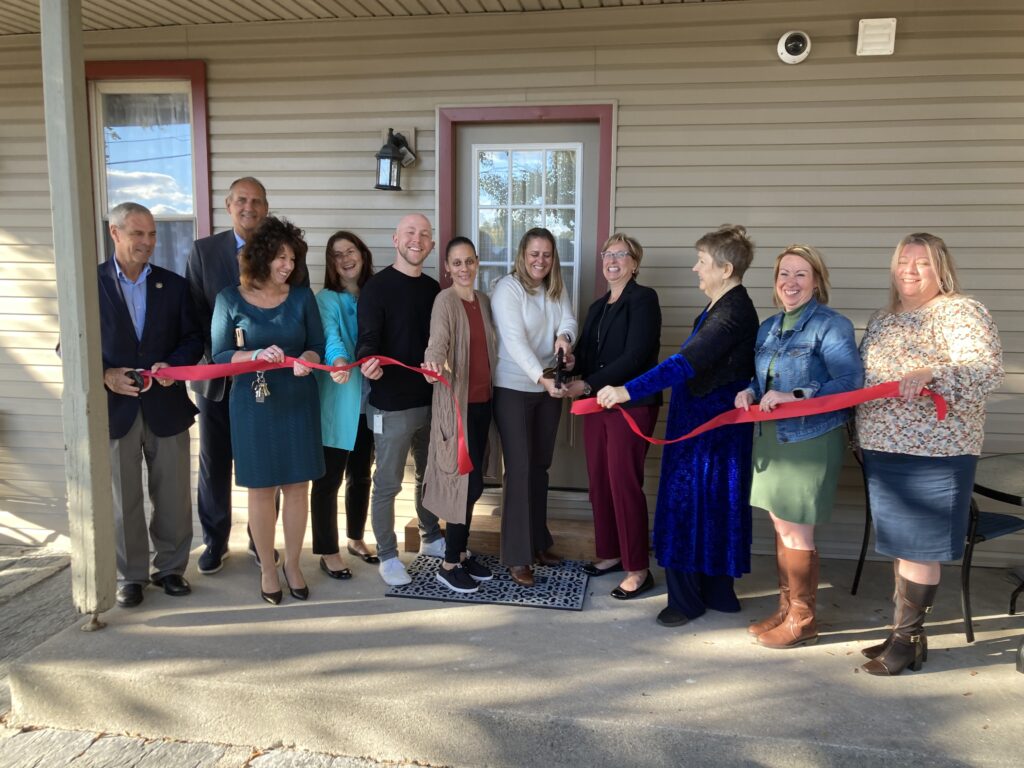
The other transitional home, The Cottage, in the 200 block of East Weidman Street, has the same mission but is designated for female residents.
“We’re proposing to build off of that successful program at The Cottage and expand into another location. Currently, The Cottage serves three females. This proposed project would serve three males, so it would give opportunity for that gender as well,” Leahy said. “This really would work in coordination with the mental health court that we are hoping to implement by the end of this year and many other things that go along with our criminal justice advisory board.”
Leahy said the home fits into the advisory board’s effort to provide housing for individuals who are in the process of exiting the criminal justice system.
“Strategic planning to increase housing for the justice-involved individuals that really do not have an ability to be released to the community without a home plan and without somewhere to go, which really puts a stressor on the prison system as well as the entire system as we really seek to serve the justice involved,” Leahy said. “But there aren’t many barriers to them reintegrating back into our community and ensuring that there aren’t re-offenses that occur as a process.”
Leahy said the program for those who live in this home, which would be on the third floor of a building owned by the Lebanon County Housing & Redevelopment Authority, would mirror the one governing Cottage residents.
“Since we implemented that in 2023, we’ve had five successful graduates. They have done wonderfully. They all have integrated into housing of their own choice. They are working, they are following through with services. They have not re-offended in any way and they have been really successful in our community,” Leahy said. “They’ve continued to get a very high level of services and support in the community, which has really given them the ability to be successful in our community.”
This plan also fits into what Leahy called a desire by state officials for more housing opportunities for these individuals.
“So we also know that the Department of Human Services is, I will say, urging us to create more housing options. And this would really play into that,” she added. “We know that that urging does not come with any funding. However, we are really looking to do this without additional funding. We really think that we found a way to do it effectively without additional funding necessary in collaboration with the housing authority.”
Dan Lyons, executive director of the housing authority, provided an overview of the authority’s involvement with the property, which Leahy said in a follow-up email to LebTown is “huge,” with 1,898 square feet.
“The housing authority’s nonprofit acquired the property at 702 Cumberland St. earlier this year. It contains two commercial spaces on the first floor, an efficiency apartment and a three-bedroom apartment on the second floor. And then the third floor is currently vacant, was last used as a one-bedroom apartment, but it’s a very large space,” Lyons said. “The authorities have partnered with MH/ID/EI in the past to develop housing for the NEWSTART program and the Jump Start program.”
Those experiences led the two agencies to seek an expansion of their working relationship for this endeavor, according to Lyons.
“So the nonprofit board went and evaluated the property. It was suggested that maybe there was a possibility for partnership again. We do believe the space on the third floor could be made suitable to MH/ID/EI’s needs,” Lyons said. “And if the commissioners approve the partnership, the authority will engage an architect to develop specifications. And we think that we could be out for bid later this year with construction completed by late spring next year.”
Commissioner Jo Ellen Litz asked about the cost of the project. Leahy provided an estimate based on the cost to do the project three years ago – even though she qualified costs then compared to now.
“We know that construction costs have increased since that time. It was a little over $200,000 for construction costs. So that was the entire home, a little cottage, three bedrooms with all the space. But that also included the outside, so that was siding and all plumbing, electrical. It was quite extensive,” Leahy said. “So we are projecting potentially somewhere in the range of $250,000 to $300,000. We do think that there will be increased costs.”
There was logic behind the cost estimate for the new project.
“It is just one floor though and ‘the bones’ are good. We just would need to go in and really create the space,” Leahy said “It’s quite an open space right now, and really has a great opportunity to build into it, what would be necessary for three individuals to be successful.”
She said the project would be funded through available allocation money.
“The potential’s there within our current allocation, within our current budget, potentially for this project, if approved. So for this fiscal year, we do have some carryover mental health Reinvestment funds from the HealthChoices system, which would offset the mental health-based funding,” Leahy said. “And then we also received an increase through our mental health-based categorical funding for fiscal years ’23/24, and ’24/25, roughly about $500,000, which infused into the system would give us, in addition to the Reinvestment funding, would give us the ability to create another project.”
The project would be sustainable since it would generate revenue from tenant rentals.
“Sustainability would be great because it would increase by three the rental payments,” Leahy said. “Outside of that, we would provide the services and support within our current provider contracts and current structure. So it wouldn’t increase the contracts to provide those services and support to the individuals identified.”

Lyons said there were two commercial tenants when the authority bought the property several months ago, but one has since vacated. He said rent with the remaining tenant is current, and the authority’s nonprofit acted solely in purchasing the building.
Leahy provided an overview of who manages the tenants who will live there.
“We have a provider that while they do not have a manager or someone on site 24/7/365, that provider goes into the home on a daily basis, meets with the individuals, and that’s just the provider identified as the housing support provider,” she said. “We create very individualized plans for that individual to be successful in our community. And that includes a plethora of other services and then other service providers coming into the home. So there’s not anything overnight, but there is a really high level of support for them.”
Security cameras will be installed and Leahy noted that just like the other transitional home, overnight guests are prohibited.
Questions about this story? Suggestions for a future LebTown article? Reach our newsroom using this contact form and we’ll do our best to get back to you.

Support Lebanon County journalism.
Cancel anytime.
Monthly Subscription
🌟 Annual Subscription
- Still no paywall!
- Fewer ads
- Exclusive events and emails
- All monthly benefits
- Most popular option
- Make a bigger impact
Already a member? Log in here to hide these messages
An informed community is a stronger community. LebTown covers the local government meetings, breaking news, and community stories that shape Lebanon County’s future. Help us expand our coverage by becoming a monthly or annual member, or support our work with a one-time contribution. Cancel anytime.