We’re celebrating Lebanon County’s role in American history. Read more here.

Growing up in Lebanon in the 1940s, trains were a part of everyday life for Jim Matthew.
So coming to Lebanon on Tuesday from his current hometown of Palmyra was a no-brainer. He wanted to experience the rare local opportunity to see the historic Big Boy No. 4014 train that was arriving on the same tracks he walked as a kid.
“We would run these tracks,” Matthew said, recalling a boyhood memory when he was around 10 years old. “I used to watch the trains during the Second World War, bringing the troops back from Europe, and down here at Forest Street, there was a bridge and a playground where we used to hang out.”
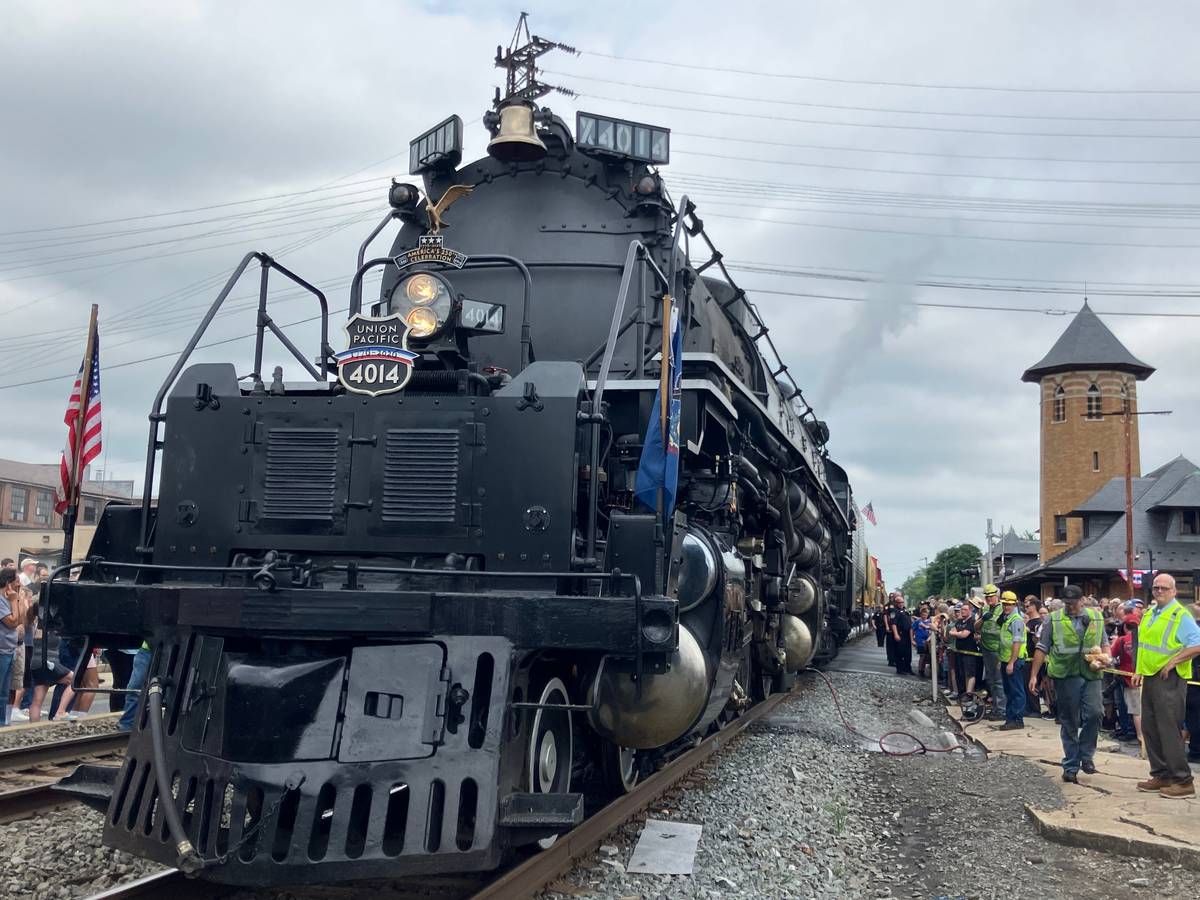
The “true American icon” – as described by Lebanon Mayor Sherry Capello – made a 45-minute whistle stop at Lebanon’s historic Philadelphia & Reading Railroad Station while traveling across the nation during the America 250 celebration commemorating the nation’s birth on July 4, 1776.
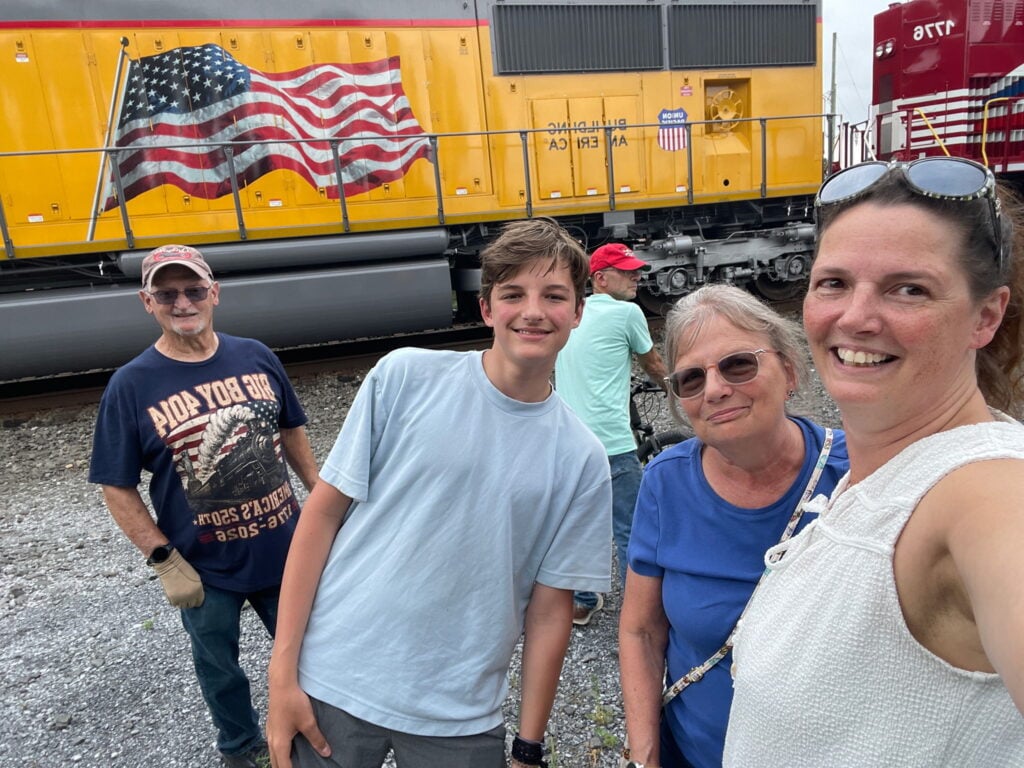
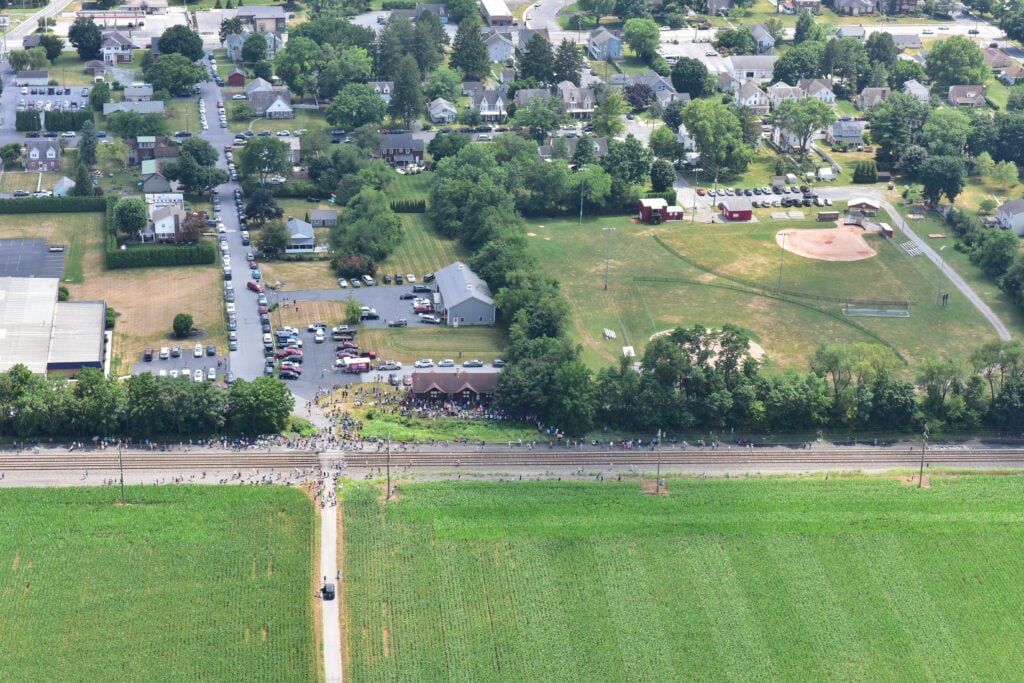
Matthew was among an early crowd of about 15 people who, as of 11 a.m., had already gathered at the South Lincoln Avenue crossing to claim a spot to see the train steam its way into Lebanon from King of Prussia. He, along with his wife Gayle Kohl, have seen the other Big Boys, so this one was also on their collective bucket list.
“Actually, we’ve seen the 4012 up in Steamtown. And we’ve seen, I don’t know what number it is, the one in the Ford Museum in Dearborn,” Matthew said, adding it was great to hear the 4014 chugging through Lebanon County. “I’ve heard this is the biggest, but that one in the Ford Museum, I’ve never seen anything that big before.”
The train rolled into town at 1:32 p.m., heralding its arrival with the steam whistle being blown repeatedly. Cheers could be heard from large crowds on both sides of the tracks at the Lebanon station on North 8th St. A short time later, Ed Dickens, manager of steam operations for Union Pacific 844, spoke with the media about the Big Boy next to a car that contained water for the engine.
LebTown asked Dickens about the historic significance of trains like the Big Boy that were integral throughout the history of a fledgling nation.
“Railroads really have built America. Without the railroad, how would it really expand the way we have? You know, railroads are so efficient. They’re designed to carry so much commerce. Even the earlier railroads, the very early railroads, back in the 1800s, were a vast improvement over the horse and wagon. They were a tremendous improvement over walking, and other means that, you know, that’s how America traveled back then,” he said.
Dickens further highlighted their significance to America.
“The railroad built our country, expanded, connected communities, and ultimately connected the country. If you remember your history back during the Civil War, this country was going through a period of … tremendous terrible unrest,” he noted.
Trains were crucial to reuniting a fractured nation.

“The process of building that transcontinental railroad helped knit the country together and bring all those territories and bring everything together so we can begin to expand and people could expand and build communities and all the major cities along the way were designed and built around the railroad, usually around the locomotive, fuel, water and logistics,” Dickens said. “So if you look at the map today, we’re a beautiful, massive country. But if you shrink it down to the early transcontinental railroad, it was all centered around the logistics of the steam locomotive. Fascinating history.”
A total of 25 iconic Union Pacific Big Boy steam locomotives were built between 1941 and 1944, primarily used to haul heavy freight across the steep mountainous grades of Utah and Wyoming until they were retired from regular service in 1959.
Eight locomotives were preserved and placed on static display in museums across the country. In 2019, Union Pacific restored Big Boy #4014 to operational status, converting it from coal to oil. It is now the world’s largest operating steam locomotive and frequently tours the national railway.
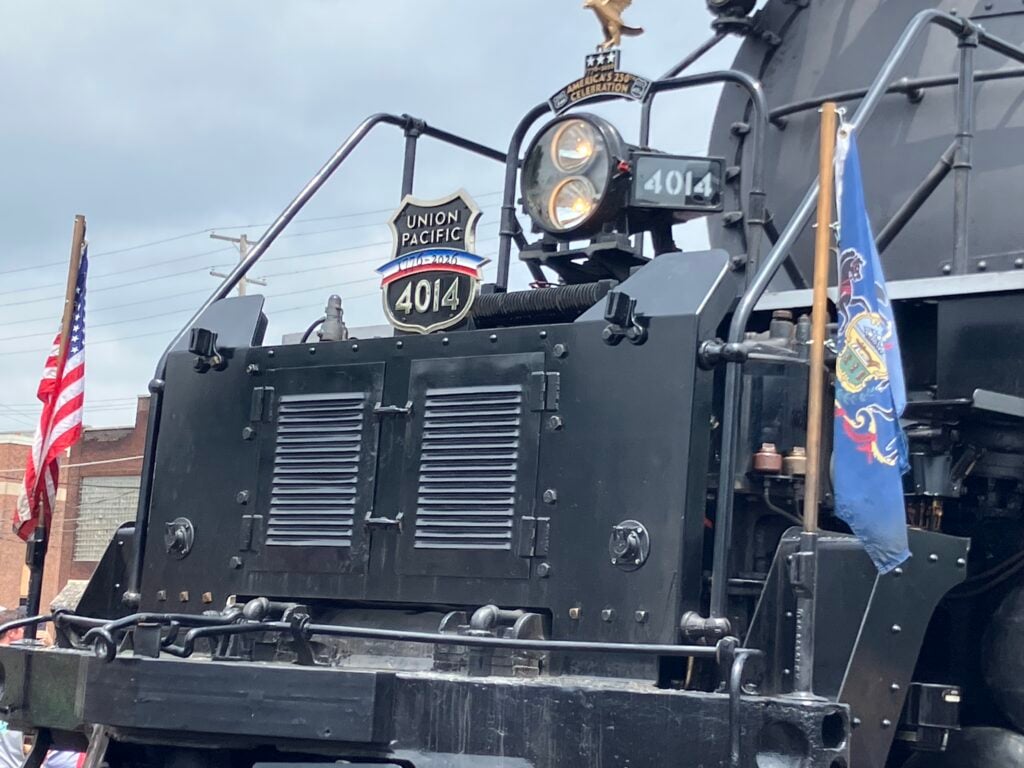
LebTown also asked Dickens why the need for the train to stop frequently for maintenance, with Dickens answering that it happens about every 65 to 95 miles.
“It’s just part of the 1940s logistics of steam locomotives. Back when America had these as the primary locomotives, it was very commonplace. So these require additional human effort, lots of labor. greasing, manual oiling, you know, manual fueling and watering,” Dickens said, noting that modern trains need little human interaction. “The steam locomotive, what’s beautiful about it is, we rebuilt this locomotive, took us two and a half years, we took it completely apart and made it so nice and made it so modern. Now when I say modern, it’s modern in the sense that it’s state-of-the-art 1941 technology, and to us that’s modern.”
LebTown also asked Dickens what it meant to travel to a community like Lebanon with its rich industrial heritage and rail history. Lebanon County had two primary historic train stations: the Cornwall & Lebanon Railroad Station built in 1885, and the Reading Railroad Station (at 250 North 8th Street), constructed in 1900.
“It’s beautiful coming to towns like this, where you have a beautiful station that represents what the railroad means to communities like this,” he replied. “This was the place where loved ones would come, loved ones would travel out (of), people went to war, a grandma would come visit, or you’d go visit grandma.”
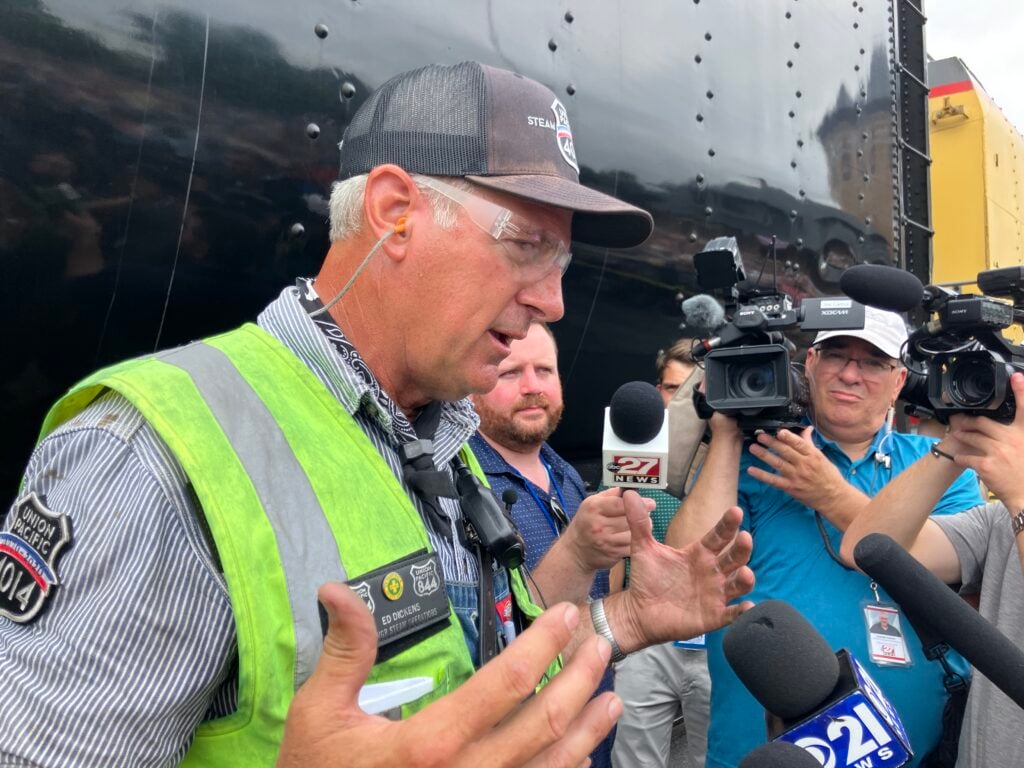
That was just a small sampling of what the train station meant to communities like Lebanon, according to Dickens.
“This is where the mail would originate and terminate from right here in big stations like this or little stations along the way. It’s beautiful seeing America like this,” he added, noting Lebanon was one of 95 stops during this particular tour. “In every one of them, this is the same. This is an example of what we see in America. It makes us proud to be a part of such a wonderful country. All the beautiful things that bring us together. Steam locomotive, the Big Boy, celebrating our nation’s 250th birthday. This has been just a trip of a lifetime for us.”
During remarks prior to the train’s arrival, Capello provided statistics about the massive engine.
She noted it weighs over 1.2 million pounds, stretches approximately 133 feet in length, and has driving wheels that stand more than 68 inches tall.
She added it was powered by 25,000 gallons of water and more than 28 tons of coal, although today it has been modernized to burn oil while preserving its historic steam operation. When working at full capacity, Big Boy could produce roughly 6,300 horsepower and generate over 135,000 pounds of tractive effort, which made it one of the most powerful steam locomotives ever constructed.
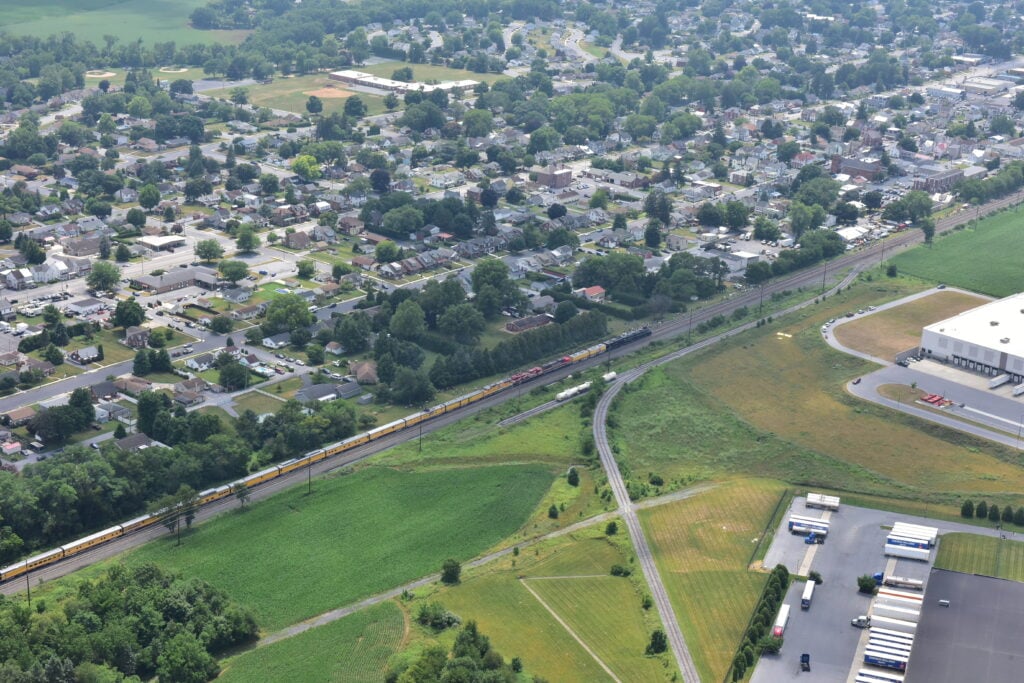
“To put that into perspective, this single locomotive was capable of pulling freight trains weighing thousands of tons across some of the most difficult railroad terrain in North America. It represents a time when America built things on a scale the world had never seen before,” Capello said.
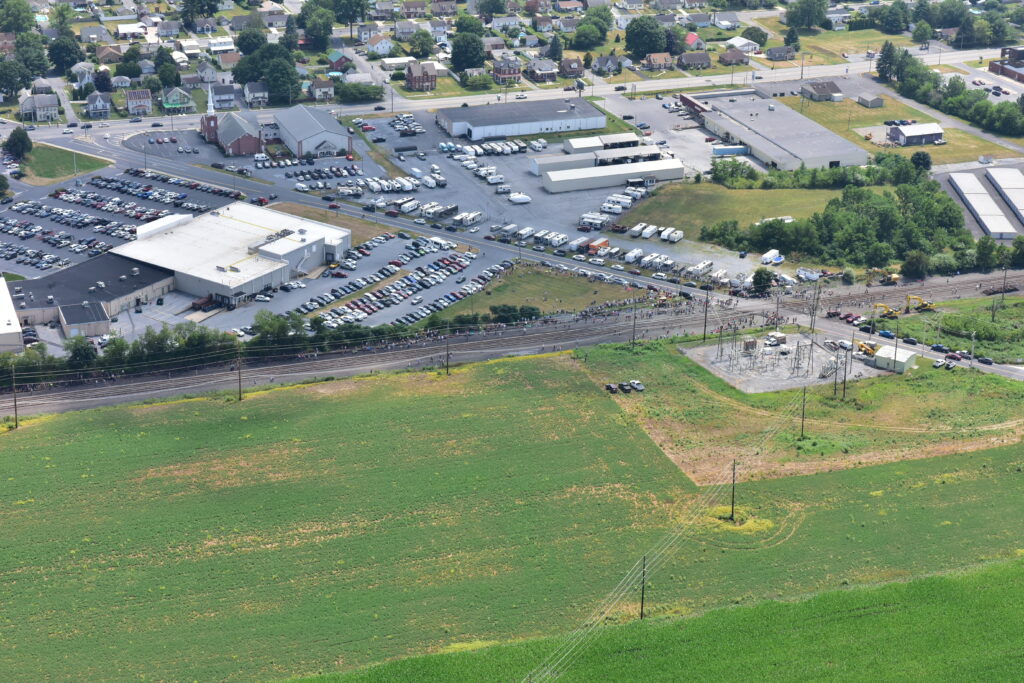
Questions about this story? Suggestions for a future LebTown article? Reach our newsroom using this contact form and we’ll do our best to get back to you.

Join our community of local news champions.
Cancel anytime.
Monthly Subscription
🌟 Annual Subscription
- Still no paywall!
- Fewer ads
- Exclusive events and emails
- All monthly benefits
- Most popular option
- Make a bigger impact
Already a member? Log in here to hide these messages
Local news is a public good—like roads, parks, or schools, it benefits everyone. LebTown keeps Lebanon County informed, connected, and ready to participate. Support this community resource with a monthly or annual membership, or make a one-time contribution. Cancel anytime.