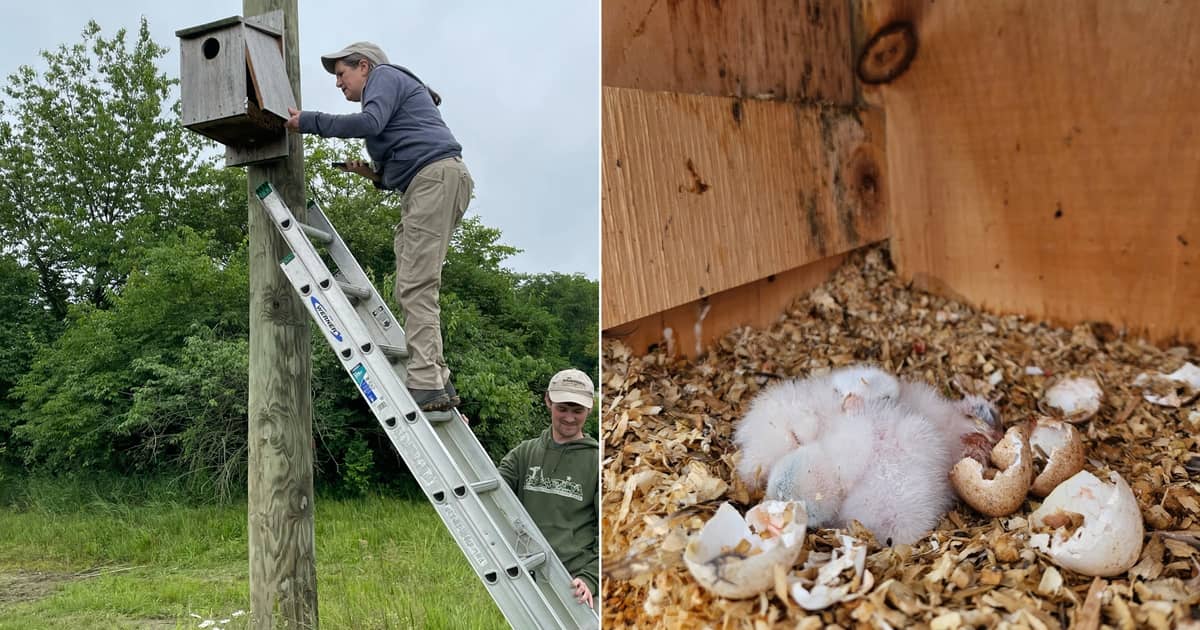

A flash of feathers bolted out of the wooden box on a nondescript pole behind the Greater Lebanon Refuse Authority’s (GLRA) electronics recycling center.
Inside the box were three, possibly four American kestrel chicks nestled among remnants of their shells.
The chicks might have just hatched, said Ann Holzman, a conservation and welfare specialist with ZooAmerica in Hershey, who was at GLRA to check how many of 18 eggs found in early May had hatched.
On that morning, three other boxes in different parts of the landfill had eggs, but no chicks. Last year, two of GLRA’s boxes had eggs and five eggs hatched, said Morgan Lusch, GLRA assistant staff engineer. This year, four boxes had 18 eggs — a record.
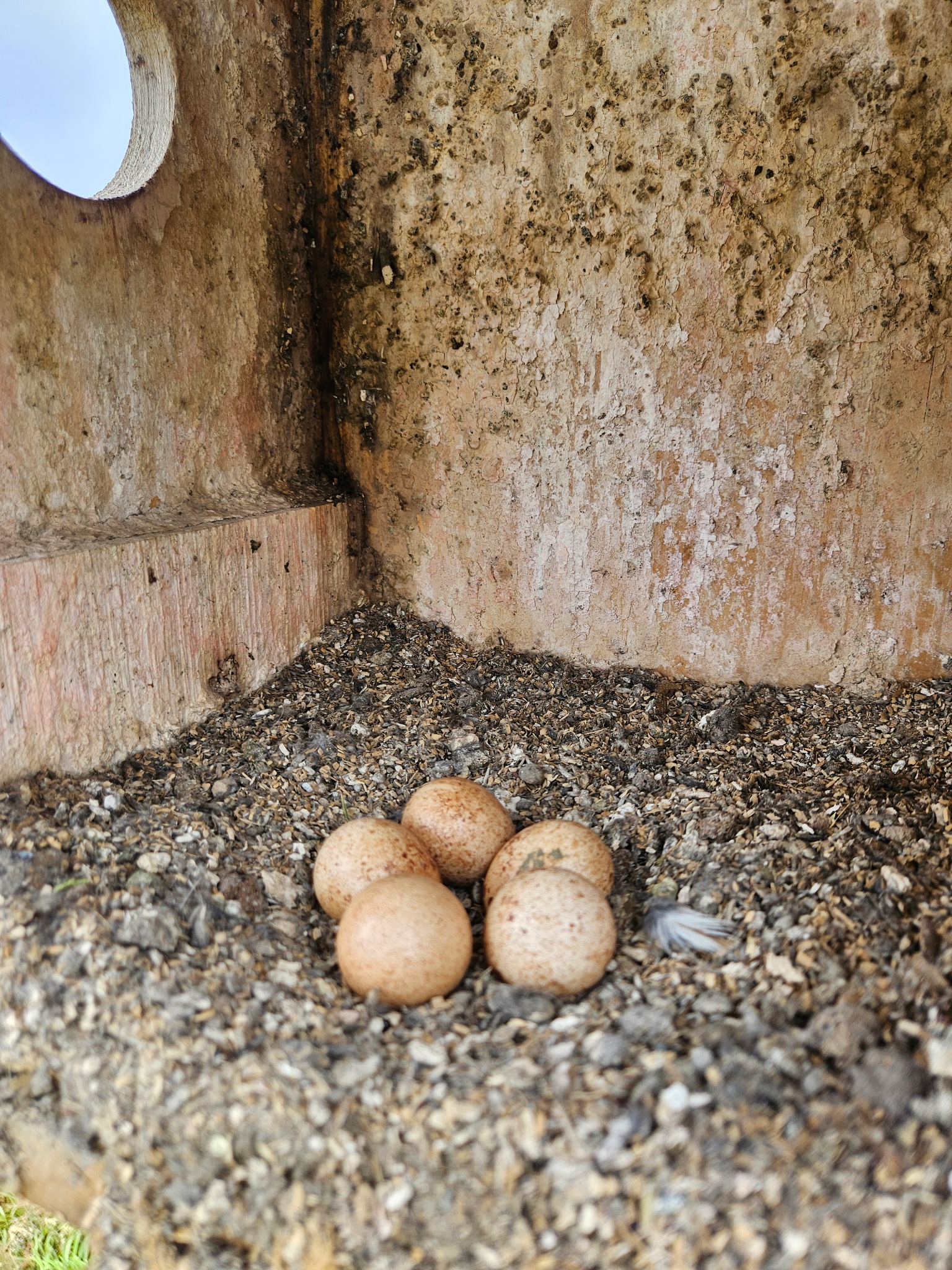
GLRA has the open fields the kestrel prefers as only about 100 of its 500 acres are used for management and disposal of Lebanon County’s waste. For the other 400 acres, the authority has a wildlife and land management plan that includes managed grasslands and nesting boxes for kestrels, seven of which have been erected across the landfill.
ZooAmerica not only helps to monitor the boxes but also helps with banding the birds.
About the size of a blue jay or mourning dove, American kestrels are the smallest and most widespread falcon in North America. Between 9 and 12 inches long, they have a wingspan of 20 to 24 inches, according to the Pennsylvania Game Commission.
They don’t construct nests, preferring cavities in trees and nesting boxes, like those at GLRA.
The kestrel population has been declining for the past 30 years largely because of landscape changes, notably the loss of open grasslands due to development, Bracken Brown, biologist-naturalist with the Acopian Center at Hawk Mountain Sanctuary, said in a phone interview. That center first mounted nesting boxes in 1954 and is monitoring 138 kestrel boxes this year across several counties.
“Kestrels evolved to be in open fields,” Brown said. “With development and sprawl, it’s challenging to come by open fields, so landfills with managed grasslands are valuable for the kestrel.”
Female kestrels begin incubation as soon as they lay their first egg, so eggs hatch sequentially, Brown said. Eggs are 1.2 to 1.5 inches, or slightly longer than the distance between the tip of a thumb and the first knuckle. Females will protect the box while males are the primary hunters, providing food.
When the chicks are between 2 and 3 weeks old, they are banded.
“Banding has allowed biologists to get a better understanding of localized movements and nesting habits, migration patterns and overall survival,” said Holzman in an email. “These data help to formulate the best scientific strategies for the conservation of this species.”
Hawk Mountain scientists, for instance, have learned from banding that some birds from this area migrate to southern Florida each year. But kestrels also have been known to stay close to their point of origin — although not necessarily return to the same nesting box, Brown said.
“There can be risks to moving to a new area,” he added.
The state Game Commission also bands kestrels to determine population size and improve their habitat management practices, said Emma Hamakerl, environmental education specialist at Middle Creek. Six of Middle Creek’s 16 boxes have eggs but the number may change because of our cooler spring, Hamakerl said. That means fewer insects for the birds to feed on.
Kestrels typically lay one brood of eggs a season with the average clutch four to five eggs. Occasionally, they may have a double hatch if conditions are great, Brown said.
With a diet of insects and small mammals, kestrels provide free pest control for agricultural crops, consuming pests and reducing crop damage.
“Kestrels tell a story about the ecosystem that supports them and its health,” Brown said. “If we’re losing raptors, there’s something toxic in the ecosystem.”
Providing next boxes for kestrels is key to kestrel conversation. Both Hawk Mountain and ZooAmerica can provide more information.
Questions about this story? Suggestions for a future LebTown article? Reach our newsroom using this contact form and we’ll do our best to get back to you.
Support Lebanon County journalism.
Cancel anytime.
Monthly Subscription
🌟 Annual Subscription
- Still no paywall!
- Fewer ads
- Exclusive events and emails
- All monthly benefits
- Most popular option
- Make a bigger impact
Already a member? Log in here to hide these messages
Local news is a public good—like roads, parks, or schools, it benefits everyone. LebTown keeps Lebanon County informed, connected, and ready to participate. Support this community resource with a monthly or annual membership, or make a one-time contribution. Cancel anytime.