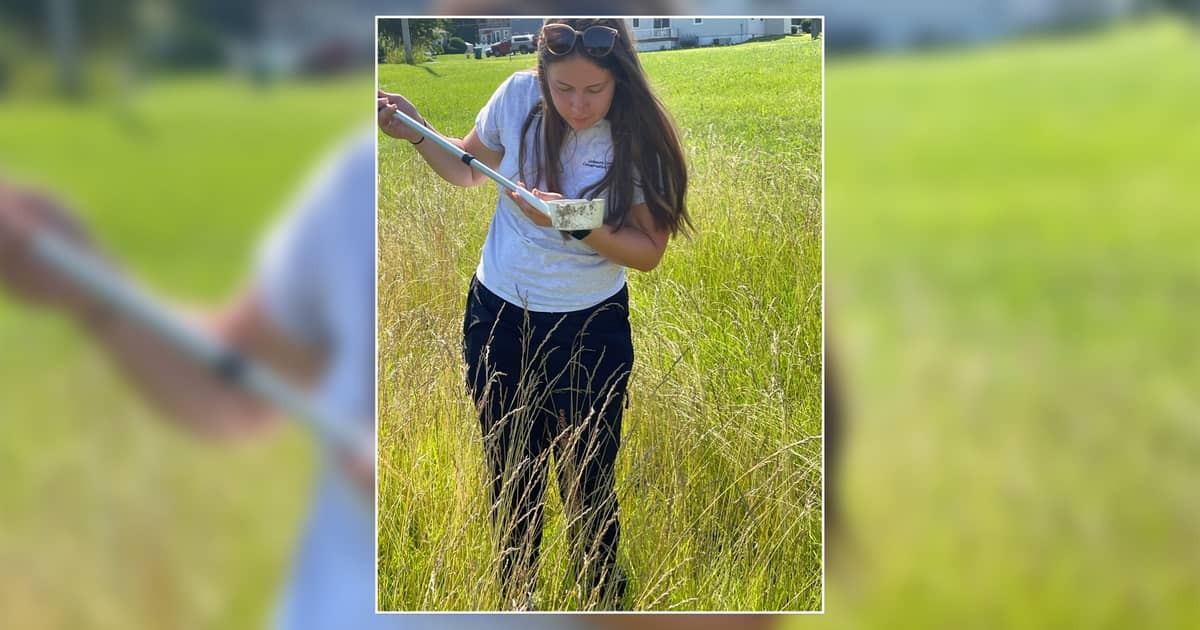

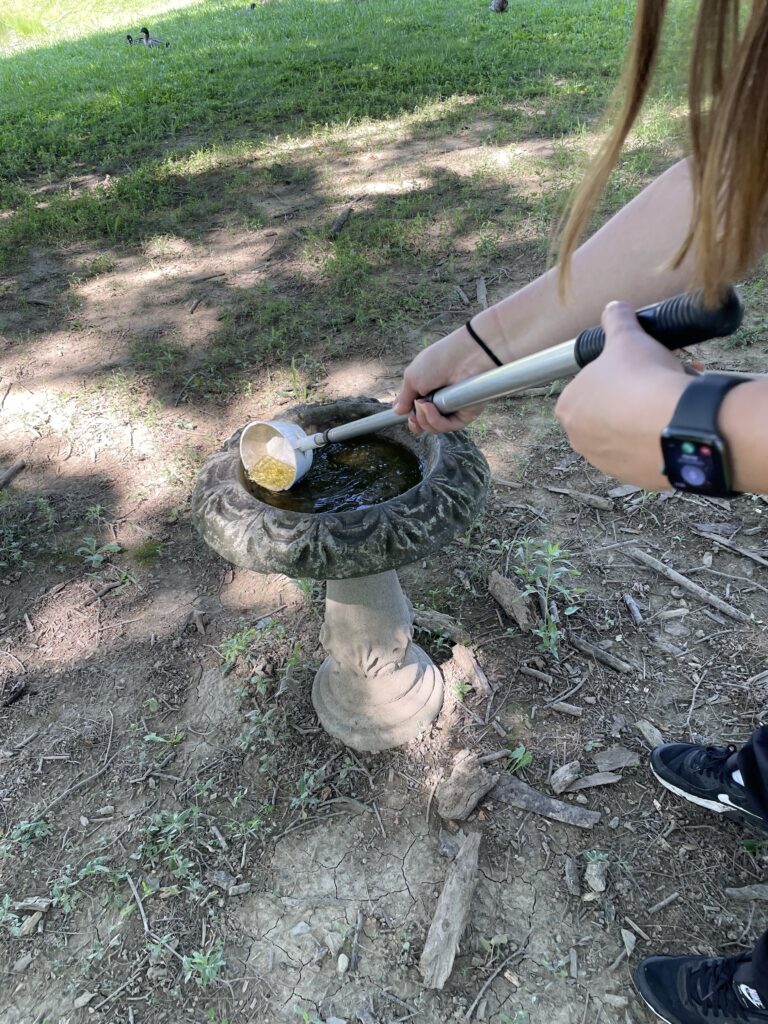
A dozen tiny, thread-thin and worm-like critters wriggled around a stone birdbath at Louser Memorial Park Northeast in Lebanon on a recent morning.
“Mosquito larvae,” declared Lydia Mohn as she suctioned them up with a pipette and transferred them into a sample bottle.
Mohn heads the Mosquito-borne Disease Control Program for Lebanon and Lancaster counties. Since April, Mohn and four technicians have been visiting sites with standing and stagnant water to check for mosquito larvae.
Drainage ponds, ditches, parking lots, old tires, and cemetery vases are all likely places where rainwater might puddle and mosquitoes lay eggs.
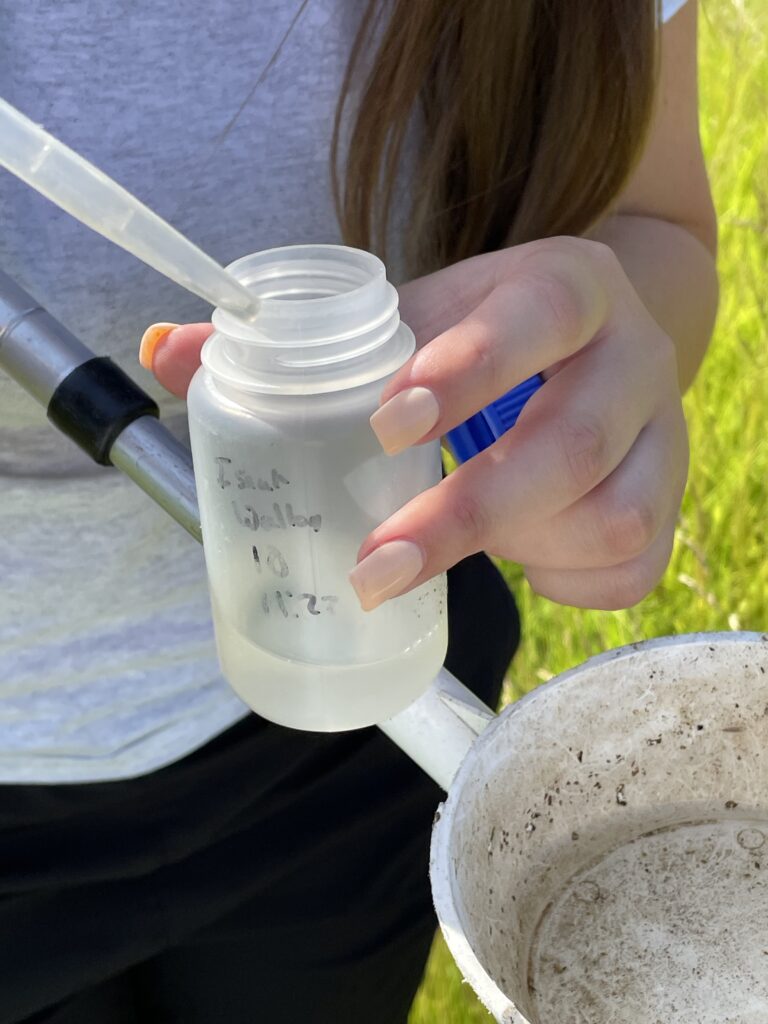
If larvae are found, they go into sample bottles labelled with the collector’s name, date, habitat, site, and approximate number of mosquitoes. The samples go to DEP for classification and testing.
Pennsylvania has 62 species of mosquitoes. While the control program team collects all specimens of mosquitoes, of particular interest is the brown Culex pipiens mosquito, a vector for West Nile Virus (WNV).
DEP has been testing for WNV since 2000 when the virus was first detected in mosquitoes in Schuykill County, said John Repetz with DEP in an email. Culex populations have increased since then, leading to more WNV detected throughout Pennsylvania, he added.
Many people who contract WNV through bites of infected mosquitoes have no symptoms. But one in five people will develop mild flu-like symptoms, and some infected individuals—particularly, the elderly and those with compromised immune symptoms—may experience a severe infection, according to the Centers for Disease Control and Prevention.
“Basically, every county in Pennsylvania has had cases of West Nile Virus,” said Mohn, who added that so far, Lebanon County is virus free. But Bucks County has recorded mosquitoes positive for WNV, according to DEP.
Mohn estimated that she and the program’s four technicians will check out several hundred sites across Lebanon and Lancaster counties this season. Nine of those in Lebanon County are ‘fixed’ sites, meaning the program team visits them weekly, Mohn said. Lancaster County has 17 fixed sites.
Others are only visited a couple of times a month although significant larval populations can trigger more frequent checks.
“This season has already been very busy,” Mohn said. “We’ve had a lot of rain which means a lot of standing water and a lot of larvae.”
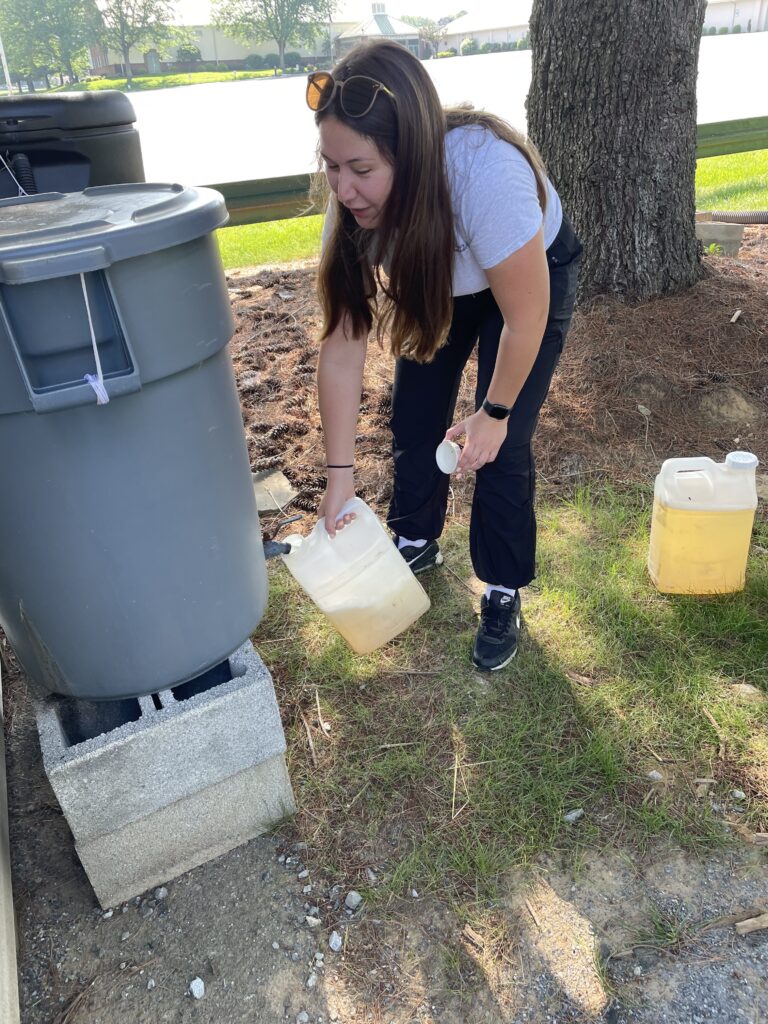
Besides hand-dipping for larvae, the program team also sets traps specific for the Culex pipiens mosquito. Traps are placed in a dishpan of gravid water made with a fermented mix of hay and protein powder that creates a pungent, unpleasant smell that attracts the Culex—although other species may also get lured in.
Mosquitoes have four different life stages, three of which occur in water and include eggs, larvae and pupae. From egg to adult takes on average from seven to 14 days.
Only adult mosquitoes live outside of water, and only the female bites, according to EPA. A female must have a blood meal in order to lay eggs.
“WNV activity is dependent on weather and temperature patterns,” said Repetz in an email. “Changing climates and weather events have provided more available habitat for mosquitoes to lay eggs. The mosquito season has also extended during this time—starting sooner, ending late.”
DEP offers ‘do’s and don’t’ to protect against mosquitoes and WNV on its website.
Questions about this story? Suggestions for a future LebTown article? Reach our newsroom using this contact form and we’ll do our best to get back to you.
Support Lebanon County journalism.
Cancel anytime.
Monthly Subscription
🌟 Annual Subscription
- Still no paywall!
- Fewer ads
- Exclusive events and emails
- All monthly benefits
- Most popular option
- Make a bigger impact
Already a member? Log in here to hide these messages
An informed community is a stronger community. LebTown covers the local government meetings, breaking news, and community stories that shape Lebanon County’s future. Help us expand our coverage by becoming a monthly or annual member, or support our work with a one-time contribution. Cancel anytime.