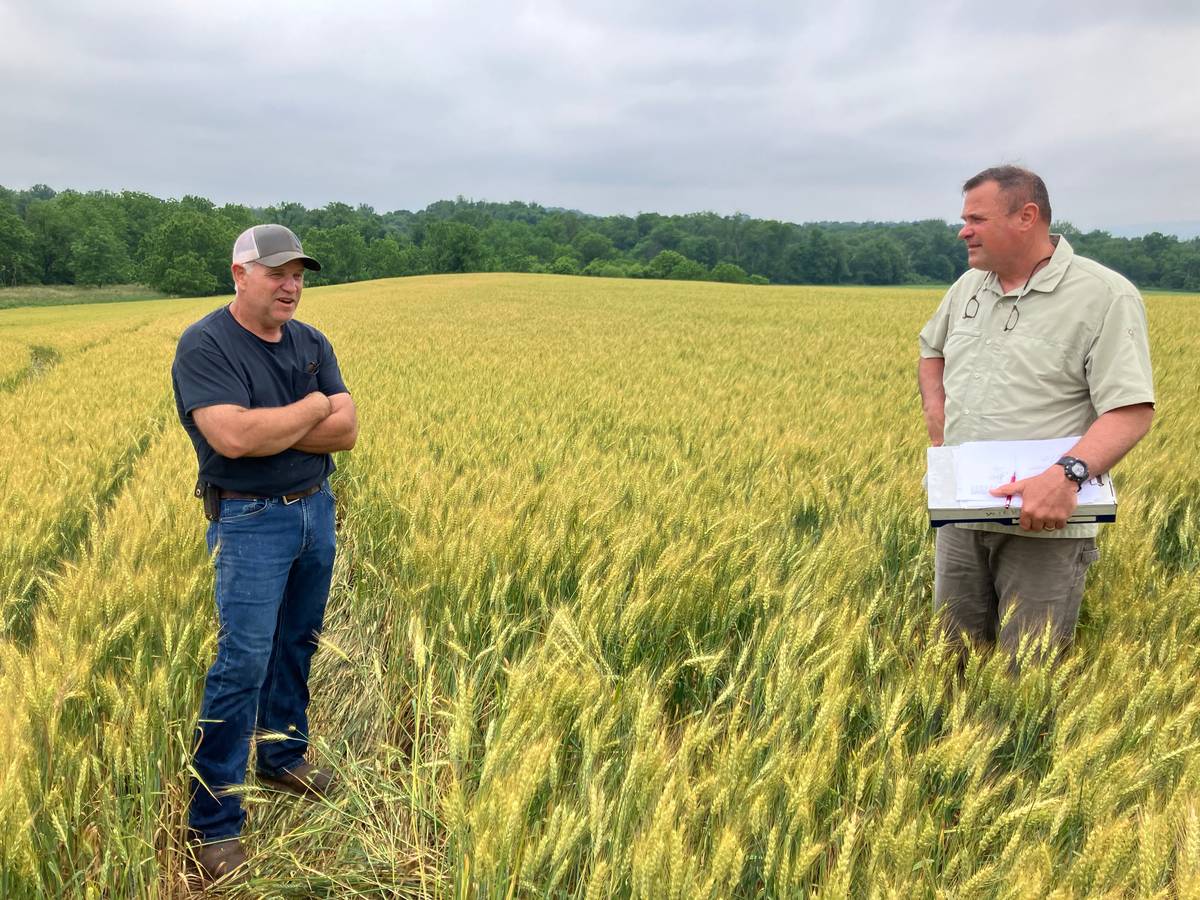
Yields for bushels of wheat in Lebanon County are expected to be average to below average this year, according to crop tests conducted by agricultural officials on two area farms on Wednesday, June 10.
On a positive note, the quality of the yield, however, appears to have the potential to be a bright spot for the 2026 harvest.
While there’s still time for the yield figures to change with the harvest still a few weeks away, the tour of fields in Lebanon, Berks, and Lancaster counties gives a snapshot of the expected harvest for the region, according to agricultural officials with Penn State Cooperative Extension from several counties.
An army of cooperative extension agents and representatives from agribusiness, including Snavely’s Mill in Lititz, were gathering data to estimate the harvest for this growing season. Wheat is harvested near the end of June/early July in the Lebanon Valley, according to Bethel Township farmer John Light, who was the participant at the northern end of the county.
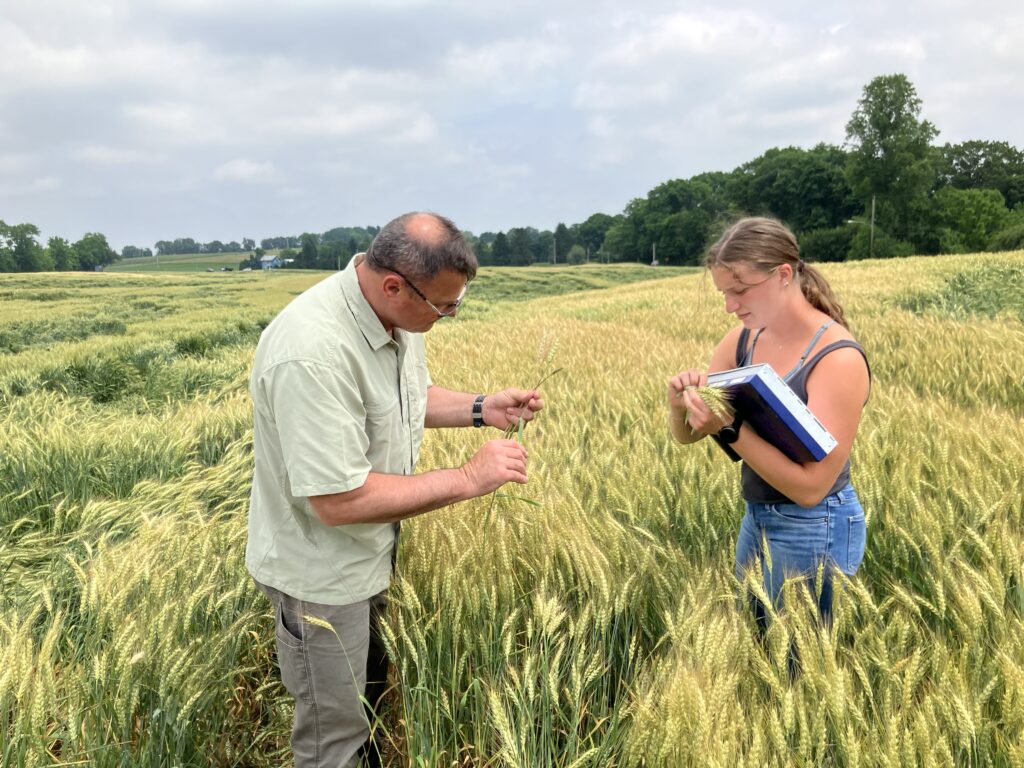
“So we’re gonna estimate the number of spikelets on the head and then the number of seeds per spikelet,” said Del Voight, extension agronomy agent for Lebanon County. “It’s a physical process, so we’re getting the number of spikelets, the number of seeds per spikelet, and the number of heads per acre. And then we know through a calculation that’ll convert that to seeds per acre, and then we can estimate a bushel based on how many seeds per bushel there is.”
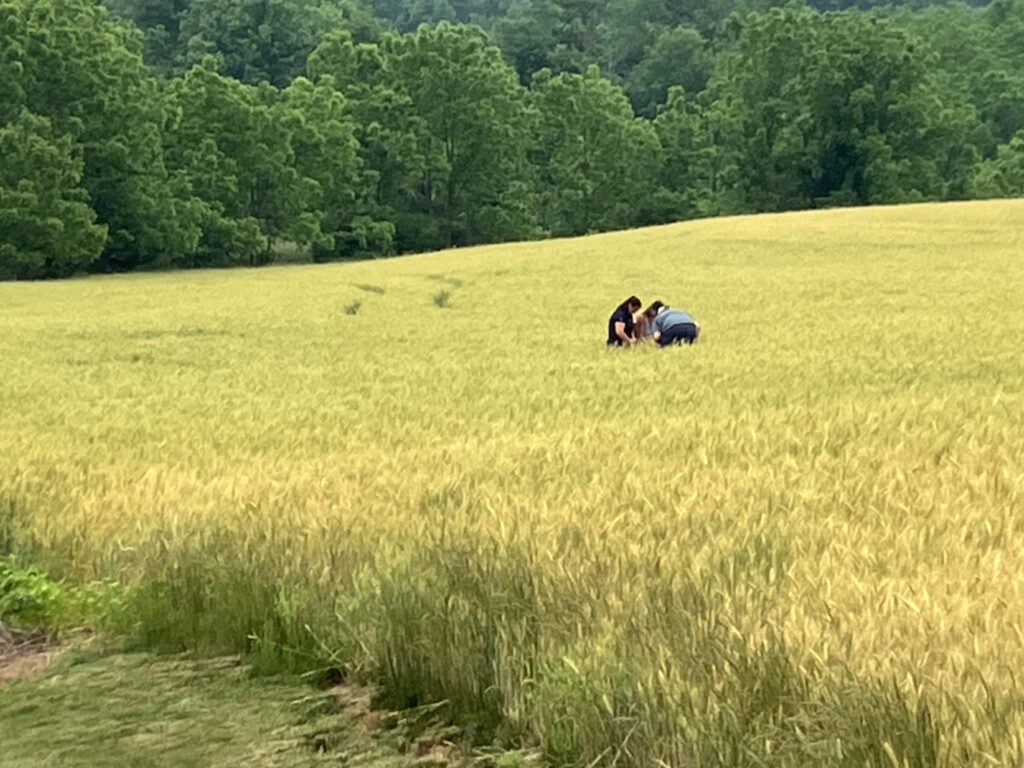
Heidi Reed, agronomy agent for Lancaster County, gave an assessment from the two fields visited in Lebanon County.
“So yield seems to be, I think, a little bit below average. Part of that, I think, is because maybe people were being a little more cautious about inputs potentially, And I don’t have all the details top of mind for those fields,” Reed said.
Other factors are potentially lowering projected yields, she added.
“But also we were so very dry early in the spring like around, you know, when the wheat would have been tillering and jointing. And so I think that has limited our yield potential,” Reed said. “In terms of quality, it’s much, much better than last year. Last year was horrible for a head scab of wheat or Vom (Vomitoxin), which is what the millers call it. So the millers should be happy, I think, with the quality, but the farmers might not be so pleased with the quantity coming off the field. But it looks like average quality, maybe average yield or slightly below average.”
Fluctuating spring weather – which has reportedly also devastated crops like apples across the region – also negatively impacted the wheat during the growing season.
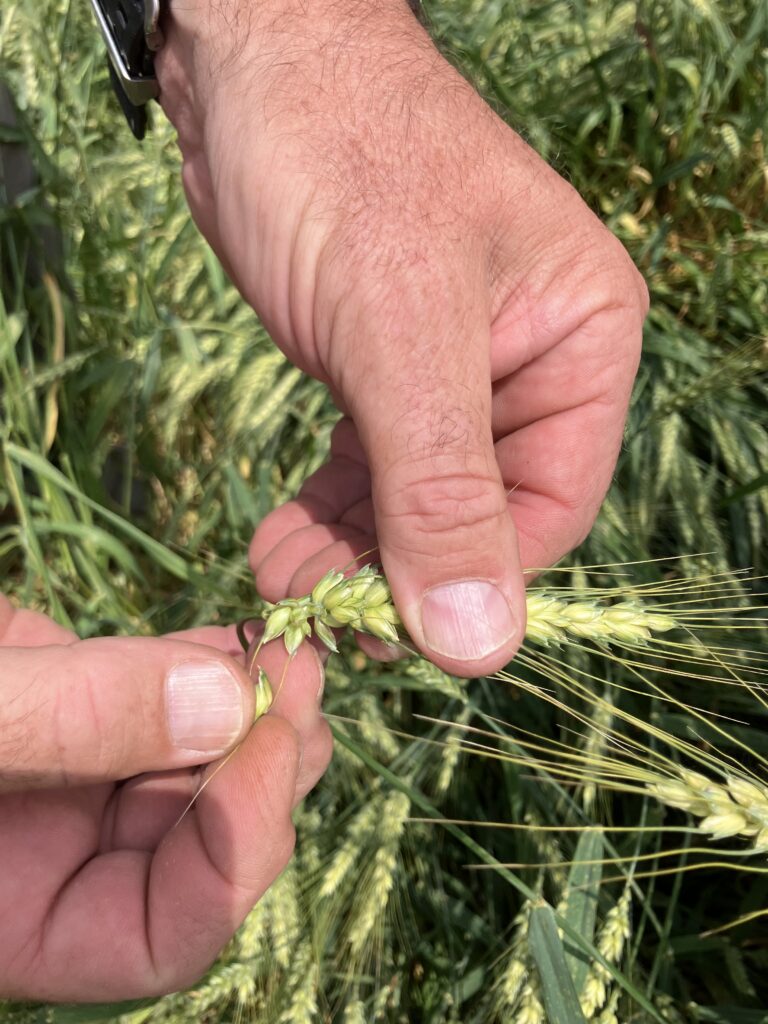
“They were mentioning that one frost that came in. We had a frost early in April and then it got really hot and then on April 19th, another drop in temperatures. So right when that crop was starting to come out could have affected a little bit – at least the development of the spikelets.”
A wheat spikelet is the fundamental structural and reproductive unit of the wheat head.
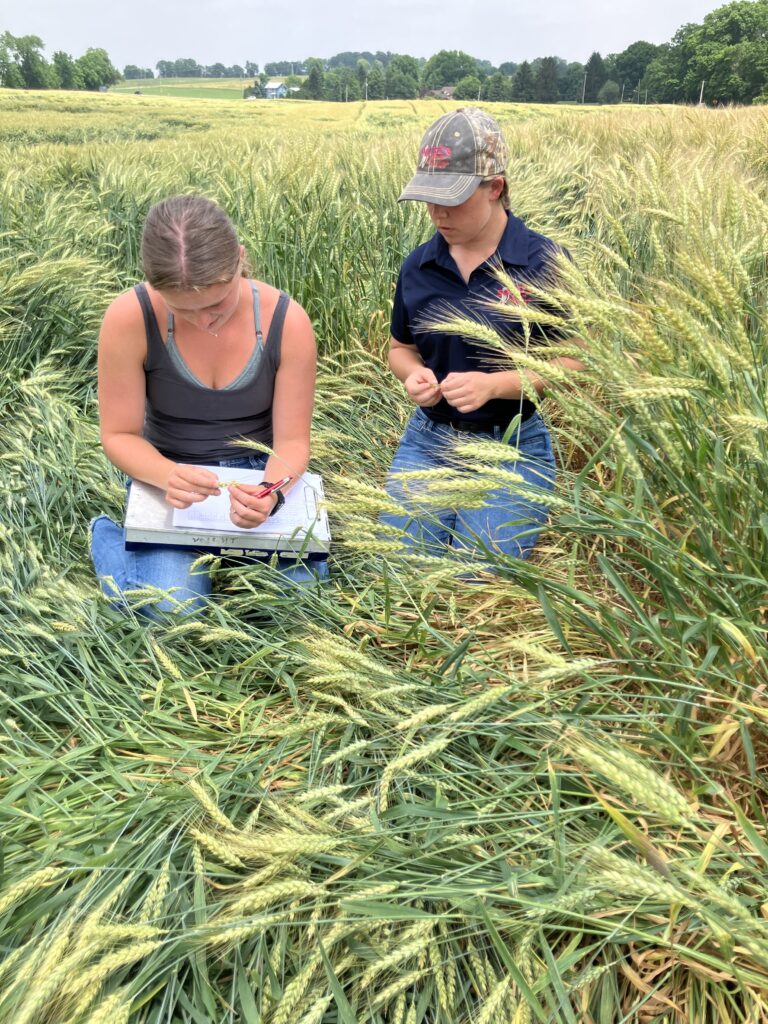
While in the fields, agents act like detectives, looking for clues that will help them determine the overall health of the plant. Observation of the plant itself is also an indicator, and that information is written down to be shared to have a record for this season.
The discussions get very technical, very scientific as they observe the plants and take notes. Here is a brief snippet of one of many conversations to occur in the field.
“I think that’s blotch.”
“The blotch?”
“Yeah. The bloom blotch.”
“Then is this kind of like, also, net (blotch) or more like a headscarf?”
“I think that’s the net blotch. Because a lot of these, I think, came from, you know, the powder and mildew or the saporous stuff.”
“Yeah, and then that jumps up. But I don’t see the…”
“We had some that were cut off, we saw some yesterday.”
Aphids, the bane of any farmer’s existence, were also discussed.
“We found some aphids, but we also found some lady beetles eating the aphids, so the natural enemies (of aphids) are out here,” said Voight.
There was also mention of a plant predator that slices the stems in half.
“An army worm should do that. We saw that in every field yesterday, just random plants here and there,” said Voight. “You’ll know if you have them. They usually cut the heads all off. They climb off the stalk and do that.”
Voight told a story from years ago of a York County extension agent who dealt with the ravenous insect with a local producer.
“His windows were open at night and he could hear this chomping. When he went out it was army worms, clipping off every head in his barley (field). He has pictures of it. It’s like an invasion,” Voight related to the assembled group.
Voight told LebTown that the tour, now believed to be in its 15th year, comes at the request of flour producers like Snavely’s Mill.
“They’re one of the big buyers in the area,” Voight said, “and it (the harvest) has to meet their milling standards.”
Snavely’s employee Christian Andersen said they sell flour to mostly the snack food industry.
“We do a lot of pretzels, but we ship to cookie manufacturers, candy manufacturers, bread manufacturers, people that do pre-mixes and ship it all over the world,” said Andersen about the flour purchased regionally, including from Lebanon County producers. He has a dual role as a transportation manager and future wheat buyer, he noted.
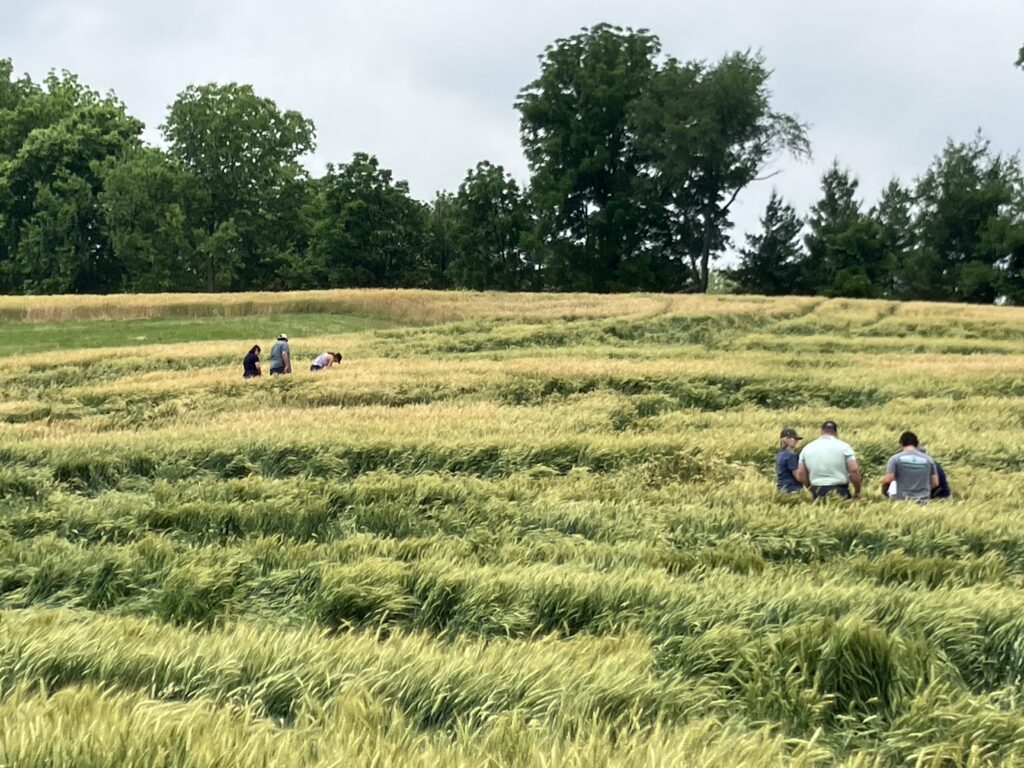
John Light, whose test farm is in the 700 block of North Lancaster Street, Jonestown, and was the first to be sampled in Lebanon County, estimated his harvest might be 80 bushels per acre.
When that estimate was set at 79 bushels, based on samples from three different areas of the field, Lebtown asked why he would participate in the study when he already had a good idea of what his yield would be.
“I’ve known Del for a long time, and it’s more about trying to learn something (new),” Light said. “You don’t have as many sets of eyes as they do. And like I said, I’m no expert. They are.”
The other Lebanon County farm visited was the Glenn Krall operation in the 200 block of Tice Lane in Cornwall Borough. Voight said the agents were visiting farms in the northern and southern sections of Lebanon County and in three counties altogether to gauge several factors.
“We’re trying to catch different climate types,” Voight said. “So the climate here (south side) is different than when we were at Lights and then northern Berks is different with the mountains and valleys there. And then Lancaster is completely different too.”
Questions about this story? Suggestions for a future LebTown article? Reach our newsroom using this contact form and we’ll do our best to get back to you.

Be part of Lebanon County’s story.
Cancel anytime.
Monthly Subscription
🌟 Annual Subscription
- Still no paywall!
- Fewer ads
- Exclusive events and emails
- All monthly benefits
- Most popular option
- Make a bigger impact
Already a member? Log in here to hide these messages
You know us because we live here too. LebTown’s credibility comes from showing up, listening, and reporting on Lebanon County with care and accuracy. Support your neighbors in the newsroom with a monthly or annual membership, or make a one-time contribution. Cancel anytime.