Modern agricultural practices are not your pappy’s farming techniques.
“Cellphones alone have come so far in the past 10 years. From being able to access weather forecasts to using it to maintain your equipment, there is a lot of power in your hands,” said Del Voight, extension agent for Penn State Cooperative Extension, about modern agricultural practices. “Technology hits every aspect of agriculture and the industry has been impacted in tremendous and amazing ways because of it.”
From robotic milking to GPS-driven precision in planting and strip-till farming, agriculture today is advanced light years from what it was just a generation or two ago, according to local farmers and Voight.
LebTown spoke with several Lebanon County producers who have implemented technologies that are increasing yields, improving production, lowering costs and making their operations overall more efficient.
Robotic milking
Silo View Farm LLC, in the 700 block of Ono Road in East Hanover Township, is one of only four or five dairy operations in the Lebanon Valley that has implemented robotic milking.
This farm is part of what is an ownership operation run by Ed Heagy, his wife Geri, sons Dale and Darrell, and grandchildren Tyler and Hannah.
Ed said robotic milking systems (also known as Automatic Milking Systems, or AMS) offer significant benefits by reducing labor costs, increasing milk production, improving animal welfare, and providing data-driven herd management.
Their farm has four robotic machines that milk the 230 milking herd (500 total animals) 24/7/365 with less human labor required than before they implemented it.
“Some cows will get milked maybe only two times a day, some will get milked two-and-a-half times and some will get milked three times,” Ed said, adding the animals are trained to enter the first gate that gives the animal access to the robotic machinery. “It’s amazing. When they get trained, 24 hours a day they’ll just go in and get milked.”
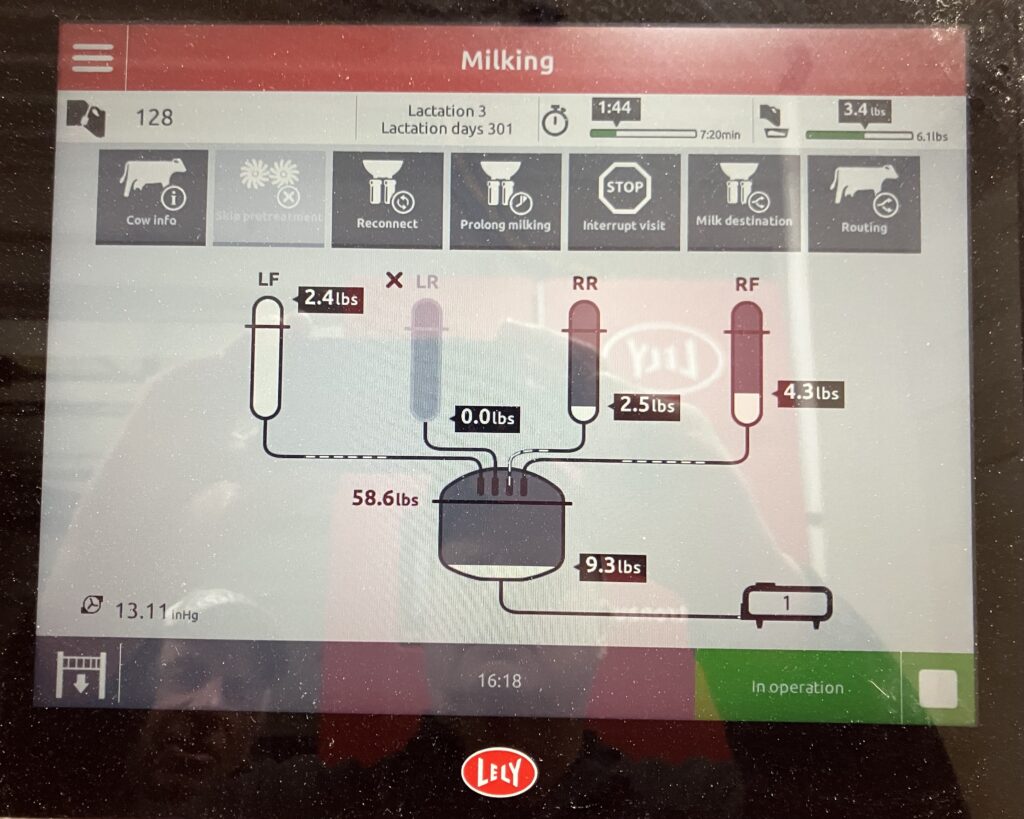
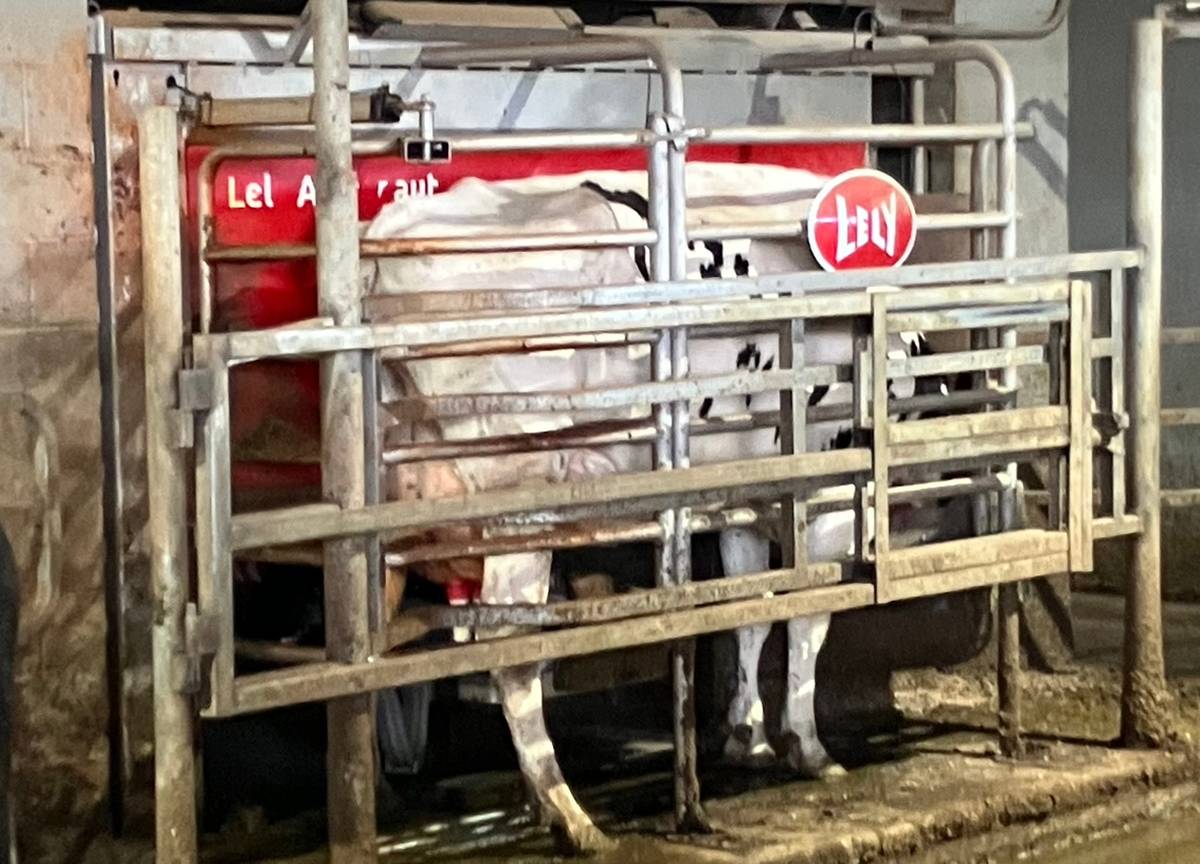
Once inside the gated area, the animal is cleaned several times with water and a cleanser, which Ed says is more sanitary than if done by humans. She is connected to the machinery and milked while being fed protein pellets, after which she is disconnected from the machinery and exits via a gate in front of her.
“There’s feed in there to help entice her, that’s like dessert. So some cows just go in there to get the feed but if they aren’t ready to be milked, then it won’t give them any feed,” Ed said. “But you get cows trained and then once trained, they know what to do.”
Since the milking operation is computerized, massive amounts of data are collected on each cow. From the amount of milk she gives each session to the state of her current health, the technology takes the guesswork out of running a dairy operation.
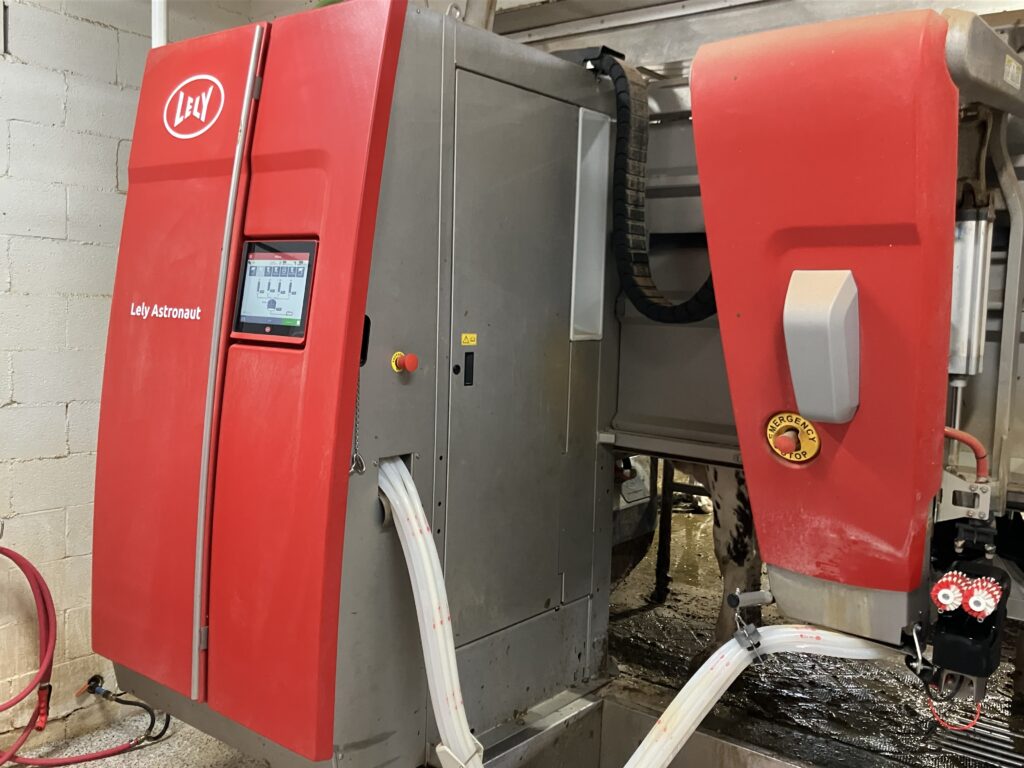
“Every cow has a report. If she has a problem with her milk, they come in here every morning and they can hit her chart, and it tells them,” Ed said. “If we make a feed change and it’s not working right, this will tell us. If the cow’s sick, it will tell us long before we would physically see it because it monitors what’s going on. It tells us when a cow is in heat.”
The technology also provides data that helps ensure higher production per cow.
“The technology is amazing. We used to get 75 pounds (on average) and now we’re running 93 (pounds). Every dot (on a computerized chart) represents a cow. So you can see the top cow is making between 150 to 160 pounds of milk.”
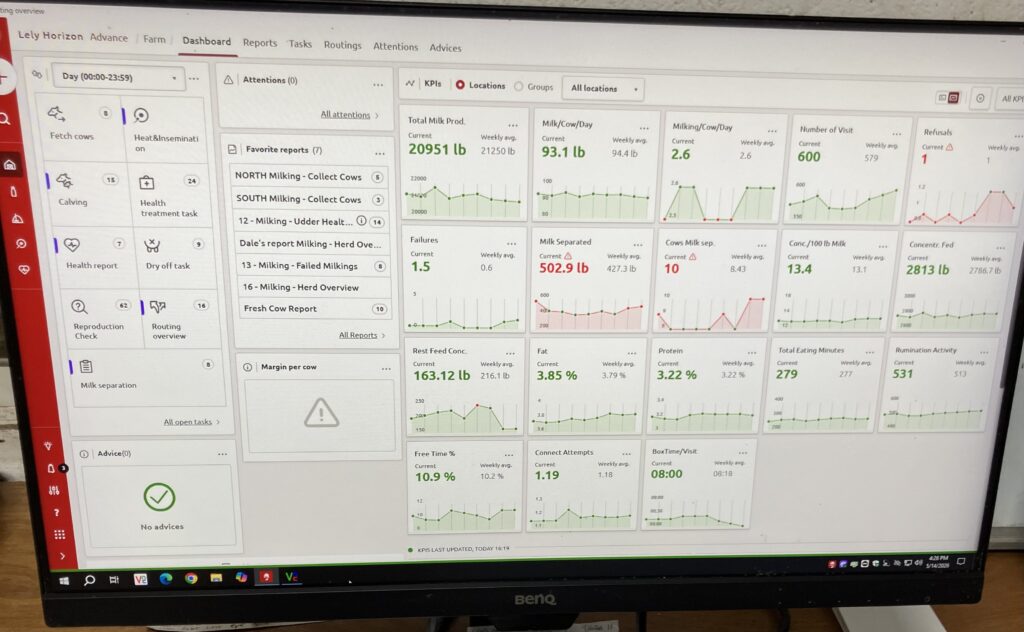
This matters when providing the “dessert” Ed mentions that is released while the cow is getting milked.
“When she comes in to get fed, she’s gonna get a lot more pellets, which is protein fat,” Ed said. “We always took the middle of the road and every cow got fed at that (volume). But now we feed the base out there to all the cows, but then she might get 16 pounds of pellets, and this one doesn’t even get six (pounds). But that’s where you get the most milk out of them because you can adjust the feed given to them.”
The Heagys built a new barn to hold the robotic milking parlor in early 2023 and installed the robotic technology by the end of the year.
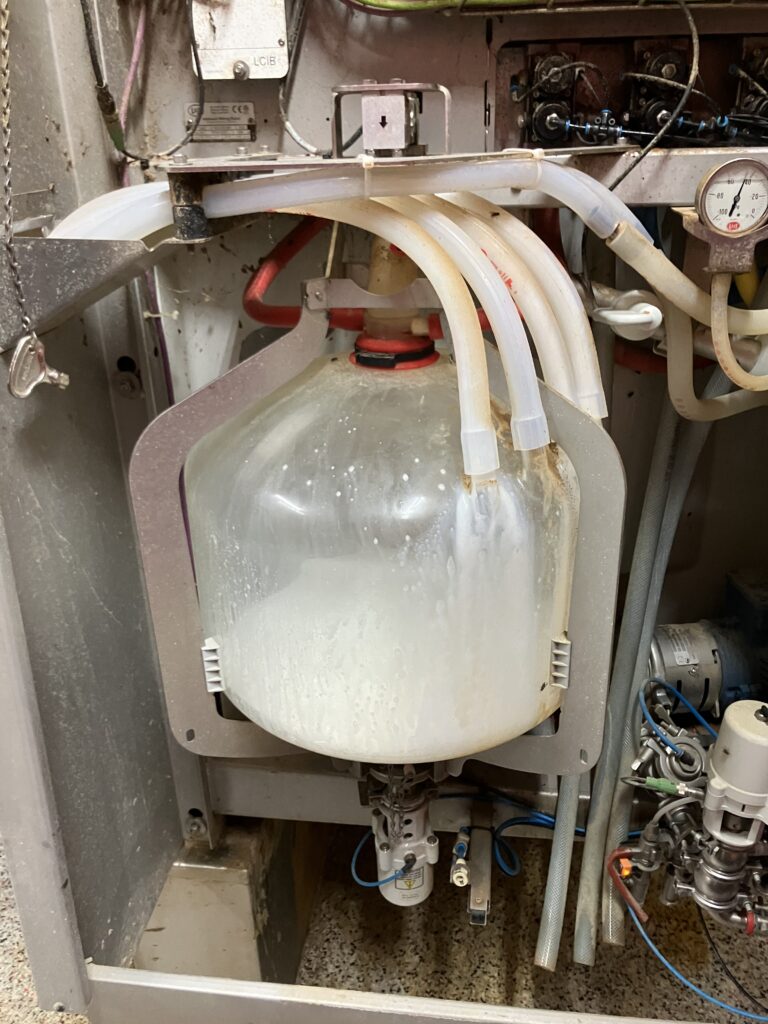
Ed said the positives outweigh the few negatives associated with the practice. Asked if he misses the old days of milking, he said “no” emphatically and without hesitation, drawing a laugh from Hannah who was running a demonstration on the computer.
He said reduced labor is a bonus and not being kicked by an animal while trying to milk it ranks among some of the top reasons for investing in robotics.
“The one son and the grandson felt pretty positive about robotics,” Ed said. “And they knew my wife and I weren’t going to be here to keep milking cows. So labor was a big part of it.”
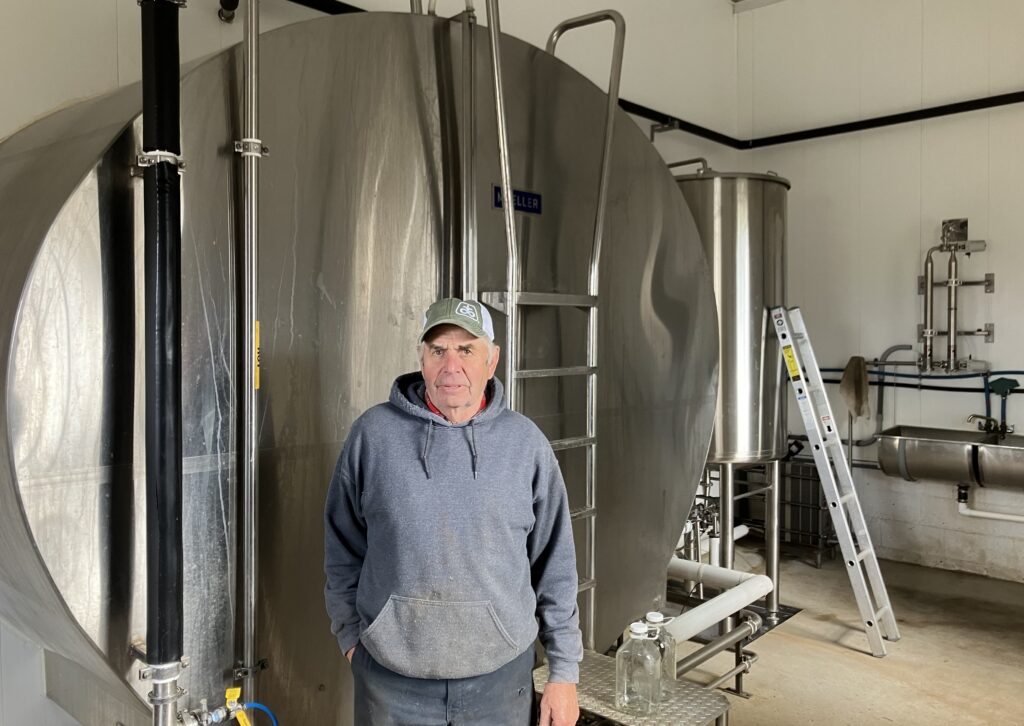
GPS technology
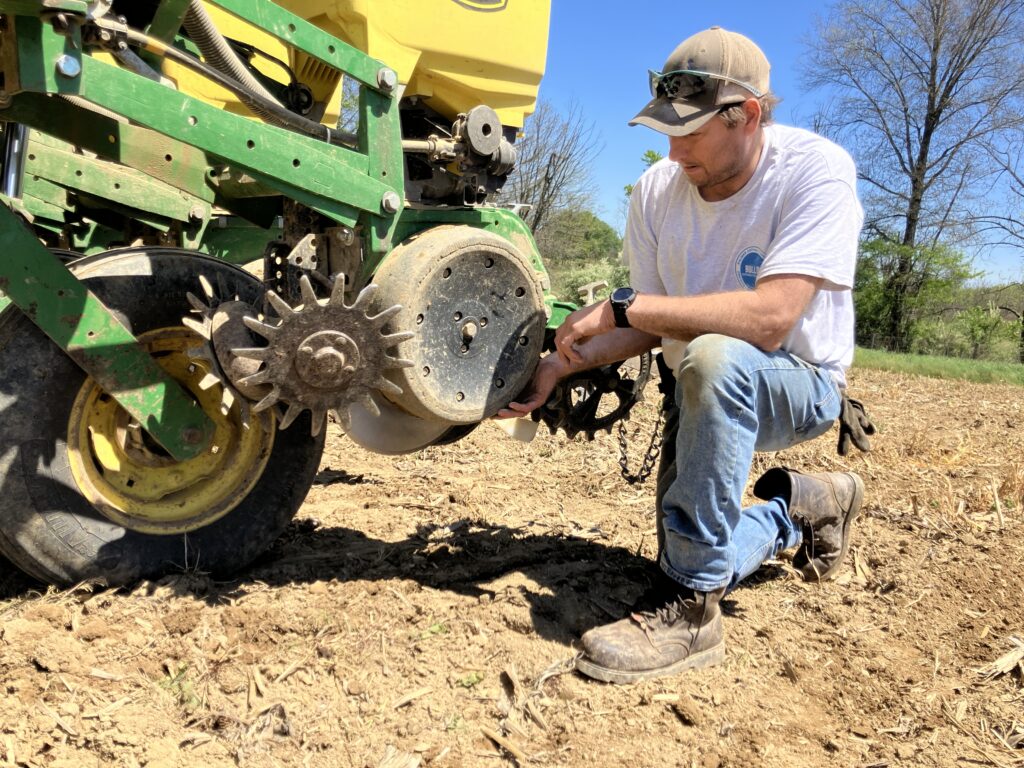
GPS technology isn’t just for finding your way from one location to another. It also allows implement guidance in agriculture to make seed planting a precise operation, according to farmer Troy Miller, who works with his father Calvin on a 300-acre farm called Shale-Rock Acres LLC in Swatara and Bethel townships.
“Implement guidance came out probably in the mid-teens. And while we’re not the first to adopt it here, we’re near the beginning for farmers in this area,” Troy said. “I would say, in the Midwest, they’ve been using it for years. So that’s when the technology came out, but it took maybe a little while for that to come into being.”
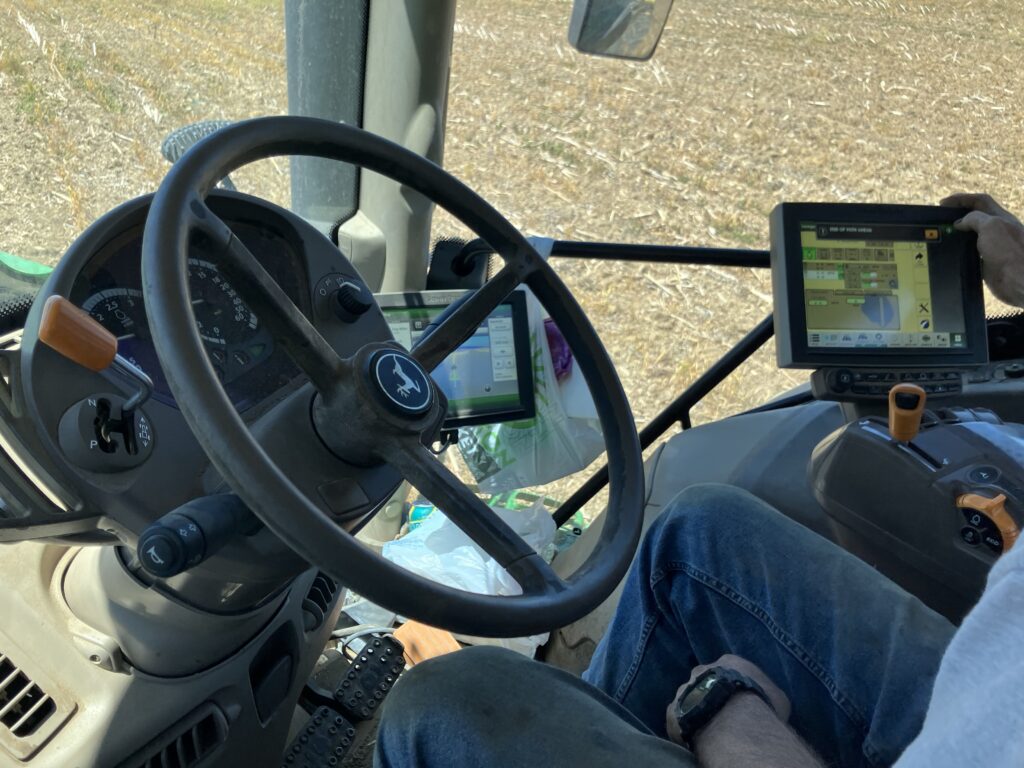
Implement guidance helps ensure accurate placement of inputs; greater productivity by increased guidance usage in subsequent cropping passes; lesser crop damage in subsequent cropping practices; and higher accuracy of placement of inputs improving crop potential.
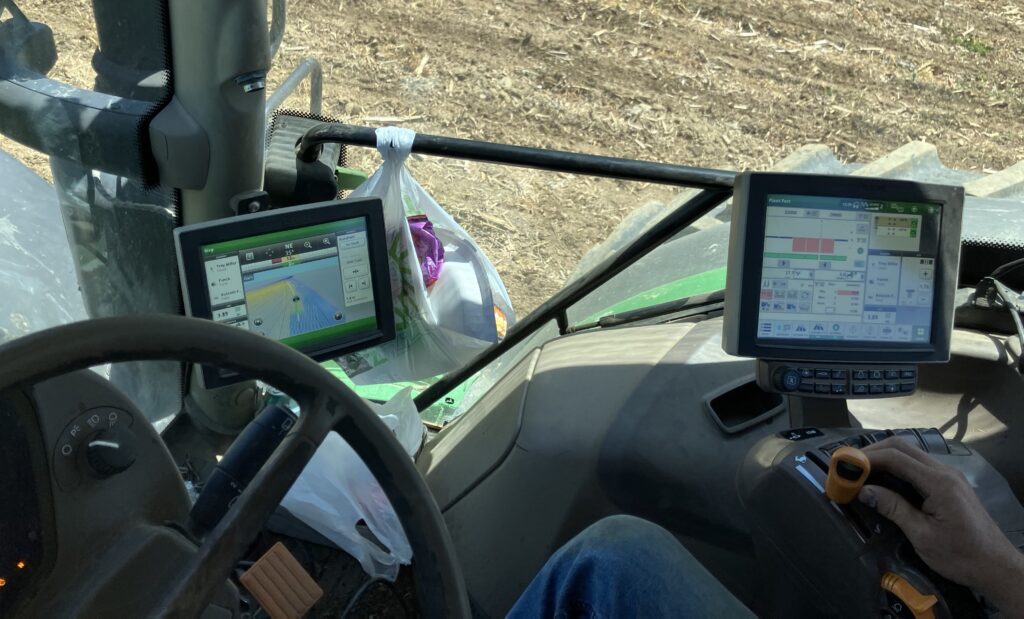
“I have row shutoffs. So when I come in, if they were already planted, my row shuts off individually, so I’m not overplanted and seeded and overlapping,” Troy said. “You can see in this field, we do one more lap and everything goes in at an angle. So with the old planter, I had to overlap, I bet you an extra acre in this field. So we went to the (GPS) technology just to hopefully save inputs.”
Troy said the family also does strip-tilling, and noted another tractor goes through the field first before he plants the seed, adds fertilizer and, in this particular year, applies an insecticide to control an invasive species. While the tractor may be “off” in a given row, the planter, thanks to GPS, knows exactly where to plant the seed.
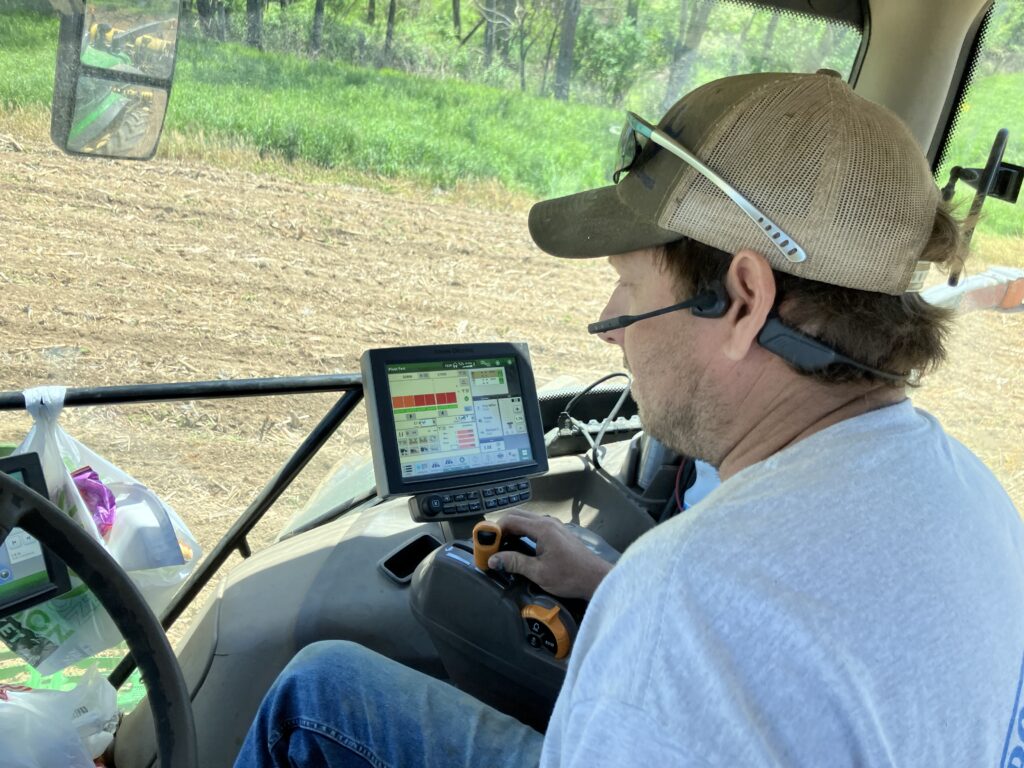
“When I come into the field with a planter, I’m planning off of the lines he creates with that tractor and the strip-till. I plant right on top of where we strip-till,” Troy said, noting the coordinates are entered into the system before he begins. “On a hill, that dome there will steer the tractor uphill to keep the planter right on that slot. I can stay on my 30- inch spacing and this tractor could be off by 30 inches, depending on the hillside.”
It almost has to be seen to be believed, but just like driverless vehicles, GPS technology enables tractors to be nearly driverless, too. He manually steers the tractor at the end of a row to turn the vehicle, but in a row his hands rarely touch the wheel.
Troy said he never believed there would come a day when he could operate a tractor mostly hands-free.
“I thought, with markers, there would be no need for GPS. I mean, it was around when I was in college, like for yield data, but I never imagined just coming out, hitting the auto steer button and then going,” he said.
Strip-till farming
The Millers are also one of the few farm families in Lebanon County to use a conservation practice known as strip-tilling. Troy said Darren Grumbine in South Annville Township is the only other farmer he knows that uses it.
Strip-tilling is a conservation tillage system that typically combines no-till benefits with conventional tillage, where only 6- to 8-inch-wide strips (about one-third of the row area) are tilled and fertilized, leaving the rest of the field undisturbed. It warms and dries soil for faster planting while preserving soil structure and reducing erosion.
Over the past 20 years, the Miller’s farming operation has morphed from conventional tilling to no-till, which many local farmers use, to now strip-till, Troy told LebTown.
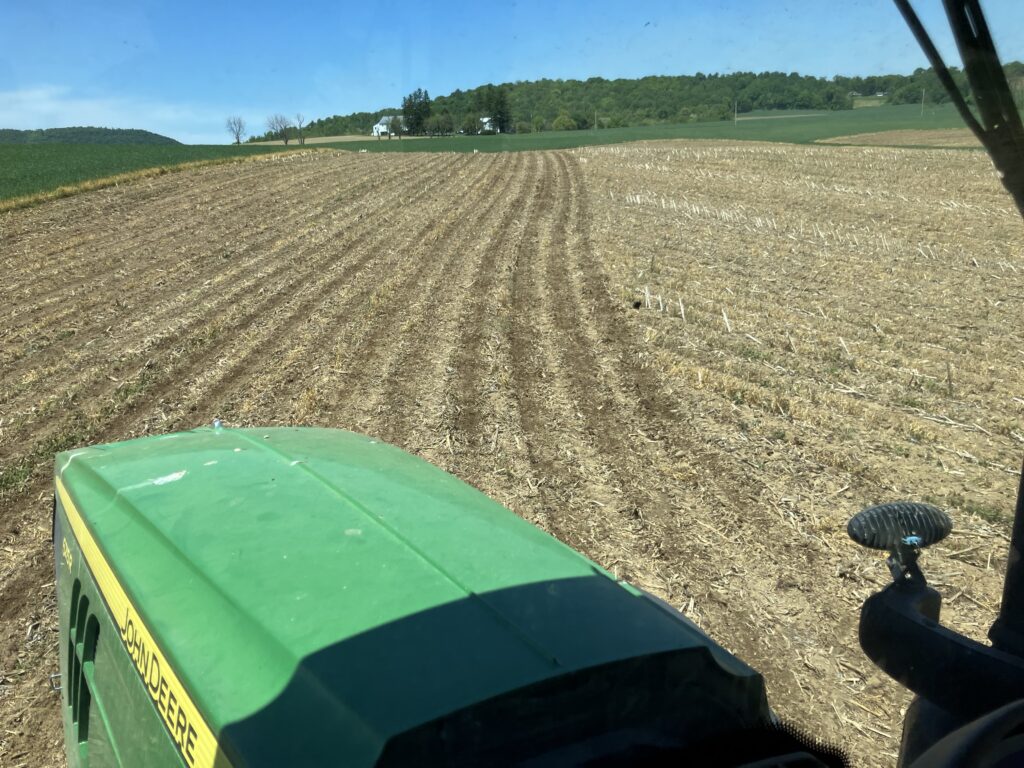
“When I got done with college, we converted to no-till and it just seems like our soils got tight over time, and I just wasn’t happy with it. And then we tried strip-till and we thought we had a really nice soil, a really beautiful planting situation. So that’s kind of why we ran with it,” he said. “This is our third year with it, and none of us are upset about it one bit.”
The first year they converted to this planting method, a drought that summer led to a poor yield come harvest.
“Last year, I’d say it was one of our better-yielding years, even with the dry weather,” said Troy, who noted soils in the northern part of the county are poorer in quality than those to the south. “We were probably better than what we’ve been in the past.”
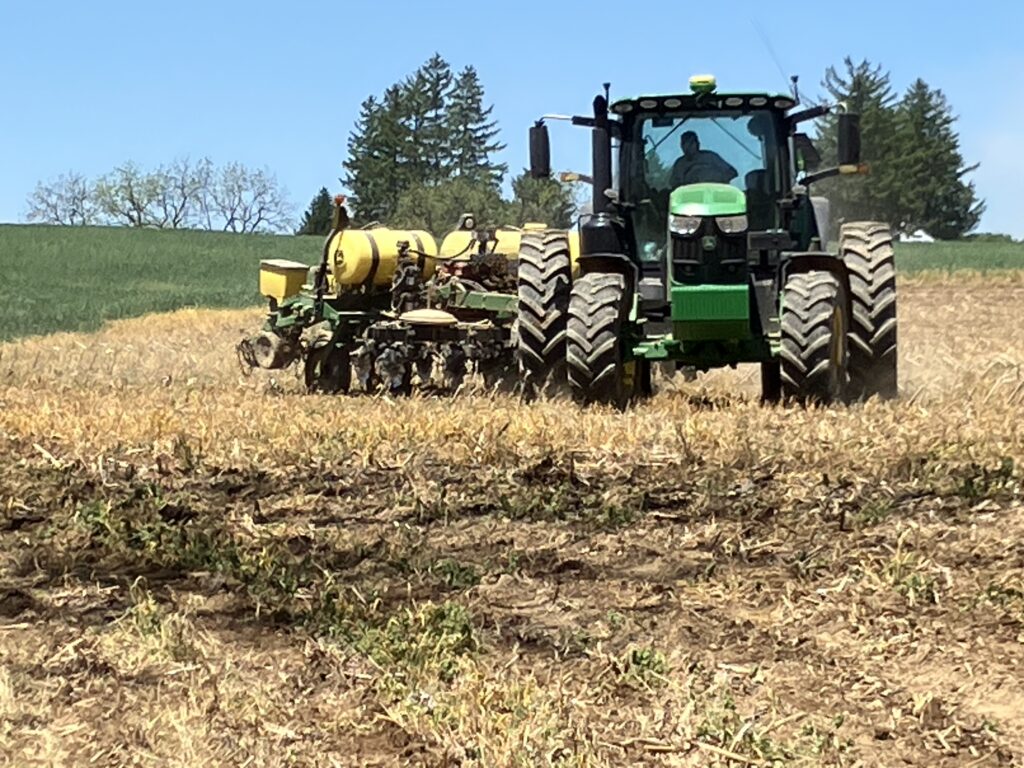
LebTown asked Troy why more farmers should convert to strip-till farming.
“I would just say the planting conditions can’t get much better. This was strip-tilled three weeks ago and it’s just beautiful,” he said in reference to the soil while planting corn. “The ground is consistent. Not going from hard soil to loose soil like you might go into with no-till. The soil is all the same texture, so everything just works more smoothly.”
It’s easy to see while in the tractor high off the ground that much of the soil is undisturbed, as residual plants from a previous harvest cover the ground surface where he’s planting corn. The impact to the soil is minimal, which keeps that asset where it belongs and out of waterways and ultimately in downstream water sources like the Susquehanna River and Chesapeake Bay.
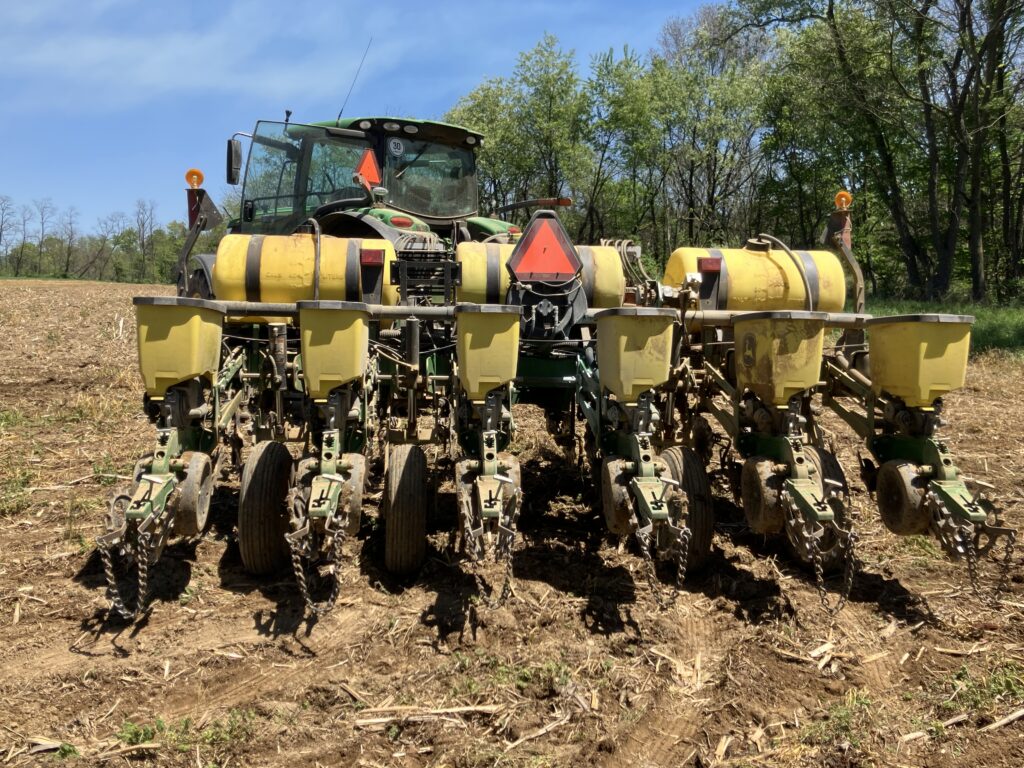
As arguably a farm’s most valuable asset, soil conservation matters, and strip-till methods help minimize various impacts. It’s estimated that up to 70% of the soil remains untouched with this farming method.
“Whatever we can do to keep the soil where it’s at is what we try to do. When we get done with harvest, we’ll come in and we’ll plant a cover crop here of wheat, rye or barley with the intention of terminating it sometime mid-April and planting it just to feed the microbes in the soil, cover the soil,” Troy added. “If there’s nothing growing on your soil, your soil’s dead. A growing soil is alive.”
Questions about this story? Suggestions for a future LebTown article? Reach our newsroom using this contact form and we’ll do our best to get back to you.

Join our community of local news champions.
Cancel anytime.
Monthly Subscription
🌟 Annual Subscription
- Still no paywall!
- Fewer ads
- Exclusive events and emails
- All monthly benefits
- Most popular option
- Make a bigger impact
Already a member? Log in here to hide these messages
Quality local news takes time and resources. While LebTown is free to read, we rely on reader support to sustain our in-depth coverage of Lebanon County. Become a monthly or annual member to help us expand our reporting, or support our work with a one-time contribution. Cancel anytime.