A snapshot of the county’s health and quality of life in the Lebanon County community was provided Wednesday during the 4th annual State of the County program.
Sponsored by the Lebanon Valley Chamber of Commerce and held at Lebanon Valley College’s Blair Music Hall, the event featured seven speakers covering a variety of topics of local interest. A special segment included a business panel focusing on the challenges of being an entrepreneur running a small company.
Karen Groh, chamber president and CEO, noted each presentation would run about eight minutes and that “each one is a snapshot of something vital happening in our county,” adding the business panel would be a 15-minute segment.
“We hope you leave today informed, encouraged, and maybe even a little fired up, ready to get involved in the areas that matter most to you,” Groh told an estimated crowd of 200 attendees. “Lebanon County is an exceptional place to work, live, and do business. Let’s celebrate it together.”

The speakers discussed the Lebanon Valley Rail Trail, which is in the process of celebrating its 30th anniversary this year; the state of health in Lebanon County; higher education as a driver of community impact; community disaster preparedness; and the county’s new comprehensive plan, which is a process that began about a year ago and continues to be formulated based on local input on the kind of future residents and municipal officials want here.
Opening remarks
Lebanon County Commission chairman Mike Kuhn said that while the county’s health is strong, existing challenges mean there’s room for improvement. His comments centered on one of those challenges.
“I’m going to focus on one area and a great example I think of how we’re managing a very difficult challenge. How many would agree with me if you had said mental health is probably one of the most difficult challenges of our time?” Kuhn asked. “You talk to any school administrators, law enforcement, prison officials, employers, they’ll share that it’s a huge challenge and there are no simple solutions. There are huge costs, but the costs are even higher if we don’t deal with it effectively.”
He noted one advance in the war to improve mental health where the county has seen success.

“Our crisis intervention center is amazing and in the last couple of years, we’ve expanded what we’re doing through crisis intervention, through a hotline and a mobile unit that’s even going out into the community to meet those people where they have a need,” he said.
State of health in Lebanon County
Dr. Jilian White, vice president of medical affairs at WellSpan Good Samaritan Hospital, highlighted the big drivers of healthcare in the Lebanon Valley.
“As many of you know, it’s obesity, hypertension, diabetes, cardiovascular disease, and they are huge drivers of utilization of health care, huge costs both directly and indirectly from not only needing care but also us having to take time off also to care for our loved ones who are suffering from many of these chronic conditions,” she said.

White noted that heart health in Lebanon County is a little worse than it is in the other 66 counties, but said the other big drivers are about the same level here.
“There are things that we’re getting better at, but there are things we’re getting worse at. But when you look at the numbers, specifically if you focus on the last column over here, physical environment, out of the 67 counties, we’re 59th,” White said. “So there’s opportunity here in the county, and then we’re going to kind of get to where I think we could go in the future as we move forward.”
White also spoke of the hospital’s behavioral health efforts.
“We’ve made huge strides in the county from a behavioral health aspect. Our crisis intervention center that we have that’s across the street from the emergency room at the WellSpan Good Samaritan Hospital has made huge impacts on the county in regard to behavioral health access,” she said.
“But we still have room to improve. So it’s estimated that we have an estimated need of about 17,000 to 20,000 unmet behavioral health needs in the county itself. And it really comes down to challenges that we’re all having, shortages and having people here that can provide that care.”

She outlined some of the current needs.
“We have high demand specifically from depression, anxiety and substance abuse disorders. And then just difficulty navigating barriers, challenges with healthcare, like your insurance, providing total coverage for behavioral health needs, and who’s in-network, and all the other things that we all deal with when we try to receive care,” she said.
Lebanon Valley Rail Trail
One driver of better physical and mental health is the Lebanon Valley Rail Trail, which was launched in 1996. LVRT board member Jay Green noted that counters tallied 300,000 users in 2025.
Green touched on the physical benefits of biking, noting two seniors who use the trail regularly and were among the early users and supporters of the green asset.
“Overall, she just confesses how much she loves the safety that she has when biking on our trail, anywhere on that trail. And apparently her doctor tells her that riding the trail is not only helping her to stay healthy, but all her medical tests and apparently reflect all the effort she puts in,” Green said.
Others have found the benefit of biking on the rail trail, added Green.
“There’s another guy, Franklin. He’s also age 79, bikes the trail, also 10 to 20 miles, four to five days a week, likes to bike in all weather, except for snow, go figure,” Green said. “He finds that biking is better for his joints than walking, jogging, or running. His physicians also say that they can see the benefits of exercise he’s done on the trail. He repeatedly said to me when I talked to him that his doctor says ‘keep riding that bike.’”
Green provided a rail trail project update, too.
“The northern section of the trail from the city to Jonestown and Route 22 is currently the focus as we work to acquire missing linker sections and easements as we develop north to complete the division,” he said.
That portion of the project has been a challenge.
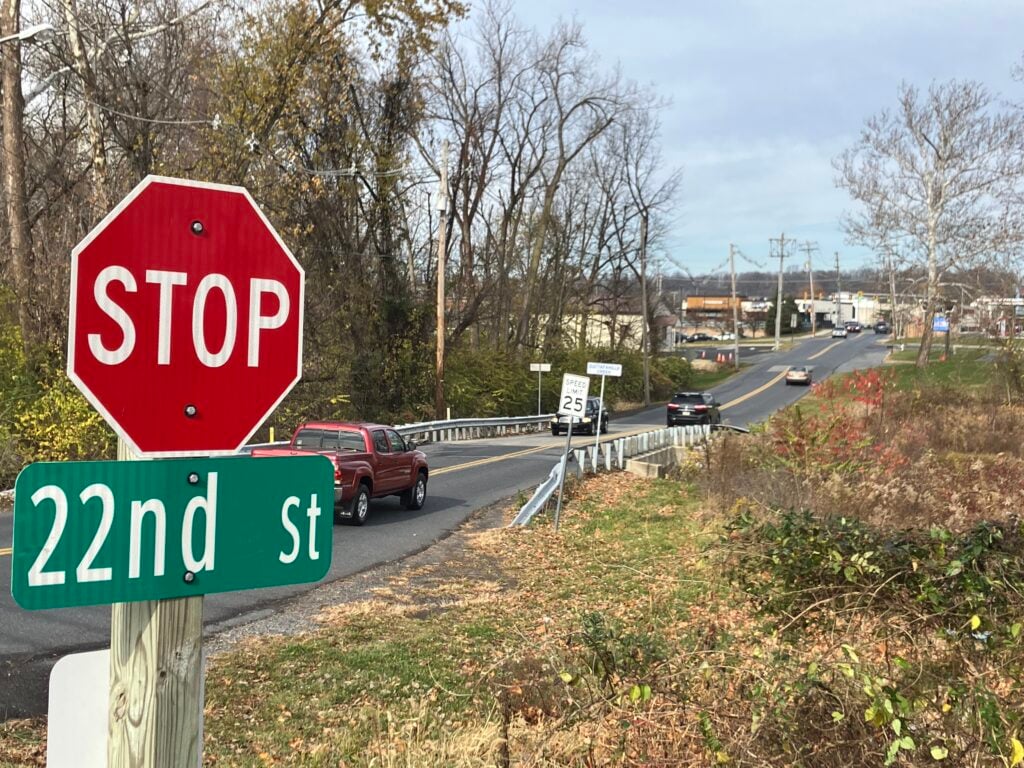
“This has been a painstaking process, folks, as LVRT has to negotiate each parcel separately with landowners,” he said. “We recently completed a trail along Chestnut Street leading up to 22nd, and this year probably being our single largest project to date, we’ll hopefully break ground to build a new ($5 million) bridge across the Quittapahilla Creek from Chestnut Street to the light at Route 422 at the Lebanon Valley Mall.”
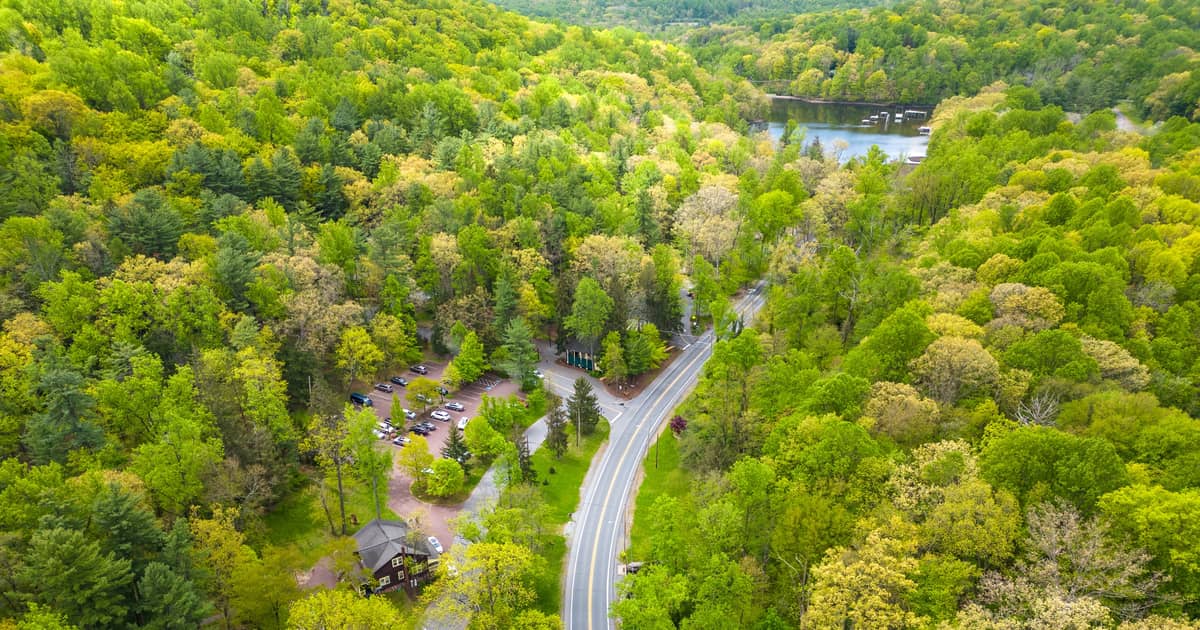
When completed in 2028, the 32.8-mile trail will cover a route that begins in Swatara State Park in northern Lebanon County, continues south through the city, and ends at the Lancaster County line near Colebrook.

Higher education

Higher education also is an important community asset that impacts the quality of life for its residents, according to LVC president Dr. James MacLaren. From the arts that are offered, like theater and an art gallery, to classes and beyond, the benefits are many.
“I’ve spoken to at least several people who retired to Annville because of the location of a college campus providing these things,” said MacLaren.
From students who spend money in town or whose parents do while visiting and watching their student athletes compete, which is about 40% of the student body, MacLaren said the college also offers courses that are building the workforce.
“For example, we tailored our MBA program with Carlisle Construction so that the courses and curriculum were aligned with the needs of their management development. And so that’s something that a small school that’s maybe more nimble than a larger state or organization can do,” he said. “If there are particular workforce development needs that align with our college’s strengths, we can certainly tailor those to meet workforce needs.”
He highlighted the college as a community partner, noting LVC has donated $3.4 million to Annville Township over the past decade, stating it’s a relationship the college values with the local community.
Disaster preparedness
Brianna Laliberte, emergency management specialist with the Department of Emergency Services, said disaster preparedness involves the entire community.
“One of the things we have learned is that preparedness is a shared responsibility. Everyone in this room and in this community, individuals and families, faith-based and community organizations, schools, the media and the government has a role in it. We call this the whole community approach to emergency management,” Laliberte said. “Because while DES has many resources, such as our field communications unit, our hazardous materials trucks, and our DES building itself, our greatest resource is you.”

She referenced the “wealth of resources” available to DES in times of emergency.
“We may not have all the resources we may need on hand, but we know there is a list of people and a wealth of resources in our community that we can look to during an emergency,” she said. “You may not think there is a need to have certain resources on the list, but you never know when it may be needed. By training, exercising, and engaging with our whole community, we can build a resilient community that is able to recover quickly from a disaster. In this ever-changing world we live in, it is more important than ever to make sure we are doing everything we can to prepare for the next disaster.”
Comprehensive plan update

Michelle Brummer, senior project manager with GFT, gave a progress report on the county’s comprehensive plan and what still needs to occur so that residents can have the kind of community in which they want to live.
“The comprehensive plan articulates a vision, a direction, that’s the compass to use that metaphor again, for where we’re headed and how we’re going to look physical development of our community, how we want to shape that, the kinds of things we’d like to see,” Brummer said. “Some of that physical development affects our environment, affects our water quality and our air quality, also affects our business opportunities based on our habitation, our ability to use our transportation networks. All of these things are very much interrelated. So this comprehensive plan is, it’s not a law, it’s not a regulation, it’s policy. It’s a direction we’d like to see that we assemble and review and discuss together and adopt as a direction we’d like to work together in our individual ways.”
Final thoughts
Groh gave guests some food for thought with her closing comments.
“Lebanon County’s strength does not come from any one sector or any one organization. It comes from all of us, connected, committed, and working toward the same goal,” she said. “These issues don’t exist in isolation.”
She presented some when/then scenarios that are beneficial to the community.
“When healthcare is strong, families stay. When trails are thriving, businesses grow. When young people are educated and small businesses are supported, the whole community rises. When we are prepared for emergencies and planning thoughtfully for the future, we don’t just survive challenges, we are ready to do it. Keeping Lebanon County strong, vibrant, and future-focused will take every single one of us. … Let’s keep working to keep Lebanon County exceptional.”
All resources to the program are located here.
Questions about this story? Suggestions for a future LebTown article? Reach our newsroom using this contact form and we’ll do our best to get back to you.

Keep local news strong.
Cancel anytime.
Monthly Subscription
🌟 Annual Subscription
- Still no paywall!
- Fewer ads
- Exclusive events and emails
- All monthly benefits
- Most popular option
- Make a bigger impact
Already a member? Log in here to hide these messages
Strong communities need someone keeping an eye on local institutions. LebTown holds leaders accountable, reports on decisions affecting your taxes and schools, and ensures transparency at every level. Support this work with a monthly or annual membership, or make a one-time contribution. Cancel anytime.